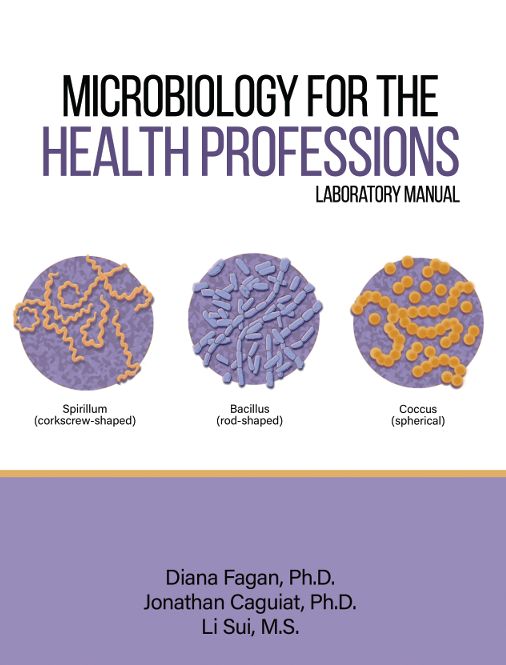
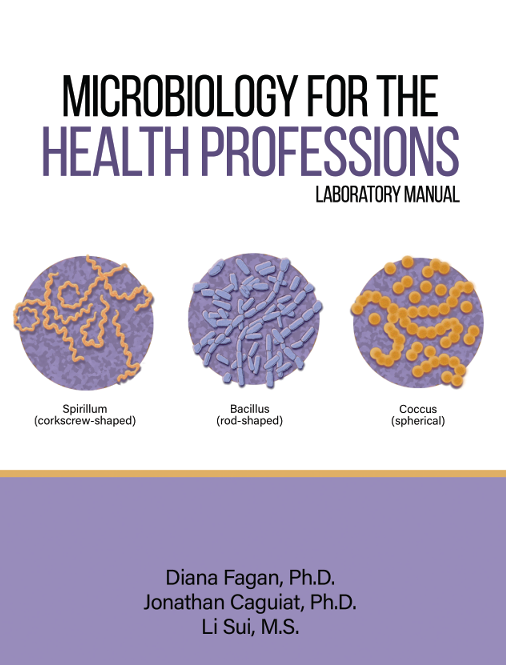
Microbiology for the Health Professions Lab Manual
Edition: 1
Copyright: 2019
Pages: 84
Edition: 1
Copyright: 2019
Pages: 84
Choose Your Format
$34.00 USD
Ebook
$34.00 USD
The Microbiology for the Health Professional Laboratory Manual introduces common techniques used by health professionals in the microbiology laboratory. Bacteria cause many different diseases. To treat a disease effectively, the health professional must rapidly identify the bacterium that causes it. In addition to providing techniques for identifying pathogenic bacteria, the manual also covers strategies for preventing and treating diseases. Other exercises detect microbes that spoil food and water and demonstrate how some microbes are used to make food. The manual covers the following exercises:
- the care and use of the microscope.
- staining techniques for viewing bacteria with a microscope and tentatively identify them.
- bacterial culturing techniques used to identify different types of bacteria.
- biochemical techniques used to identify bacteria.
- hand washing.
- principles of disinfection.
- antibiotic susceptibility.
- bacterial tolerances to pH, temperature and salt.
- detection of microbes that cause milk spoilage.
- detection of bacteria that cause dental caries.
- activity of microbes in making bread and yogurt.
This manual provides many laboratory exercises for pre-nursing, pre-dental hygiene, pre-respiratory therapy, pre-nutrition and other health professional students.
Acknowledgments
Introduction
Lab #1 The Use and Care of the Microscope: Viewing Prepared Slides of Microorganisms
Lab #2 Inoculation of Agar Plates with Bacteria from the Environment
Lab #3 Microscopic Observation of Bacteria Using the Simple Stain Procedure
Lab #4 Obtaining Isolated Colonies by the Pour Plate Method
Lab #5 Obtaining a Pure Culture by the Streak Plate Method
Lab #6 Differential Staining of Bacteria: The Gram Stain
Lab #7 Hydrolysis of Starch
Lab #8 Hydrolysis of Gelatin
Lab #9 Types of Microbiological Media
Lab #10 Hemolysin Production by Microorganisms
Lab #11 Motility Test Medium
Lab #12 Catalase in Bacteria
Lab #13 Differential Staining of Bacteria: The Acid-Fast Stain
Lab #14 Carbohydrate Fermentation
Lab #15 Triple Sugar Iron Agar
Lab #16 The Effect of Desiccation on Microorganisms
Lab #17 Chemical Disinfection
Lab #18 The Effect of Different Light Sources on Microorganisms
Lab #19 The Effects of Cold Temperatures on Microorganisms
Lab #20 Skin Antisepsis
Lab #21 Sensitivity Testing: The Kirby-Bauer Method
Lab #22 The Effect of Osmotic Pressure on Microorganisms
Lab #23 Effects of pH on Microorganisms
Lab #24 Moist Heat Sterilization: Boiling and Autoclaving
Lab #25 Bacteriological Testing of Water
Lab #26 Bacteria on Fruits and Vegetables
Lab #27 Bacteria on Meat
Lab #28 The Making of Dough
Lab #29 The Making of Yogurt Cultures
Lab #30 Dental Caries
Lab #31 Standard Plate Count and Total Coliform Counts of Milk
Lab #32 Phosphatase Test
Appendix Accepted Format for Microbiology Laboratory Notebooks
Bibliography

Dr. Diana Fagan is Professor Emerita of Biological Sciences at Youngstown State University, where she taught microbiology and immunology for 30 years. She earned her Ph.D. in Microbiology and Immunology from the University of Texas Southwestern Medical Center and completed postdoctoral research at Washington University School of Medicine. Throughout her career, Dr. Fagan has conducted research in immunology, infectious diseases, and vitamin D regulation of natural killer cell function while mentoring countless students and promoting STEM education through leadership in programs such as Women in Science and Engineering Career Day. Her passion for student success and active learning inspired the development of practical reading and study strategies that help college students become more effective, independent learners.

Dr. Jonathan Caguiat is a Professor in the Department of Biological Sciences at Youngstown State University (YSU). In 1987, He received his Bachelor’s degree in Molecular Biology from the University of Michigan and studied an ATPase enzyme found in spinach chloroplasts. In 1995, he earned his Ph.D. in Microbiology from Michigan State University where he studied selenite resistance in Enterobacter sp. YSU, a bacterial strain that was isolated from a heavy metal contaminated site in Oak Ridge, TN. As a postdoctoral fellow at the University of Georgia, he studied the protein, MerR, which regulates the expression of mercury resistance. In 2000, he worked for Pall Life Sciences in Ann Arbor, MI developing molecular biology applications for filtration products. Then, in 2001, he worked at New Target Technologies, a startup company that searched for drug targets to combat diabetes and obesity. He began teaching at YSU in 2004 and is using transposon mutagenesis to identify heavy metal resistance genes found in the multi-metal resistant bacterial strains, Stenotrophomonas maltophilia Oak Ridge strain 02 and Enterobacter sp. YSU.
The Microbiology for the Health Professional Laboratory Manual introduces common techniques used by health professionals in the microbiology laboratory. Bacteria cause many different diseases. To treat a disease effectively, the health professional must rapidly identify the bacterium that causes it. In addition to providing techniques for identifying pathogenic bacteria, the manual also covers strategies for preventing and treating diseases. Other exercises detect microbes that spoil food and water and demonstrate how some microbes are used to make food. The manual covers the following exercises:
- the care and use of the microscope.
- staining techniques for viewing bacteria with a microscope and tentatively identify them.
- bacterial culturing techniques used to identify different types of bacteria.
- biochemical techniques used to identify bacteria.
- hand washing.
- principles of disinfection.
- antibiotic susceptibility.
- bacterial tolerances to pH, temperature and salt.
- detection of microbes that cause milk spoilage.
- detection of bacteria that cause dental caries.
- activity of microbes in making bread and yogurt.
This manual provides many laboratory exercises for pre-nursing, pre-dental hygiene, pre-respiratory therapy, pre-nutrition and other health professional students.
Acknowledgments
Introduction
Lab #1 The Use and Care of the Microscope: Viewing Prepared Slides of Microorganisms
Lab #2 Inoculation of Agar Plates with Bacteria from the Environment
Lab #3 Microscopic Observation of Bacteria Using the Simple Stain Procedure
Lab #4 Obtaining Isolated Colonies by the Pour Plate Method
Lab #5 Obtaining a Pure Culture by the Streak Plate Method
Lab #6 Differential Staining of Bacteria: The Gram Stain
Lab #7 Hydrolysis of Starch
Lab #8 Hydrolysis of Gelatin
Lab #9 Types of Microbiological Media
Lab #10 Hemolysin Production by Microorganisms
Lab #11 Motility Test Medium
Lab #12 Catalase in Bacteria
Lab #13 Differential Staining of Bacteria: The Acid-Fast Stain
Lab #14 Carbohydrate Fermentation
Lab #15 Triple Sugar Iron Agar
Lab #16 The Effect of Desiccation on Microorganisms
Lab #17 Chemical Disinfection
Lab #18 The Effect of Different Light Sources on Microorganisms
Lab #19 The Effects of Cold Temperatures on Microorganisms
Lab #20 Skin Antisepsis
Lab #21 Sensitivity Testing: The Kirby-Bauer Method
Lab #22 The Effect of Osmotic Pressure on Microorganisms
Lab #23 Effects of pH on Microorganisms
Lab #24 Moist Heat Sterilization: Boiling and Autoclaving
Lab #25 Bacteriological Testing of Water
Lab #26 Bacteria on Fruits and Vegetables
Lab #27 Bacteria on Meat
Lab #28 The Making of Dough
Lab #29 The Making of Yogurt Cultures
Lab #30 Dental Caries
Lab #31 Standard Plate Count and Total Coliform Counts of Milk
Lab #32 Phosphatase Test
Appendix Accepted Format for Microbiology Laboratory Notebooks
Bibliography
Dr. Diana Fagan is Professor Emerita of Biological Sciences at Youngstown State University, where she taught microbiology and immunology for 30 years. She earned her Ph.D. in Microbiology and Immunology from the University of Texas Southwestern Medical Center and completed postdoctoral research at Washington University School of Medicine. Throughout her career, Dr. Fagan has conducted research in immunology, infectious diseases, and vitamin D regulation of natural killer cell function while mentoring countless students and promoting STEM education through leadership in programs such as Women in Science and Engineering Career Day. Her passion for student success and active learning inspired the development of practical reading and study strategies that help college students become more effective, independent learners.
Dr. Jonathan Caguiat is a Professor in the Department of Biological Sciences at Youngstown State University (YSU). In 1987, He received his Bachelor’s degree in Molecular Biology from the University of Michigan and studied an ATPase enzyme found in spinach chloroplasts. In 1995, he earned his Ph.D. in Microbiology from Michigan State University where he studied selenite resistance in Enterobacter sp. YSU, a bacterial strain that was isolated from a heavy metal contaminated site in Oak Ridge, TN. As a postdoctoral fellow at the University of Georgia, he studied the protein, MerR, which regulates the expression of mercury resistance. In 2000, he worked for Pall Life Sciences in Ann Arbor, MI developing molecular biology applications for filtration products. Then, in 2001, he worked at New Target Technologies, a startup company that searched for drug targets to combat diabetes and obesity. He began teaching at YSU in 2004 and is using transposon mutagenesis to identify heavy metal resistance genes found in the multi-metal resistant bacterial strains, Stenotrophomonas maltophilia Oak Ridge strain 02 and Enterobacter sp. YSU.