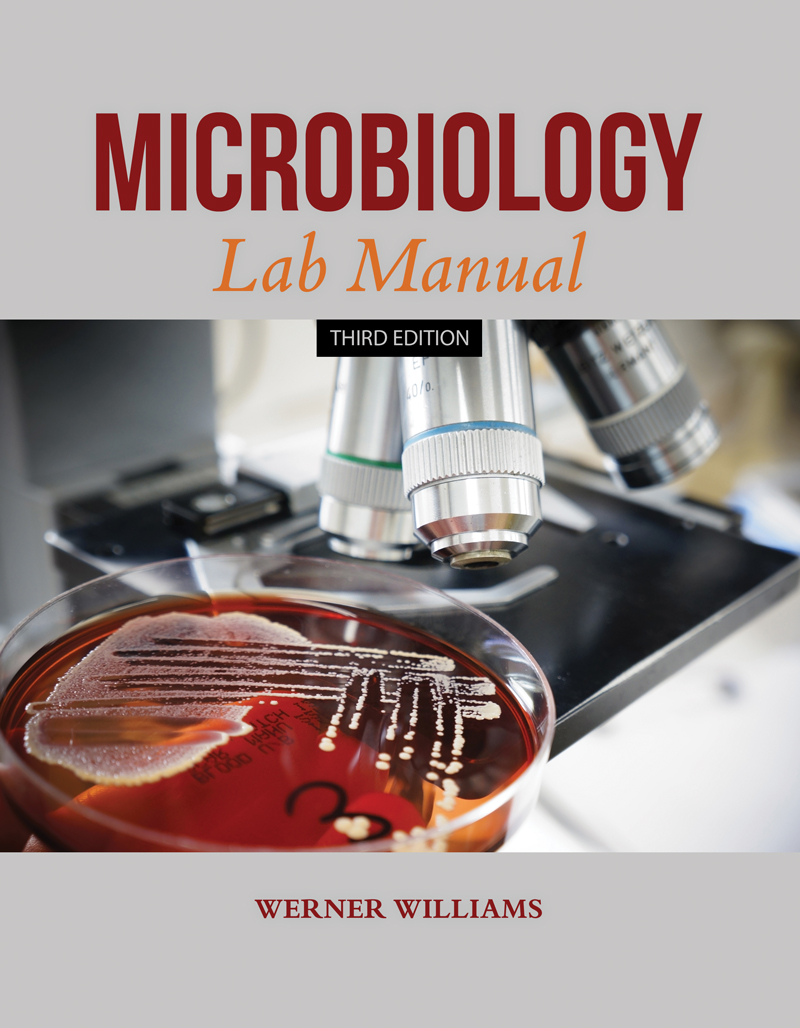
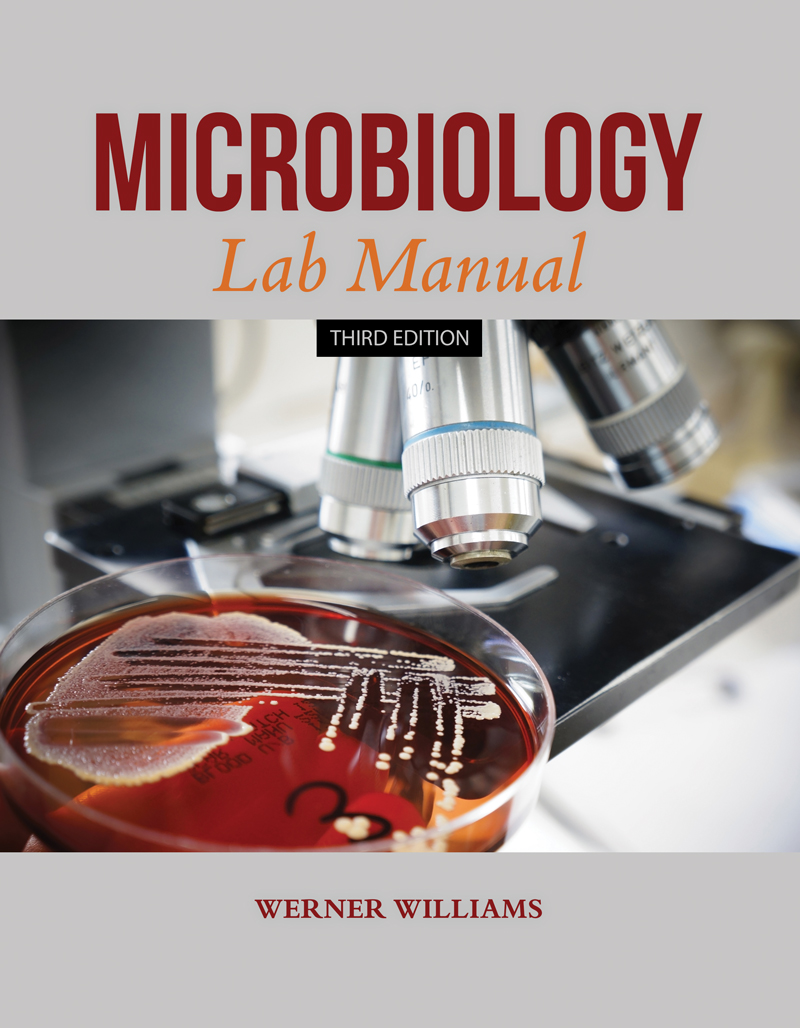
Microbiology Lab Manual
Edition: 3
Copyright: 2019
Pages: 112
Edition: 3
Copyright: 2019
Pages: 110
Edition: 1
Copyright: 2017
Pages: 104
Choose Your Format
$40.52 USD
Ebook
$28.94 USD
$36.38 USD
Microbiology Lab Manual provides students with a hands-on introduction to the techniques, tools, and experimental methods used in microbiology laboratories. Beginning with microscope operation and the study of microorganisms such as algae, protozoa, and fungi, the manual guides students through essential laboratory procedures, including aseptic technique, culture preparation, staining methods, and microbial isolation. These foundational exercises develop the technical skills necessary for observing, cultivating, and identifying microorganisms safely and accurately.
The manual also explores microbial physiology, identification, and clinical applications through experiments involving environmental factors that influence microbial growth, antibiotic susceptibility testing, bacterial enzyme detection, serological methods, and the identification of unknown bacterial samples. By combining laboratory practice with scientific observation and analysis, Microbiology Lab Manual helps students develop practical laboratory competencies while reinforcing key microbiological concepts used in healthcare, research, biotechnology, and environmental science.
Lab 1: The Use and Care of the Microscope
Lab 2: Algae and Protozoa
Lab 3: Fungi
Lab 4: Common Microbiological Techniques
Lab 5: Isolation of Pure Cultures/Streak Plate Method
Lab 6: Pouring Media
Lab 7: Acid- Fast and Endospore Staining
Lab 8: The Negative Stain
Lab 9: The Gram Stain
Lab 10: The Effects of Temperature and pH on Microbial Growth
Lab 11: The Effects of Disinfectants and Antiseptics on Microbial Growth
Lab 12: Antibiotic Sensitivity Testing
Lab 13: Detecting Bacterial Enzymes
Lab 14: Multi-test Systems to Identify Bacteria
Lab 15: Serology and Serotyping
Lab 16: Sampling the Environment and Skin
Lab 17: Identifying Bacterial Unknowns