Older Adults: Understanding & Facilitating Transitions, Chapters 5-7

Edition: 3

Copyright: 2019

Pages: 150

Choose Your Format

Ebook

$36.47 USD

ISBN 9781524988166

Details Electronic Delivery EBOOK 180 days

"Old age is no place for sissies!" exclaimed Bette Davis. This has always been true, but with the challenges of our current society, it has become even more poignant.

Transitions, in and of themselves, are confounding and challenging to navigate! While transitions can be difficult for anyone, for a number of reasons they often pose great problems for older adults within North America.

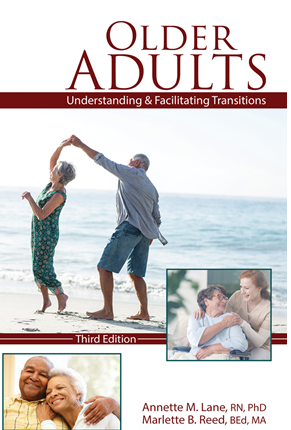
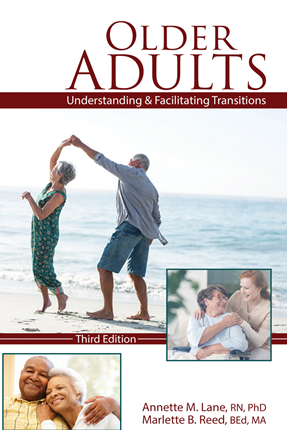
The NEW third edition of Older Adults: Understanding and Facilitating Transitions illustrates the complexities of these transitions faced by older adults and their family members and offers ideas for nurses, social workers, chaplains, and other health and human service professionals in working with vulnerable aging individuals.

Written by educators and authors with extensive experience working with older adults in many different sites, including community agencies, hospitals, and hospice, Older Adults: Understanding and Facilitating Transitions:

  • Addresses transitions such as coping with chronic illness, retirement, illnesses, relocations (e.g. moves to facilities), and the final transition, dying and death.
  • Incorporates within each chapter, websites, references and a case example that illustrates the challenges of transition, as well as how health and human service professionals can assess and intervene.
  • Discuses issues of meaning and purpose that may arise through these transitions, as well as the challenges experienced by families of older adults assisting their family members.
  • Features a chapter that analyzes offer future directions for research and professional practice that may benefit older adults (and their family members) as they experience the challenges of later life.
  • Integrates a mixture of the authors’ personal and professional experiences.

Chapter 5 Existential Transitions
Development of Personhood
Existential Transitions in Older Adults
Interventions to Address Existential Issues in Older Adults
Existential Work for Professionals

Chapter 6 Death: The Final Transition
Myths About Dying in Advancing Years
Issues Related to Dying for Older Adults
Issues for Family Members
Ethical Issues

Chapter 7 The Family
Definition of the Family
Developmental Tasks of an Aging Family
Challenges in Working With the Family
Principles in Assessment and Intervention With Families

Marlette B. Reed

Marlette Reed, BEd, MA is a community chaplain and sessional instructor at a number of post-secondary institutions in Calgary, Canada. She also speaks on the issues germane to older adults in a variety of settings – churches, nursing homes, and conferences locally, nationally and internationally. After enjoying the challenges as a junior high teacher for 18 years, she went on to become a palliative care chaplain providing end-of-life care for almost a decade. In addition she has been a pastor providing pastoral care for those facing life issues and providing guidance for those effected by transitions in later life.

Annette M. Lane

Annette Lane, RN, PhD is an Associate Professor in the Centre for Nursing and Health Studies at Athabasca University. Her areas of expertise include older adults with mental illness and their families. She speaks locally, nationally and internationally about issues pertaining to older adults.  Her life experiences have taken her from her years as a nurse in a Cambodian refugee camp to providing local crisis counseling and to supervising a mental health unit at a Calgary hospital.

"Old age is no place for sissies!" exclaimed Bette Davis. This has always been true, but with the challenges of our current society, it has become even more poignant.

Transitions, in and of themselves, are confounding and challenging to navigate! While transitions can be difficult for anyone, for a number of reasons they often pose great problems for older adults within North America.

The NEW third edition of Older Adults: Understanding and Facilitating Transitions illustrates the complexities of these transitions faced by older adults and their family members and offers ideas for nurses, social workers, chaplains, and other health and human service professionals in working with vulnerable aging individuals.

Written by educators and authors with extensive experience working with older adults in many different sites, including community agencies, hospitals, and hospice, Older Adults: Understanding and Facilitating Transitions:

  • Addresses transitions such as coping with chronic illness, retirement, illnesses, relocations (e.g. moves to facilities), and the final transition, dying and death.
  • Incorporates within each chapter, websites, references and a case example that illustrates the challenges of transition, as well as how health and human service professionals can assess and intervene.
  • Discuses issues of meaning and purpose that may arise through these transitions, as well as the challenges experienced by families of older adults assisting their family members.
  • Features a chapter that analyzes offer future directions for research and professional practice that may benefit older adults (and their family members) as they experience the challenges of later life.
  • Integrates a mixture of the authors’ personal and professional experiences.

Chapter 5 Existential Transitions
Development of Personhood
Existential Transitions in Older Adults
Interventions to Address Existential Issues in Older Adults
Existential Work for Professionals

Chapter 6 Death: The Final Transition
Myths About Dying in Advancing Years
Issues Related to Dying for Older Adults
Issues for Family Members
Ethical Issues

Chapter 7 The Family
Definition of the Family
Developmental Tasks of an Aging Family
Challenges in Working With the Family
Principles in Assessment and Intervention With Families

Marlette B. Reed

Marlette Reed, BEd, MA is a community chaplain and sessional instructor at a number of post-secondary institutions in Calgary, Canada. She also speaks on the issues germane to older adults in a variety of settings – churches, nursing homes, and conferences locally, nationally and internationally. After enjoying the challenges as a junior high teacher for 18 years, she went on to become a palliative care chaplain providing end-of-life care for almost a decade. In addition she has been a pastor providing pastoral care for those facing life issues and providing guidance for those effected by transitions in later life.

Annette M. Lane

Annette Lane, RN, PhD is an Associate Professor in the Centre for Nursing and Health Studies at Athabasca University. Her areas of expertise include older adults with mental illness and their families. She speaks locally, nationally and internationally about issues pertaining to older adults.  Her life experiences have taken her from her years as a nurse in a Cambodian refugee camp to providing local crisis counseling and to supervising a mental health unit at a Calgary hospital.