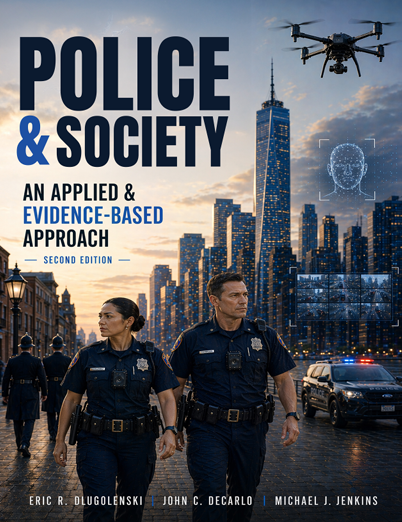
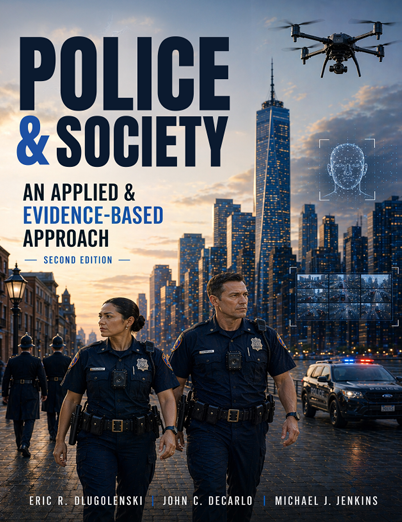
Police & Society: An Applied & Evidence-Based Approach

Edition: 2

Copyright: 2026

Pages: 276

Choose Your Format

Ebook

$82.00 USD

ISBN 9798319702418

Details Electronic Delivery EBOOK 180 days

The chapters in this textbook are intended to give the student a broad overview of what policing is. Although newspapers and other forms of media provide us with stories almost daily, on what the police are and what they do and their relationship with communities, news stories and popular accounts do not often discuss the statistical facts and deep underlying reasons surrounding subjects such as law-enforcement and policing. Why do communities need police? Have police helped reduce crime over the last 20 years?
How can we improve the profession of policing? These are all important questions. As we work our way through the chapters in this book, we will not only discuss the origins and evolution of police and their place in a civil society, but we will also learn to analyze and intelligently discuss what police are actually intended for and what they are called upon to do. If law enforcement is done correctly, it is a rewarding career that allows practitioners to work closely with people in a positive and meaningful way and make a difference in peoples’ lives. If done badly however, the police can extract a cost on communities and that is why we need to learn as much as we can about the subject. 

Introduction

1 Democratic Policing

Overview
Life, Liberty, and Property
Democratic Policing: What Is It?
Coercion as the Core Function of the Police
Liberty as the Core Organizing Principle of Policing: The Intelligent Use of Coercion
The Lack of Adequate Information about Police Coercion

2 The Conceptual Basis and Historical Development of the Police from the Ancient World to England in the 1800s

Why Study History?
The Origins of Policing
Police in Ancient Egypt
Police in Ancient Greece
Police in Ancient Rome
Vigiles
Cohortes Urbanae
Praetorian Guard
Policing in the Anglo-Saxon Period
Frankpledge
Constables, Watchmen, and Thief-Takers and Stipendiary Policing
Bow Street Runners
River Police (Thames Police)
The Metropolitan Police Act and Sir Robert Peal
Sir Robert Peel

3 Modern and Postmodern Policing in the United States

Why Did Policing in the United States Alter Course from Britain?
Early Police Departments in the United States
Boston
The New York Police Department
The New York Metropolitan Police
The Philadelphia Police Department
Summary
Policing Eras
The Postmodern Era of Policing

4 Criminal Law

Federalism and Policing
Due Process Versus Crime Control
Criminal Law
Substantive Law
Criminal Procedure
A Brief History
The Warren Court
Opposition
Police Procedure
Fourth Amendment Interpretations
Legal Standards For Seizing Persons
Consensual Encounters
Investigative Detentions
Frisks and Pat-Downs
Beyond Terry
Duration of A “Reasonable” Investigative Detention
Police Actions
Arrests
Warrant and Warrantless Arrests
Entry To Arrest
Search Warrants
Facial Recognition
Exceptions To Search Warrants
The Search-Incident-To-Arrest Exception
The Plain-View Exception
The Community Caretaker Exception
Consensual Searches
Exigent Circumstances
Hot Pursuit
Automobile Exception
Inventory Searches
Pretextual Stops
Interrogations and Confessions
Going Forward

5 Policing: Strategy, Tactics, and Function

Introduction
Strategy, Tactics, and Function
Strategy
Traditional Policing
The Scientific Revolution in Policing
Modern Policing
Community Policing
Community Policing Applied
Problem-Solving Policing
Problem-Solving Policing Applied
Broken Windows Policing
Broken Windows Policing Applied
Intelligence-Led Policing
Intelligence-Led Policing Applied
CompStat
CompStat in Action
Situational Crime Prevention
Situational Crime Prevention Applied
Focused Deterrence
Focused Deterrence in Action
Specialized Enforcement and Response
Crisis Intervention Teams

6 Local Agency Structure and Organization

Overview
Organizational Mission and Mission Statement
Bureaucracy and Organizational Structure
Community Policing and Organizational Change
Special Functions and Units
Multi-Jurisdictional Task Forces (MJTFs)
Police Paramilitary Units

7 How the Business of Policing Works—Operations, Management, and Administration

The Police Administration
The Progenitors of Police Administration
Three Catalysts Converge
Classical Organization Theory
Emergence of a New Paradigm
The Administrative Quandary
Navigating the Paramilitary Hierarchy
The Hierarchy
Generalists Versus Specialists
Generalists
Specialists
Police Management
Leadership in the Realm of Policing
Special Considerations

8 Entering “The Job”

“The Job”
The Police Personality
Self-Selection Or Socialization
Argument #1 People Self-Select Police Work
Argument #2 The Police Ethos Is The Product of Job Socialization
Pre-Entry Choice
Multiple-Hurdle Procedure
Admittance And Introduction
War Stories
Encounter
Day 1 At The Agency (Post-Academy Graduation)
The FTO Process
The Cop’s Code
Acceptance of Group Rules
Metamorphosis
Working Personality
The Public
Dirty Work
Nuance Wins The Day
Is Policing A Dangerous Occupation?
Risk Factors
Risk
Databases
Assault
Putting Things In Perspective
Accidents
What Is The Model Profile?
The Ideal Personality Characteristics
Warriors Versus Guardians

9 Use of Force

Introduction
Policing’s License for Coercion
How often Do Police Use Force?
Officer-Involved Shootings in an Armed Society
The Sanctity of Life
Force Options
Less Lethal Options
Lethal Force
Canine (K-9): A Category of its Own
What the Continuum Gets Right, and What it Gets Wrong
The Encounter: Force at the Street Level
Use of Force Through the Constitutional Lens
What Research Tells Us About Police Use of Force
Training
The Community Lens
Where the Field is Heade

10 Policing in the Future

Learning Objectives
Democratic Policing—The Demand for Transparency and Accountability
Intelligence-Led Policing—Incorporating ILP Throughout the Agency
Introduction
The Purpose of Policing
The “New” Business of Policing: Cost Reduction and Building Community Trust
Technology
Conclusion
Partnerships: New and Re-Envisioned
Technology and Community Policing: Changing the Co-Production of Crime Control
Technology: Improving Communication for First Responders
Technology and Investigations: Spotlight on Evidence Collection and Analysis
Technology: New Tools for Patrol Officers and Supervisors
The Promise and Challenge of Video Cameras
Social and Population Trends
Conclusion
Review Questions
Critical Thinking Questions
References

Eric Dlugolenski

Eric Dlugolenski, Ph.D. is an Assistant Professor of Criminology and Criminal Justice and Undergraduate Director at Central Connecticut State University. A retired police sergeant, he earned a B.A. in Political Science from the University of Connecticut, an M.S. in Criminal Justice Management, and a Ph.D. in Criminal Justice from the University of New Haven. His research focuses on policing, procedural justice, use of force, police leadership, emerging technologies, officer wellness, and criminal justice policy. Dr. Dlugolenski has co-authored two books on policing, published extensively in peer-reviewed journals, and serves in leadership roles with national criminal justice organizations while coordinating experiential learning opportunities for students.

John DeCarlo

John DeCarlo, Ph.D. is a Professor of Criminal Justice and Criminology, Coordinator of the M.S. in Criminal Justice program, and Director of the Center for Advanced Policing at the University of New Haven. A former Branford, Connecticut, police chief with 34 years of law enforcement experience, he earned his Ph.D. and M.Phil. from the City University of New York Graduate Center, an M.A. from John Jay College of Criminal Justice, and an M.S. from Tiffin University. His research focuses on community policing, police management, race and policing, police use of force, environmental criminology, and eyewitness identification. Dr. DeCarlo is the co-author of three books, has published extensively in peer-reviewed journals, and is a nationally recognized expert on policing and criminal justice policy.

Michael Jenkins

Michael Jenkins, Ph.D. is Professor and Chair of the Department of Criminal Justice, Cybersecurity, and Sociology at the University of Scranton. He earned a B.S. from the University of Scranton and both his M.A. and Ph.D. from Rutgers, The State University of New Jersey. He is the founding Executive Director of the University's Center for the Analysis and Prevention of Crime (CAPoC) and has served as Director of Academics for the development of an international Bachelor of Security Sciences program. A Fulbright Scholar with the London Metropolitan Police, Dr. Jenkins specializes in policing, police-community relations, police organization, and international policing.

The chapters in this textbook are intended to give the student a broad overview of what policing is. Although newspapers and other forms of media provide us with stories almost daily, on what the police are and what they do and their relationship with communities, news stories and popular accounts do not often discuss the statistical facts and deep underlying reasons surrounding subjects such as law-enforcement and policing. Why do communities need police? Have police helped reduce crime over the last 20 years?
How can we improve the profession of policing? These are all important questions. As we work our way through the chapters in this book, we will not only discuss the origins and evolution of police and their place in a civil society, but we will also learn to analyze and intelligently discuss what police are actually intended for and what they are called upon to do. If law enforcement is done correctly, it is a rewarding career that allows practitioners to work closely with people in a positive and meaningful way and make a difference in peoples’ lives. If done badly however, the police can extract a cost on communities and that is why we need to learn as much as we can about the subject. 

Introduction

1 Democratic Policing

Overview
Life, Liberty, and Property
Democratic Policing: What Is It?
Coercion as the Core Function of the Police
Liberty as the Core Organizing Principle of Policing: The Intelligent Use of Coercion
The Lack of Adequate Information about Police Coercion

2 The Conceptual Basis and Historical Development of the Police from the Ancient World to England in the 1800s

Why Study History?
The Origins of Policing
Police in Ancient Egypt
Police in Ancient Greece
Police in Ancient Rome
Vigiles
Cohortes Urbanae
Praetorian Guard
Policing in the Anglo-Saxon Period
Frankpledge
Constables, Watchmen, and Thief-Takers and Stipendiary Policing
Bow Street Runners
River Police (Thames Police)
The Metropolitan Police Act and Sir Robert Peal
Sir Robert Peel

3 Modern and Postmodern Policing in the United States

Why Did Policing in the United States Alter Course from Britain?
Early Police Departments in the United States
Boston
The New York Police Department
The New York Metropolitan Police
The Philadelphia Police Department
Summary
Policing Eras
The Postmodern Era of Policing

4 Criminal Law

Federalism and Policing
Due Process Versus Crime Control
Criminal Law
Substantive Law
Criminal Procedure
A Brief History
The Warren Court
Opposition
Police Procedure
Fourth Amendment Interpretations
Legal Standards For Seizing Persons
Consensual Encounters
Investigative Detentions
Frisks and Pat-Downs
Beyond Terry
Duration of A “Reasonable” Investigative Detention
Police Actions
Arrests
Warrant and Warrantless Arrests
Entry To Arrest
Search Warrants
Facial Recognition
Exceptions To Search Warrants
The Search-Incident-To-Arrest Exception
The Plain-View Exception
The Community Caretaker Exception
Consensual Searches
Exigent Circumstances
Hot Pursuit
Automobile Exception
Inventory Searches
Pretextual Stops
Interrogations and Confessions
Going Forward

5 Policing: Strategy, Tactics, and Function

Introduction
Strategy, Tactics, and Function
Strategy
Traditional Policing
The Scientific Revolution in Policing
Modern Policing
Community Policing
Community Policing Applied
Problem-Solving Policing
Problem-Solving Policing Applied
Broken Windows Policing
Broken Windows Policing Applied
Intelligence-Led Policing
Intelligence-Led Policing Applied
CompStat
CompStat in Action
Situational Crime Prevention
Situational Crime Prevention Applied
Focused Deterrence
Focused Deterrence in Action
Specialized Enforcement and Response
Crisis Intervention Teams

6 Local Agency Structure and Organization

Overview
Organizational Mission and Mission Statement
Bureaucracy and Organizational Structure
Community Policing and Organizational Change
Special Functions and Units
Multi-Jurisdictional Task Forces (MJTFs)
Police Paramilitary Units

7 How the Business of Policing Works—Operations, Management, and Administration

The Police Administration
The Progenitors of Police Administration
Three Catalysts Converge
Classical Organization Theory
Emergence of a New Paradigm
The Administrative Quandary
Navigating the Paramilitary Hierarchy
The Hierarchy
Generalists Versus Specialists
Generalists
Specialists
Police Management
Leadership in the Realm of Policing
Special Considerations

8 Entering “The Job”

“The Job”
The Police Personality
Self-Selection Or Socialization
Argument #1 People Self-Select Police Work
Argument #2 The Police Ethos Is The Product of Job Socialization
Pre-Entry Choice
Multiple-Hurdle Procedure
Admittance And Introduction
War Stories
Encounter
Day 1 At The Agency (Post-Academy Graduation)
The FTO Process
The Cop’s Code
Acceptance of Group Rules
Metamorphosis
Working Personality
The Public
Dirty Work
Nuance Wins The Day
Is Policing A Dangerous Occupation?
Risk Factors
Risk
Databases
Assault
Putting Things In Perspective
Accidents
What Is The Model Profile?
The Ideal Personality Characteristics
Warriors Versus Guardians

9 Use of Force

Introduction
Policing’s License for Coercion
How often Do Police Use Force?
Officer-Involved Shootings in an Armed Society
The Sanctity of Life
Force Options
Less Lethal Options
Lethal Force
Canine (K-9): A Category of its Own
What the Continuum Gets Right, and What it Gets Wrong
The Encounter: Force at the Street Level
Use of Force Through the Constitutional Lens
What Research Tells Us About Police Use of Force
Training
The Community Lens
Where the Field is Heade

10 Policing in the Future

Learning Objectives
Democratic Policing—The Demand for Transparency and Accountability
Intelligence-Led Policing—Incorporating ILP Throughout the Agency
Introduction
The Purpose of Policing
The “New” Business of Policing: Cost Reduction and Building Community Trust
Technology
Conclusion
Partnerships: New and Re-Envisioned
Technology and Community Policing: Changing the Co-Production of Crime Control
Technology: Improving Communication for First Responders
Technology and Investigations: Spotlight on Evidence Collection and Analysis
Technology: New Tools for Patrol Officers and Supervisors
The Promise and Challenge of Video Cameras
Social and Population Trends
Conclusion
Review Questions
Critical Thinking Questions
References

Eric Dlugolenski

Eric Dlugolenski, Ph.D. is an Assistant Professor of Criminology and Criminal Justice and Undergraduate Director at Central Connecticut State University. A retired police sergeant, he earned a B.A. in Political Science from the University of Connecticut, an M.S. in Criminal Justice Management, and a Ph.D. in Criminal Justice from the University of New Haven. His research focuses on policing, procedural justice, use of force, police leadership, emerging technologies, officer wellness, and criminal justice policy. Dr. Dlugolenski has co-authored two books on policing, published extensively in peer-reviewed journals, and serves in leadership roles with national criminal justice organizations while coordinating experiential learning opportunities for students.

John DeCarlo

John DeCarlo, Ph.D. is a Professor of Criminal Justice and Criminology, Coordinator of the M.S. in Criminal Justice program, and Director of the Center for Advanced Policing at the University of New Haven. A former Branford, Connecticut, police chief with 34 years of law enforcement experience, he earned his Ph.D. and M.Phil. from the City University of New York Graduate Center, an M.A. from John Jay College of Criminal Justice, and an M.S. from Tiffin University. His research focuses on community policing, police management, race and policing, police use of force, environmental criminology, and eyewitness identification. Dr. DeCarlo is the co-author of three books, has published extensively in peer-reviewed journals, and is a nationally recognized expert on policing and criminal justice policy.

Michael Jenkins

Michael Jenkins, Ph.D. is Professor and Chair of the Department of Criminal Justice, Cybersecurity, and Sociology at the University of Scranton. He earned a B.S. from the University of Scranton and both his M.A. and Ph.D. from Rutgers, The State University of New Jersey. He is the founding Executive Director of the University's Center for the Analysis and Prevention of Crime (CAPoC) and has served as Director of Academics for the development of an international Bachelor of Security Sciences program. A Fulbright Scholar with the London Metropolitan Police, Dr. Jenkins specializes in policing, police-community relations, police organization, and international policing.