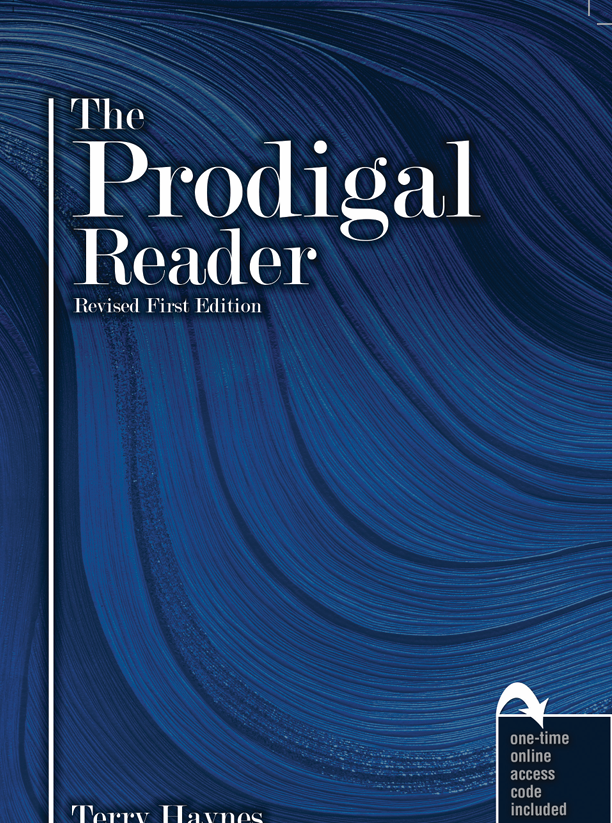
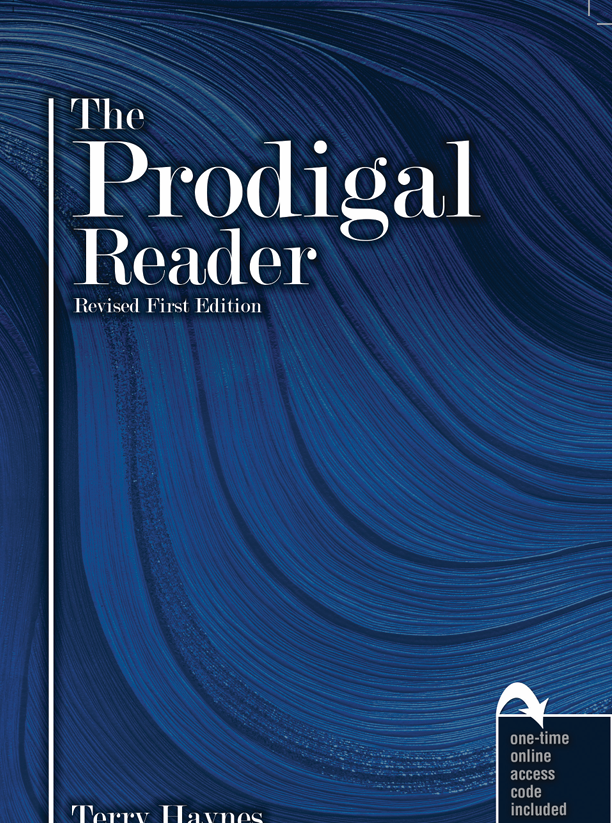
The Prodigal Reader
Edition: 1
Copyright: 2023
Edition: 1
Copyright: 2023
Pages: 340
Choose Your Format
Choose Your Platform | Help Me Choose


Print Package
$77.18 USD
Ebook Package
$38.59 USD
The Prodigal Reader, Second Edition, combines elements of standard rhetorical theory with critical thinking strategies, thought-provoking presentations and engaging readings designed to encourage rewarding classroom discussions and inspired writing. The essays, short stories, drama, and poetry which make up this anthology have been drawn from cultures across the globe and include a mix of current and “canonical” authors. Designed to celebrate and support the vital importance of reading, writing, critical thinking, and the humanities, the second edition of the book contains new selections, a detailed glossary of literary terms, hundreds of creative and stimulating discussion / writing questions, and coded access to 30 online content quizzes.
Terry Haynes, the author of The Prodigal Reader, is a tenured professor of English at SUNY Westchester Community College.
Acknowledgments
To The Reader
Murder and the Art of Rhetoric: Reading Between the Lines
Non-Fiction Prose
1.Niccolò Machiavelli (1469–1527)
2.Sir Francis Bacon (1561–1626)
3.Elizabeth Keckley (1818–1907)
4.Nicole Carroll (1967–)
5.Andrew Sullivan (1963–)
6.David Brooks (1961–)
Fiction
1.Aesop (Sixth Century BCE?)
2.Gesta Romanorum (circa 1200 CE)
3.Jacques de Vitry (1160–1240 CE)
4.Edgar Allan Poe (1809–1849)
5.Kate Chopin (1851–1904)
6.James Joyce (1882–1941)
7.Sherwood Anderson (1876–1941)
8.Frigyes Karinthy (1887–1938)
9.Kurt Vonnegut (1922–2007)
10.Mia Couto (1955–)
Poetry
1.Anakreon (c. 582–485 BCE)
2.Gaius Valerius Catullus (c. 84–54 BCE)
3.Marcus Valerius Martialis (c. 38–103 CE)
4.William Shakespeare (1564–1616)
5.Emily Dickinson (1830–1886)
6. Charles Baudelaire (1821–1867)
7. Walt Whitman (1819–1892)
8. Benjamin Banneker (1731–1806)
9. Paul Laurence Dunbar (1872–1906)
10. Robert Frost (1874–1963)
11. Frank O’Hara (1926–1966)
12. Philip Larkin (1922–1985)
13. Rainer Maria Rilke (1875–1926)
14. Christine Timm
15. Tom Wayman (1945-)
Drama
1.Karel Čapek (1890–1938)
2.August Strindberg (1849–1912)
Appendix
A Glossary of Literary Terms
B “But . . . Can’t / Doesn’t / Shouldn’t It Mean Whatever I Want It to Mean?”
Index
Terry Haynes is a professor in the English department at SUNY Westchester Community College.