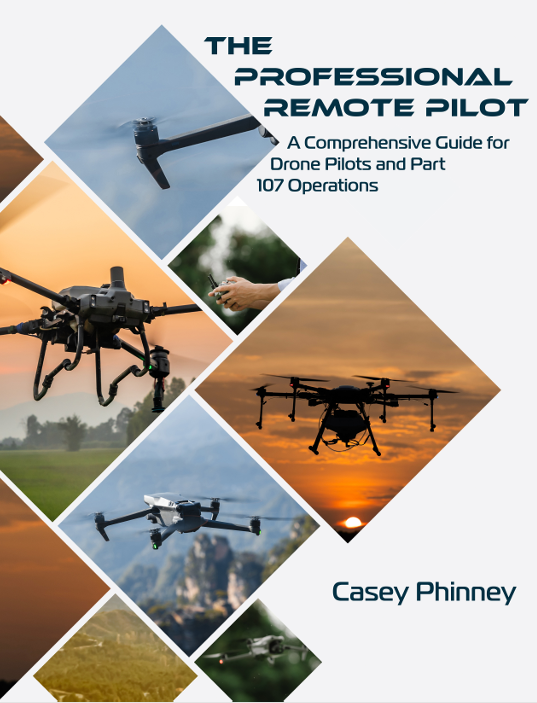
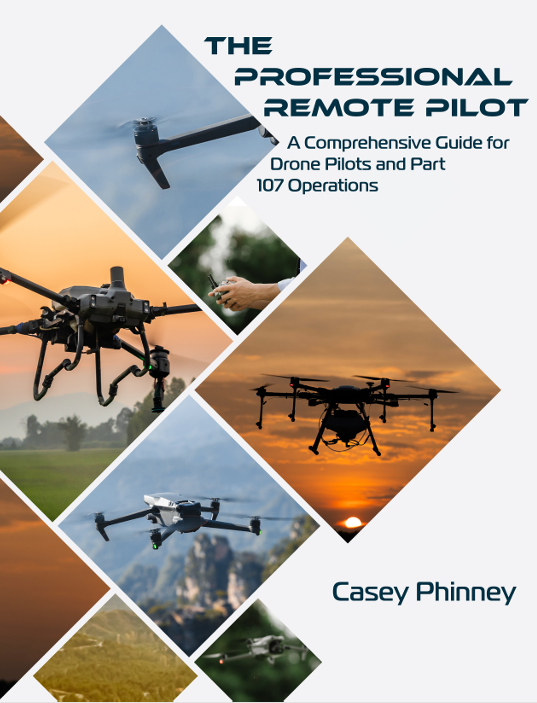
The Professional Remote Pilot: A Comprehensive Guide for Drone Pilots and Part 107 Operations
Edition: 1
Copyright: 2026
Pages: 164
Choose Your Format
Ebook
$95.00 USD
Throughout this text, you will explore the core subject areas tested on the Part 107 Aeronautical Knowledge Exam. These include regulations specific to small UAS operations, airspace classification and operating requirements, aviation weather sources and interpretation, loading and performance considerations, emergency procedures, radio communication requirements, and aeronautical decision-making. Each chap ter builds upon the last, reinforcing both conceptual understanding and practical application. Real-world examples and scenario-based discussions are included to help you develop the mindset of a remote pilot rather than simply memorize information.
Safety remains the central theme of all UAS operations. While drones may be small, their impact on the aviation system is significant. The shared nature of the NAS demands that remote pilots maintain situational awareness, respect regulatory boundaries, and continuously assess risk. This involves not only understanding the rules but also applying sound judgment in dynamic and sometimes unpredictable environments. Human factors—such as fatigue, complacency, and stress—play a critical role in decision-making and are emphasized throughout this text as essential components of safe flight operations.
In addition to regulatory compliance, this book encourages a mindset of professionalism and continuous learning. The UAS industry is evolving rapidly, with advances in automation, detect-and-avoid systems, and expanded operational permissions such as operations over people and beyond visual line of sight (BVLOS). As a result, remote pilots must remain adaptable and informed. By mastering the foundational knowledge presented here, you will be better prepared not only to pass the Part 107 exam, but also to operate confidently and responsibly in a variety of professional settings
Introduction
Chapter 1 Introduction to the World of Unmanned Aerial Systems
Chapter 2 UAS Components, Anatomy, and Classification
Chapter 3 Atmospheric Principles
Chapter 4 UAS Aerodynamics
Chapter 5 Weather Theory for UAS
Chapter 6 UAS Performance
Chapter 7 Human Factors
Chapter 8 Federal Aviation Regulations (Part 107)
Chapter 9 Airspace
Chapter 10 Aeronautical Charts, Publications, and Online Resources
Chapter 11 The Airport
Chapter 12 Radio Communications for UAS Pilots
Chapter 13 Weather Services for Unmanned Aerial Systems
Chapter 14 Flight Preparation and Operational Safety
Casey Phinney is an Assistant Professor of Aviation and Aerospace Sciences specializing in emerging aerospace technologies and their integration into the national airspace system. His academic and professional interests encompass aviation and aerospace operations, technology adoption, and workforce preparedness. His current research focuses on Uncrewed Aircraft Systems (UAS) and Advanced Air Mobility (AAM), exploring the opportunities and challenges associated with next-generation aviation technologies. Casey Phinney is committed to bridging academia and industry to support the safe and effective evolution of aerospace transportation.