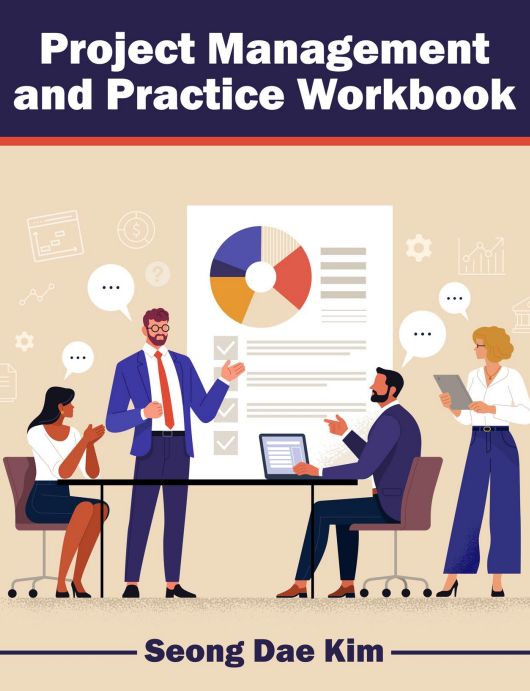
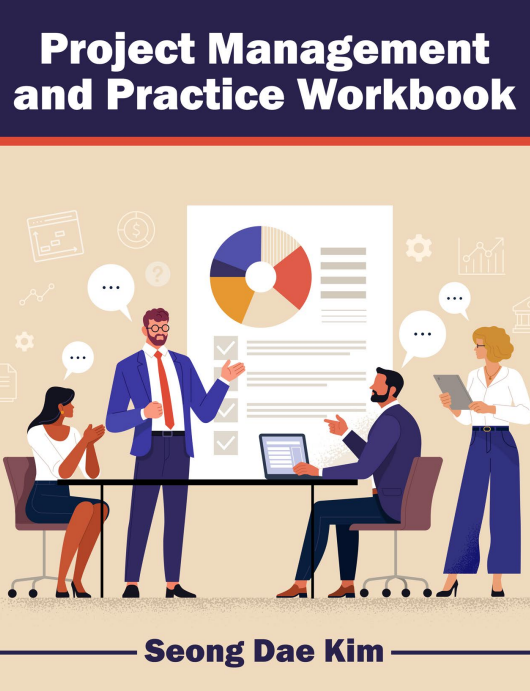
Project Management and Practice

Author(s): Seong Dae Kim

Edition: 1

Copyright: 2025

Pages: 86

Choose Your Format

Ebook

$75.00 USD

ISBN 9798385198931

Details Electronic Delivery EBOOK 180 days

Ebook


This product is currently not available.

Project Management and Practice provides a practical introduction to the principles, tools, and techniques needed to successfully manage projects. The book covers project initiation and selection, financial analysis, stakeholder management, project planning, risk assessment, and resource-constrained scheduling. Additional chapters explore conflict management, creative problem solving, TRIZ, design thinking, and generative AI, as well as practical project management tools such as SWOT analysis, the Kano Model, and Fishbone diagrams. Through step-by-step examples, templates, and applied assignments, readers develop hands-on skills for planning, organizing, evaluating, and managing projects in real-world settings.

Chapter 1. Project Initiation

  • Payback analysis
  • Payback Analysis example 1
  • Payback Analysis example 2
  • Payback Analysis example 3
  • NPV Analysis
  • NPV Analysis example
  • Multi-Weighted Scoring Model
  • Multi-Weighted Scoring Model example
  • Project Charter template
  • Stakeholder Power-Interest Grid
  • Stakeholder mapping on Power-Interest Grid template
  • Possible Assignment 1: Project Selection
  • Possible Assignment 2: Project Selection
  • Possible Assignment 3: Project Charter
  • Possible Assignment 4: Stakeholder Analysis


Chapter 2. Project Planning

  • WBS
  • WBS Dictionary
  • Responsibility Matrix
  • Outline format WBS template
  • WBS Dictionary template
  • RACI Chart template
  • Possible Assignment 1: WBS
  • Possible Assignment 2: Responsibility Matrix


Chapter 3. Project Risk Management

  • Risk identification
  • Risk assessment or analysis
  • Risk Matrix
  • Risk Response Strategies
  • Risk Matrix template
  • Risk Response Plan template
  • Risk Register template
  • Possible Assignment 1: Risk Response Plan
  • Possible Assignment 2: Risk Register


Chapter 4. Project Scheduling

  • Project scheduling with minimal information
  • Project scheduling with resource allocation information
  • Creating a Gantt chart using ProjectLibre
  • Changing project start date
  • Gantt chart with summary task
  • Gantt chart with Start and End milestones
  • Gantt chart with one resource
  • Gantt chart with two resources
  • Gantt chart with three design engineers (DE) available
  • Gantt chart with three design engineers (DE) and two software engineers (SE) available
  • Possible Assignment 1: Resource-constrained Schedule
  • Possible Assignment 2: Crashing
  • Possible Assignment 3: Fast Tracking


Chapter 5. Conflict Management

  • Conflict
  • Conflict Resolution Strategies
  • Possible Assignment 1: Conflict Resolution


Chapter 6. Creative Problem Solving

  • Creativity
  • Blocks to Creativity
  • TRIZ
  • Technical Contradiction
  • Physical Contradiction
  • Administrative Contradiction (Effects Database)
  • Design Thinking
  • GenAI & Creative Problem Solving
  • Possible Assignment 1: TRIZ
  • Possible Assignment 2: Design Thinking


Chapter 7. PM Methods and Tools

  • SWOT Analysis
  • SWOT Analysis template
  • Kano Model Analysis
  • Kano Model Analysis template
  • Fishbone Diagram
  • Fishbone Diagram template
  • ProjectLibre
  • Possible Assignment 1: SWOT Analysis
  • Possible Assignment 2: Kano Model Analysis
  • Possible Assignment 3: Fishbone Diagram
Seong Dae Kim

Seong Dae Kim is Professor in Engineering Management at Engineering Management & Technology Department, the University of Tennessee at Chattanooga (UTC). He earned Ph.D. in Industrial Engineering at Texas A&M University in 2009. His research areas include computer simulation modeling for process improvement, decision & risk analysis for energy technologies, emergency management modeling when facing natural disasters, sports analytics for baseball teams and managers, technology forecasting using TRIZ method, forecast verification for weather information, creative problem-solving methods for system improvement, product design for innovation, digital twin modeling for collaborative robots, and creativity & AI.

Project Management and Practice provides a practical introduction to the principles, tools, and techniques needed to successfully manage projects. The book covers project initiation and selection, financial analysis, stakeholder management, project planning, risk assessment, and resource-constrained scheduling. Additional chapters explore conflict management, creative problem solving, TRIZ, design thinking, and generative AI, as well as practical project management tools such as SWOT analysis, the Kano Model, and Fishbone diagrams. Through step-by-step examples, templates, and applied assignments, readers develop hands-on skills for planning, organizing, evaluating, and managing projects in real-world settings.

Chapter 1. Project Initiation

  • Payback analysis
  • Payback Analysis example 1
  • Payback Analysis example 2
  • Payback Analysis example 3
  • NPV Analysis
  • NPV Analysis example
  • Multi-Weighted Scoring Model
  • Multi-Weighted Scoring Model example
  • Project Charter template
  • Stakeholder Power-Interest Grid
  • Stakeholder mapping on Power-Interest Grid template
  • Possible Assignment 1: Project Selection
  • Possible Assignment 2: Project Selection
  • Possible Assignment 3: Project Charter
  • Possible Assignment 4: Stakeholder Analysis


Chapter 2. Project Planning

  • WBS
  • WBS Dictionary
  • Responsibility Matrix
  • Outline format WBS template
  • WBS Dictionary template
  • RACI Chart template
  • Possible Assignment 1: WBS
  • Possible Assignment 2: Responsibility Matrix


Chapter 3. Project Risk Management

  • Risk identification
  • Risk assessment or analysis
  • Risk Matrix
  • Risk Response Strategies
  • Risk Matrix template
  • Risk Response Plan template
  • Risk Register template
  • Possible Assignment 1: Risk Response Plan
  • Possible Assignment 2: Risk Register


Chapter 4. Project Scheduling

  • Project scheduling with minimal information
  • Project scheduling with resource allocation information
  • Creating a Gantt chart using ProjectLibre
  • Changing project start date
  • Gantt chart with summary task
  • Gantt chart with Start and End milestones
  • Gantt chart with one resource
  • Gantt chart with two resources
  • Gantt chart with three design engineers (DE) available
  • Gantt chart with three design engineers (DE) and two software engineers (SE) available
  • Possible Assignment 1: Resource-constrained Schedule
  • Possible Assignment 2: Crashing
  • Possible Assignment 3: Fast Tracking


Chapter 5. Conflict Management

  • Conflict
  • Conflict Resolution Strategies
  • Possible Assignment 1: Conflict Resolution


Chapter 6. Creative Problem Solving

  • Creativity
  • Blocks to Creativity
  • TRIZ
  • Technical Contradiction
  • Physical Contradiction
  • Administrative Contradiction (Effects Database)
  • Design Thinking
  • GenAI & Creative Problem Solving
  • Possible Assignment 1: TRIZ
  • Possible Assignment 2: Design Thinking


Chapter 7. PM Methods and Tools

  • SWOT Analysis
  • SWOT Analysis template
  • Kano Model Analysis
  • Kano Model Analysis template
  • Fishbone Diagram
  • Fishbone Diagram template
  • ProjectLibre
  • Possible Assignment 1: SWOT Analysis
  • Possible Assignment 2: Kano Model Analysis
  • Possible Assignment 3: Fishbone Diagram

Seong Dae Kim

Seong Dae Kim is Professor in Engineering Management at Engineering Management & Technology Department, the University of Tennessee at Chattanooga (UTC). He earned Ph.D. in Industrial Engineering at Texas A&M University in 2009. His research areas include computer simulation modeling for process improvement, decision & risk analysis for energy technologies, emergency management modeling when facing natural disasters, sports analytics for baseball teams and managers, technology forecasting using TRIZ method, forecast verification for weather information, creative problem-solving methods for system improvement, product design for innovation, digital twin modeling for collaborative robots, and creativity & AI.