Race and Ethnicity: Difference and Decolonization, Preliminary Edition
Edition: 0
Copyright: 2020
Pages: 114
Choose Your Format
Choose Your Platform | Help Me Choose


Ebook
$97.24 USD
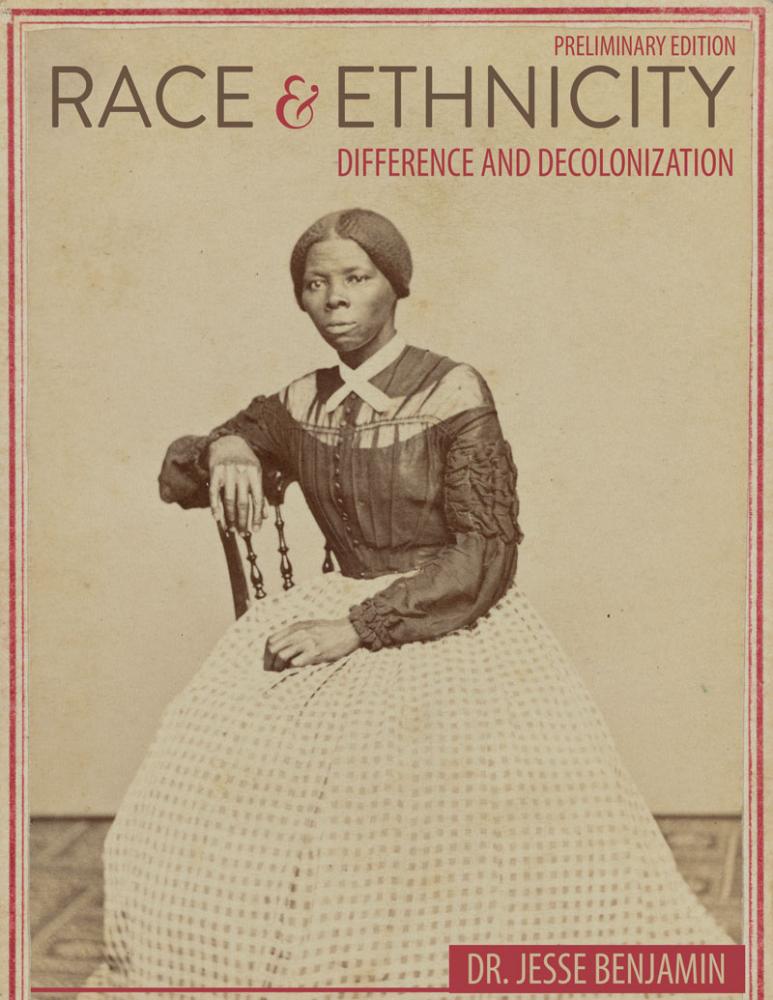
Race and Ethnicity: Difference and Decolonization, Preliminary Edition is an interdisciplinary reader that examines the historical, political, and social construction of race and ethnicity from a decolonial perspective. Bringing together influential historical documents and foundational scholarly works, the text explores how colonialism, capitalism, and Western systems of knowledge have shaped ideas of race, identity, and human difference. Rather than treating race as a biological reality, the reader presents it as a social, historical, and political construct that has been used to justify systems of inequality and power.
The collection is organized into thematic sections that trace the evolution of racial thought, freedom struggles, and critical theories of race and identity. Readings from influential thinkers such as W. E. B. Du Bois, Sylvia Wynter, Audre Lorde, Bartolomé de las Casas, Howard Zinn, and Fannie Lou Hamer encourage readers to critically examine colonialism, slavery, civil rights, intersectionality, and decolonization. By combining historical narratives with contemporary theoretical perspectives, the reader fosters critical thinking about race, ethnicity, power, and social justice while providing a foundation for understanding ongoing debates surrounding identity, inequality, and human liberation.
Introduction: How to Use This Reader
History I: Race in the Capitalist World System: Origins, Self/Other Dynamics and Western Epistemology
Benjamin of Tudela, “African and European Itineraries,” in: The Itinerary of Benjamin of Tudela (1165 – 1173)
Jan Carew, “The End of the Moorish Enlightenment and the Beginning of the Columbian Era,”
Bartolome de las Casas, “Destruction of the Indies”
Sylvia Wynter, “Sambos and Minstrels”
Carl von Linne, “The God-Given Order of Nature”
History IV: Race in the United States: Freedom Struggles From Slavery to ‘Jim Crow,’ and Civil Rights
Howard Zinn, “Drawing the Color Line”
W. E. B. Du Bois, “Of The Dawn of Freedom,” Chapter II, in: The Souls Of Black Folk,
Ashraf Rushdy, “Exquisite Corpse”
Fannie Lou Hamer, in: My Soul Was Rested: Movement Days in the Deep South Remembered
W. E. B. Du Bois, “A Litany For Atlanta”
Theory I: 1960s Ruptures of Epistemology, Identity, Categories: From Anticolonialism and Intersectional Feminism to Decolonial Theory
W. E. B. Du Bois, “The Souls of White Folk”
Audre Lorde, “Age, Race, Class and Sex: Women Redefining Difference”
Theory II: A Theory of Epistemology, Race and Class in the World System
Sylvia Wynter, “Black Education, Toward the Human, After “Man”: In the Manner of a Manifesto”
Sylvia Wynter, “Race and Our Biocentric Belief System: An Interview with Sylvia Wynter”
Jesse Benjamin, PhD, is a Professor of Sociology and Criminal Justice at Kennesaw State University (KSU), as well as a Professor of Sociology, Black Studies, and the School of Conflict Management, Peacebuilding, and Development. He is also affiliated with the Department of Interdisciplinary Studies and has served as Coordinator of African and African Diaspora Studies.
Benjamin is an interdisciplinary world-systems sociologist and anthropologist whose research spans social theory, racial theory, epistemology, coloniality and decolonial studies, development theories, and Pan-African theory and culture. His scholarly work includes extensive fieldwork on forced Bedouin resettlement in Israel and Egypt, identity and historiography on the Swahili Coast of Kenya, and anti-racist theory and practice in North America.
He has been recognized for his leadership in higher education administration, community engagement, and diversity consulting. Benjamin is a Freirean educator who emphasizes critical pedagogy and transformative learning. He has served on the Walter Rodney Foundation Board and as coordinator of the Annual Walter Rodney Public Speakers Series in Atlanta. He was also the first Research Scholar appointed to the Radow Institute for Social Equity at Kennesaw State University.