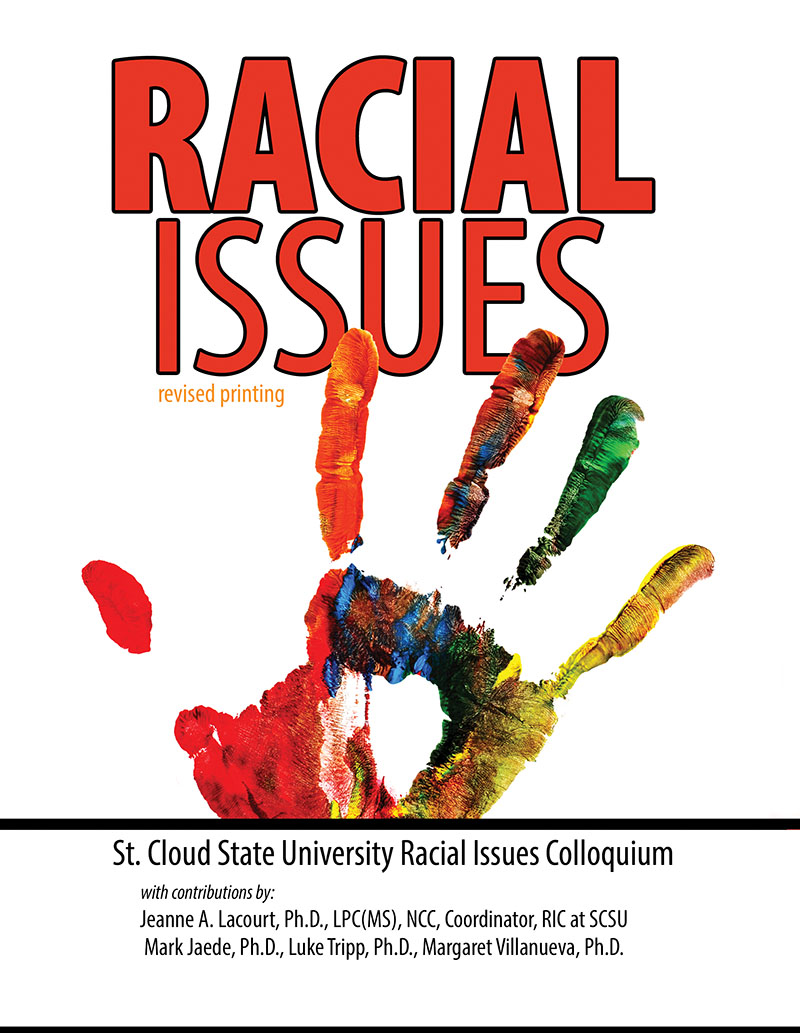
Racial Issues

Edition: 1

Copyright: 2015

Pages: 116

Choose Your Format

Ebook

$42.55 USD

ISBN 9781465292605

Details Electronic Delivery EBOOK 180 days

This text examines the social construction of race, ethnicity, and racialization through a collection of influential scholarly essays. It explores how racial categories are created, interpreted, and reinforced across historical and cultural contexts, emphasizing the ways identity is shaped through social processes and power relations. The text also engages foundational theories of racial formation and ethnic identity, providing tools for understanding how race operates in both personal experience and broader social systems. The collection further analyzes how racism is reproduced through institutions, ideology, and cultural narratives, highlighting the persistence of racial inequality in contemporary society. It also addresses the dynamics of whiteness, privilege, and allyship, considering how systems of advantage are maintained and how they can be critically examined and challenged. 

Part I: What Are Race, Ethnicity, and Racialization?

Chapter 1: Race as a Worldview: A Theoretical Perspective — Audrey Smedley, Ph.D. and Brian Smedley, Ph.D.
Chapter 2: Replenishing Mexican Ethnicity — Thomas R. Jimenez
Chapter 3: Racial Formation in the United States: From the 1960s to the 1980s — Michael Omi and Howard Winant
Chapter 4: Why Are All the Black Kids Sitting Together in the Cafeteria?: And Other Conversations About Race — Beverly Daniel Tatum, Ph.D.

Part II: Thinking Critically about Racism

Chapter 5: The Strange Enigma of Race in Contemporary America — Eduardo Bonilla-Silva
Chapter 6: Blacks in America: American Mythology and Miseducation — Luke Tripp, Ph.D.
Chapter 7: Racial Ideological Warfare: IQ as a Weapon — Luke Tripp, Ph.D.

Part III: White Privilege, White Allies, White Choices

Chapter 8: A Long History of Racial Preferences—For Whites — Larry Adelman
Chapter 9: The Possessive Investment in Whiteness — George Lipsitz
Chapter 10: The Perils of Color Blindness — Dottie Blais
Chapter 11: How White People Can Serve as Allies to People of Color in the Struggle to End Racism: Paul Kivel


Margaret Villanueva
Luke Tripp

Dr. Luke Tripp is Professor in the Department of Ethnic, Gender, & Women’s Studies at St. Cloud State University. His history of activism for social justice began in 1960. He has served in leadership roles in the Black liberation movement, including the Student Nonviolent Coordinating Committee, the Black Panther Party, the League of Revolutionary Black Workers, and the Anti-Apartheid struggle. He also has a long history in the global anti-imperialist movement and movements for human rights and social justice.

Mark G. Jaede
Jeanne Lacourt

Jeanne A. Lacourt is a Professor of American Indian Studies at St. Cloud State University in Minnesota, a faculty member of the Minnesota Seminar in Jungian Studies, and a Jungian Analyst in private practice. She has authored a book on traditional Indian Education, edited a book on racial issues in the United States, and her articles in Spring Journal focus on the intersections of Indigenous and Jungian Studies. She is most intrigued with the theme of human-animal transformation in Indigenous origin stories. Her home community is with the Menominee Indian Tribe of Wisconsin.