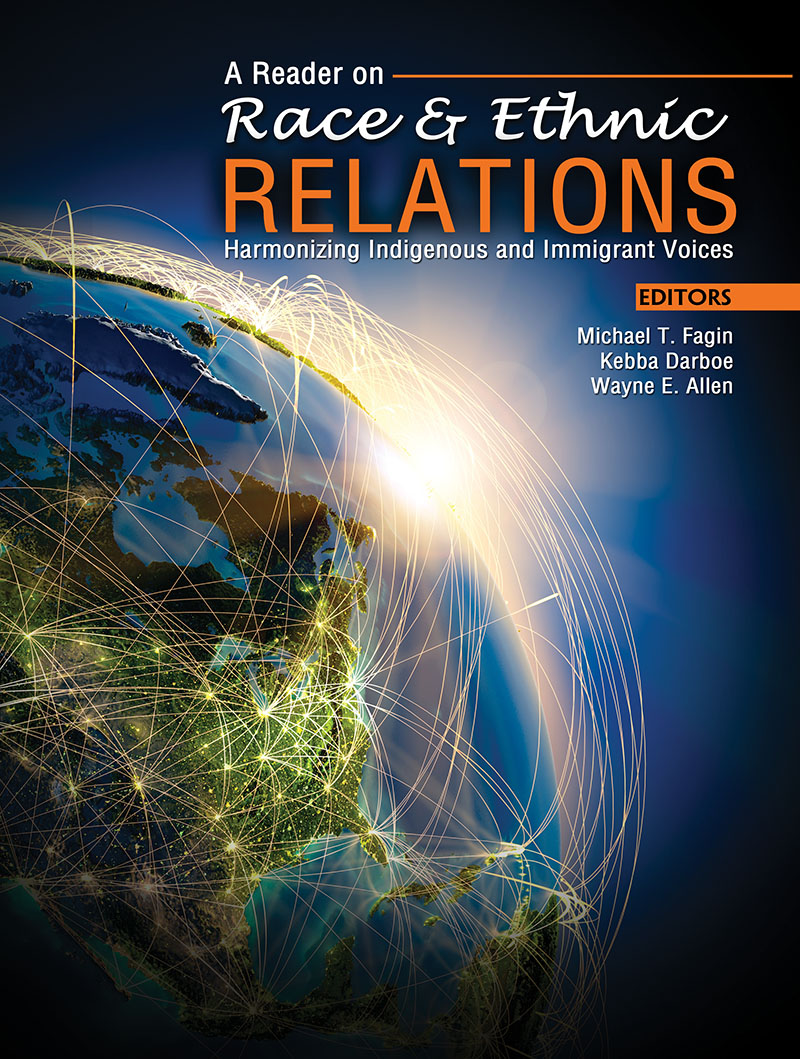
A Reader on Race and Ethnic Relations: Harmonizing Indigenous and Immigrant Voices
Edition: 1
Copyright: 2012
Pages: 210
Edition: 1
Copyright: 2012
Pages: 208
Choose Your Format
$165.66 USD
Ebook
$78.89 USD
eBook Version
You will receive access to this electronic text via email after using the shopping cart above to complete your purchase.
A Reader on Race & Ethnic Relations: Harmonizing Indigenous and Immigrant Voices is a unique academic undertaking in that it is not the standard academic reader that relies solely on so-called academic “experts.” And while it does include contributors with expertise in their fields, it is also an attempt to include the voices of a diverse population of scholars— professors, junior faculty, and students—who all have a stake in the project of studying the plethora of issues surrounding the topics of race and ethnicity in the larger world.
The articles in this work are intended to challenge and stimulate the reader to ask questions, both of themselves and of each other, but also of our society, our nation, and our world.
A Reader on Race & Ethnic Relations: Harmonizing Indigenous and Immigrant Voices is a unique academic undertaking in that it is not the standard academic reader that relies solely on so-called academic “experts.” And while it does include contributors with expertise in their fields, it is also an attempt to include the voices of a diverse population of scholars— professors, junior faculty, and students—who all have a stake in the project of studying the plethora of issues surrounding the topics of race and ethnicity in the larger world.
The articles in this work are intended to challenge and stimulate the reader to ask questions, both of themselves and of each other, but also of our society, our nation, and our world.
SECTION ONE: RACE/ETHNIC RELATIONS
Perspectives on Institutional Discrimination, Bigotry, and Ethnocentrism
By Kebba Darboe and Avra Johnson
Workplace Challenges of African American Managers and the Need for Effective Diversity Management
By Sandra King
Multiple Perspectives on the Nature of Black and Latino/a Intergroup Relations
By Raj Sethuraju
The Transformation of Hispanic Identity in America: Ethnicity and Race
By Raj Sethuraju, Sherrise Truesdale, and Martel Pipkins
Opportunities and Challenges: Managing College Access Programs for Underrepresented Students
By Michael T. Fagin, Tonya Fagin, and Dalton Crayton
SECTION TWO: CORRECTIONAL COUNSELING
Intellectual Power, Social Injustice, and Negotiating Tenure for Criminal Justice Faculty
By Sherrise Truesdale-Moore
Counseling Racial Minorities in the Correctional System
By Sherrise Truesdale-Moore
Counseling the Minority Male Deviant
By James Burnett
How can Leisure be Used to Integrate Young, Minority Offenders into Society?
By D. J. Williams
SECTION THREE: MIGRATION THEORIES
Theoretical Perspectives on Migration
By Kebba Darboe and Agnes A. Odinga
Somali Immigration to the USA
By Abdulkadir Alasow
A South Asian Feminist Perspective
By Mridusha Shrestha Allen
Jean-Marie Le Pen and the National Front: The Rising Tide of Anti-immigration in France
By Miho Chisaki
Korea’s Struggle to Decide Whether to Be a Monoethnic or Multiethnic Nation: The Reality of Multicultural Children in School
By Nayoung Heo
A Review of Citizenship Theories
By Kebba Darboe
SECTION FOUR: INDIGENOUS STRUGGLES
Racial and Cultural Genocide in America
By Jamie Erickson
A Lakota Oral Teaching on Learning about Self and Other
By Sebastian “Bronco” C. LeBeau II
The Métis: The Ethnogenesis of a People through Racial, Ethnic, and Cultural Mixing in America
By Wayne E. Allen
Reclaiming the Indigenous: Origins, Development, and Future of the Taino “Revival” Movement among Caribbean Latinos
By Francisco J. González
The Emergence of an Independent East Timor: The Story of Permitting that “Ole World Wall Map” to Be Fluid for the Sake of Ethnic Survival and Justice
By Jose Javier Lopez
The Real Root Causes of Somali Piracy
By Maria Qanyare, Adam Svendsen, Abdullahi Ali, Ahmed Shiiraar, Aish Ali, Ibrahim Alsgoor, Abdirahman Ibrahim, Olufunsho Oguntoyinbo, and Ahmed Barkhadle
SECTION FIVE: APPLYING ETHNIC STUDIES IN NEW WAYS: COUNTERCULTURE IDENTITY AND CULTURAL EXCHANGE
What Punk Has to Offer All of Us: An Auto-ethnographic Journey from the Circle Pit to the Classroom
By Thomas R. Heffernan
Video Gamers and Gaming: Virtual Counterculture that Cuts across All Ethnic and Racial Differences
By Joe Riska
Applying Ethnic Studies while Teaching and Traveling Abroad: A Memoir
By Charles Elton
SECTION ONE: RACE/ETHNIC RELATIONS
Perspectives on Institutional Discrimination, Bigotry, and Ethnocentrism
By Kebba Darboe and Avra Johnson
Workplace Challenges of African American Managers and the Need for Effective Diversity Management
By Sandra King
Multiple Perspectives on the Nature of Black and Latino/a Intergroup Relations
By Raj Sethuraju
The Transformation of Hispanic Identity in America: Ethnicity and Race
By Raj Sethuraju, Sherrise Truesdale, and Martel Pipkins
Opportunities and Challenges: Managing College Access Programs for Underrepresented Students
By Michael T. Fagin, Tonya Fagin, and Dalton Crayton
SECTION TWO: CORRECTIONAL COUNSELING
Intellectual Power, Social Injustice, and Negotiating Tenure for Criminal Justice Faculty
By Sherrise Truesdale-Moore
Counseling Racial Minorities in the Correctional System
By Sherrise Truesdale-Moore
Counseling the Minority Male Deviant
By James Burnett
How can Leisure be Used to Integrate Young, Minority Offenders into Society?
By D. J. Williams
SECTION THREE: MIGRATION THEORIES
Theoretical Perspectives on Migration
By Kebba Darboe and Agnes A. Odinga
Somali Immigration to the USA
By Abdulkadir Alasow
A South Asian Feminist Perspective
By Mridusha Shrestha Allen
Jean-Marie Le Pen and the National Front: The Rising Tide of Anti-immigration in France
By Miho Chisaki
Korea’s Struggle to Decide Whether to Be a Monoethnic or Multiethnic Nation: The Reality of Multicultural Children in School
By Nayoung Heo
A Review of Citizenship Theories
By Kebba Darboe
SECTION FOUR: INDIGENOUS STRUGGLES
Racial and Cultural Genocide in America
By Jamie Erickson
A Lakota Oral Teaching on Learning about Self and Other
By Sebastian “Bronco” C. LeBeau II
The Métis: The Ethnogenesis of a People through Racial, Ethnic, and Cultural Mixing in America
By Wayne E. Allen
Reclaiming the Indigenous: Origins, Development, and Future of the Taino “Revival” Movement among Caribbean Latinos
By Francisco J. González
The Emergence of an Independent East Timor: The Story of Permitting that “Ole World Wall Map” to Be Fluid for the Sake of Ethnic Survival and Justice
By Jose Javier Lopez
The Real Root Causes of Somali Piracy
By Maria Qanyare, Adam Svendsen, Abdullahi Ali, Ahmed Shiiraar, Aish Ali, Ibrahim Alsgoor, Abdirahman Ibrahim, Olufunsho Oguntoyinbo, and Ahmed Barkhadle
SECTION FIVE: APPLYING ETHNIC STUDIES IN NEW WAYS: COUNTERCULTURE IDENTITY AND CULTURAL EXCHANGE
What Punk Has to Offer All of Us: An Auto-ethnographic Journey from the Circle Pit to the Classroom
By Thomas R. Heffernan
Video Gamers and Gaming: Virtual Counterculture that Cuts across All Ethnic and Racial Differences
By Joe Riska
Applying Ethnic Studies while Teaching and Traveling Abroad: A Memoir
By Charles Elton
Dr. Wayne Allen is a Professor of Ethnic Studies at Minnesota State University, Mankato. He received his Ph.D. and M.A. in Cultural Anthropology from the University of California, Santa Barbara, and earned a B.A. in Anthropology and Religious Studies from Mankato State University. His research and teaching interests include Native American studies, resource colonialism, shamanism, environmental racism and environmental justice, and cross-cultural studies in Nepal and global contexts. Through courses on American Indian studies, multiculturalism, environmental justice, cultural pluralism, and oppression, Dr. Allen encourages students to examine the relationships between culture, identity, power, and the environment while fostering a deeper understanding of Indigenous experiences and global diversity.
Dr. Kebba Darboe is a Professor and Chair of the Department of Ethnic Studies at Minnesota State University, Mankato. He earned a Ph.D. in Sociology from South Dakota State University and holds graduate degrees in Educational Administration and Multicultural Studies from California State University, Bakersfield, and Economics from Mankato State University, as well as a B.A. in Economics from the University of Minnesota Duluth. His academic interests include race and ethnic relations, immigration, social inequality, criminology, political sociology, and research methods. Dr. Darboe has taught a wide range of undergraduate and graduate courses in multicultural studies, African American studies, immigration, civil rights, cultural pluralism, diversity management, and research methods, with a focus on promoting social justice, cultural awareness, and critical engagement with diverse communities.