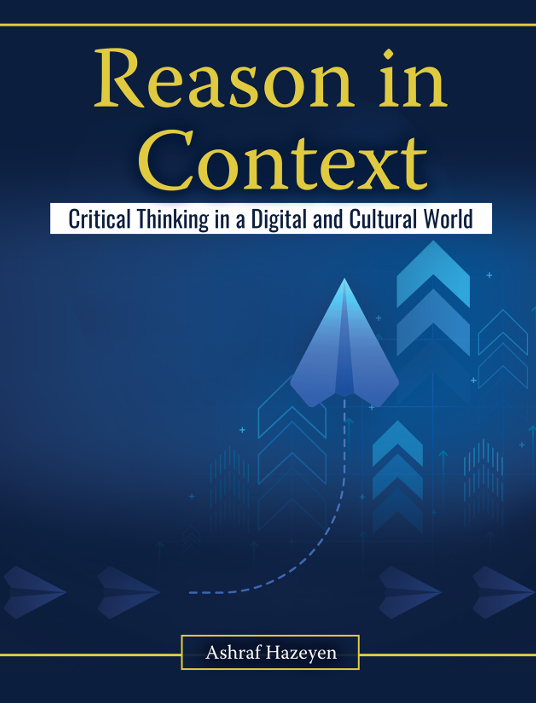
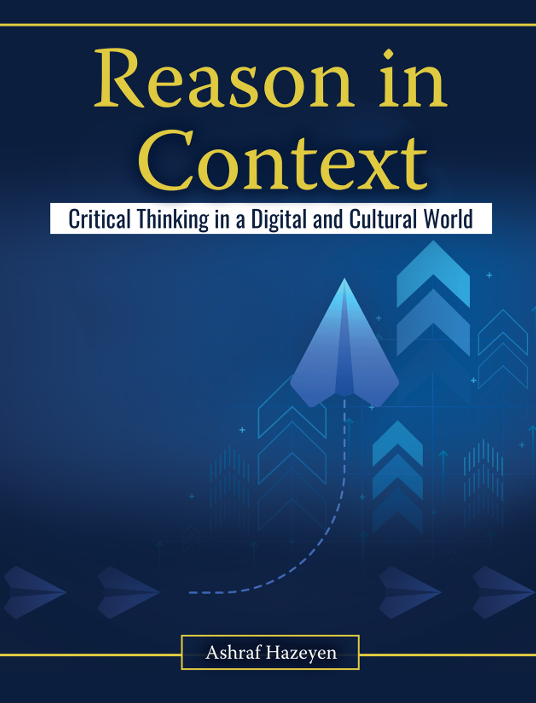
Reason in Context: Critical Thinking in a Digital and Cultural World
Edition: 1
Copyright: 2026
Pages: 184
Choose Your Format
Choose Your Platform | Help Me Choose


Ebook
$110.00 USD
Critical thinking often enters classrooms as a neutral toolkit, a sequence of steps practiced through repetition. Many learners first encounter it through exercises that sort claims, identify fallacies, and arrange reasons into clear diagrams. These skills matter, and they remain active throughout this book. They capture part of the experience of thinking. The full experience extends into a world where words carry histories, where power shapes what is heard, and where digital systems influence what is taken as true before evaluation begins. This book emerges from that gap and from the questions students raise when those limits come into view.
Part I: What Is Critical Thinking, and Who Gets to Define It?
Chapter 1: Why Thinking Matters
Introductory Framing
1.1 Why Thinking Matters
1.2 Standards and Authority in Reasoning
1.3 Reason and Responsibility
1.4 Thinking in Noise
1.5 Practice: What Shaped How You Think?
1.6 Closing Reflection
Part II: Arguments, Language, and Meaning
Chapter 2: The Structure of Arguments
Introductory Framing
2.1 Claims, Reasons, and Conclusions
2.2 Argument Indicators
2.3 Inference
2.4 Evaluating Arguments
2.5 Argument Analysis
2.6 Closing Reflection
Chapter 3: When Language Thinks for Us
Introductory Framing
3.1 Language before Reason
3.2 Metaphor and Framing
3.3 Labels and Interpretation
3.4 Framing and Boundaries of Thought
3.5 Symbolic Power
3.6 Thinking Across Worlds
3.7 Practice: Rewriting Headlines and Decoding Terms
3.8 Closing Reflection
Part III: When Thinking Breaks Down
Chapter 4: Fallacies and the Illusion of Clarity
Introductory Framing
4.1 Fallacies as Patterns
4.2 Hidden Assumptions
4.3 Context-Sensitive Errors
4.4 When Structure Misleads
4.5 Practice: Diagnosing Structured Error
4.6 Closing Reflection
Part IV: The Interior Architecture of Belief
Chapter 5: Emotion, Bias, and the Architecture of Belief
5.1 Emotional Orientation
5.2 Identity and Belief Persistence
5.3 Bias and Motivated Reasoning
5.4 Probability and Risk
5.5 Calibration and Intellectual Humility
5.6 Closing Reflection
Part V: Reasoning in Community
Chapter 6: Thinking in Communities: Voice, Power, and Silence
Introductory Framing
6.1 Testimony and Shared Knowledge
6.2 Credibility Distribution
6.3 Epistemic Injustice
6.4 Language and Meaning Across Worlds
6.5 Institutional Filtering and Participation
6.6 Knowledge Types and Proportional Reasoning
6.7 Practice: Mapping Reasoning in Context
Chapter 7: Stories That Think for Us: Narrative, Myth, and Institutional Logic
Introductory Framing
7.1 Narrative as Reasoning
7.2 National Narratives and Collective Reasoning
7.3 Institutional Narratives and Legitimation
7.4 Imperial Narratives
7.5 Narrative Practice and Critical Application
7.6 Closing Reflection
Part VI: Critical Thinking in the Age of AI
Chapter 8: Thinking with and Against the Machine
Introductory Framing
8.1 Synthetic Coherence and Grounded Understanding
8.2 Persuasion, Amplification, and Algorithmic Selection
8.3 Visual Evidence and Epistemic Trust
8.4 Data Bias and Feedback Loops
8.5 Practice: Auditing Machine-Generated Reasoning
8.6 Closing Reflection
Part VII: Moral Reasoning in Context
Chapter 9: Moral Thinking Under Conditions of Power
Introductory Framing
9.1 Moral Disagreement, Judgment, and Power
9.2 Justice in Unequal Conditions
9.3 Surveillance, Technology, and Moral Judgment
9.4 Reasoning, Responsibility, and Public Judgment
9.5 Closing Reflection
Part VIII: Reflection and Intellectual Autonomy
Chapter 10: Building a Thinking Life
Introductory Framing
10.1 The Thinking Self in Practice
10.2 Reasoning Within Incomplete Conditions
10.3 Belief, Continuity, and Revision
10.4 Reasoning as Shared Practice
10.5 Closing Reflection

Critical thinking often enters classrooms as a neutral toolkit, a sequence of steps practiced through repetition. Many learners first encounter it through exercises that sort claims, identify fallacies, and arrange reasons into clear diagrams. These skills matter, and they remain active throughout this book. They capture part of the experience of thinking. The full experience extends into a world where words carry histories, where power shapes what is heard, and where digital systems influence what is taken as true before evaluation begins. This book emerges from that gap and from the questions students raise when those limits come into view.
Part I: What Is Critical Thinking, and Who Gets to Define It?
Chapter 1: Why Thinking Matters
Introductory Framing
1.1 Why Thinking Matters
1.2 Standards and Authority in Reasoning
1.3 Reason and Responsibility
1.4 Thinking in Noise
1.5 Practice: What Shaped How You Think?
1.6 Closing Reflection
Part II: Arguments, Language, and Meaning
Chapter 2: The Structure of Arguments
Introductory Framing
2.1 Claims, Reasons, and Conclusions
2.2 Argument Indicators
2.3 Inference
2.4 Evaluating Arguments
2.5 Argument Analysis
2.6 Closing Reflection
Chapter 3: When Language Thinks for Us
Introductory Framing
3.1 Language before Reason
3.2 Metaphor and Framing
3.3 Labels and Interpretation
3.4 Framing and Boundaries of Thought
3.5 Symbolic Power
3.6 Thinking Across Worlds
3.7 Practice: Rewriting Headlines and Decoding Terms
3.8 Closing Reflection
Part III: When Thinking Breaks Down
Chapter 4: Fallacies and the Illusion of Clarity
Introductory Framing
4.1 Fallacies as Patterns
4.2 Hidden Assumptions
4.3 Context-Sensitive Errors
4.4 When Structure Misleads
4.5 Practice: Diagnosing Structured Error
4.6 Closing Reflection
Part IV: The Interior Architecture of Belief
Chapter 5: Emotion, Bias, and the Architecture of Belief
5.1 Emotional Orientation
5.2 Identity and Belief Persistence
5.3 Bias and Motivated Reasoning
5.4 Probability and Risk
5.5 Calibration and Intellectual Humility
5.6 Closing Reflection
Part V: Reasoning in Community
Chapter 6: Thinking in Communities: Voice, Power, and Silence
Introductory Framing
6.1 Testimony and Shared Knowledge
6.2 Credibility Distribution
6.3 Epistemic Injustice
6.4 Language and Meaning Across Worlds
6.5 Institutional Filtering and Participation
6.6 Knowledge Types and Proportional Reasoning
6.7 Practice: Mapping Reasoning in Context
Chapter 7: Stories That Think for Us: Narrative, Myth, and Institutional Logic
Introductory Framing
7.1 Narrative as Reasoning
7.2 National Narratives and Collective Reasoning
7.3 Institutional Narratives and Legitimation
7.4 Imperial Narratives
7.5 Narrative Practice and Critical Application
7.6 Closing Reflection
Part VI: Critical Thinking in the Age of AI
Chapter 8: Thinking with and Against the Machine
Introductory Framing
8.1 Synthetic Coherence and Grounded Understanding
8.2 Persuasion, Amplification, and Algorithmic Selection
8.3 Visual Evidence and Epistemic Trust
8.4 Data Bias and Feedback Loops
8.5 Practice: Auditing Machine-Generated Reasoning
8.6 Closing Reflection
Part VII: Moral Reasoning in Context
Chapter 9: Moral Thinking Under Conditions of Power
Introductory Framing
9.1 Moral Disagreement, Judgment, and Power
9.2 Justice in Unequal Conditions
9.3 Surveillance, Technology, and Moral Judgment
9.4 Reasoning, Responsibility, and Public Judgment
9.5 Closing Reflection
Part VIII: Reflection and Intellectual Autonomy
Chapter 10: Building a Thinking Life
Introductory Framing
10.1 The Thinking Self in Practice
10.2 Reasoning Within Incomplete Conditions
10.3 Belief, Continuity, and Revision
10.4 Reasoning as Shared Practice
10.5 Closing Reflection