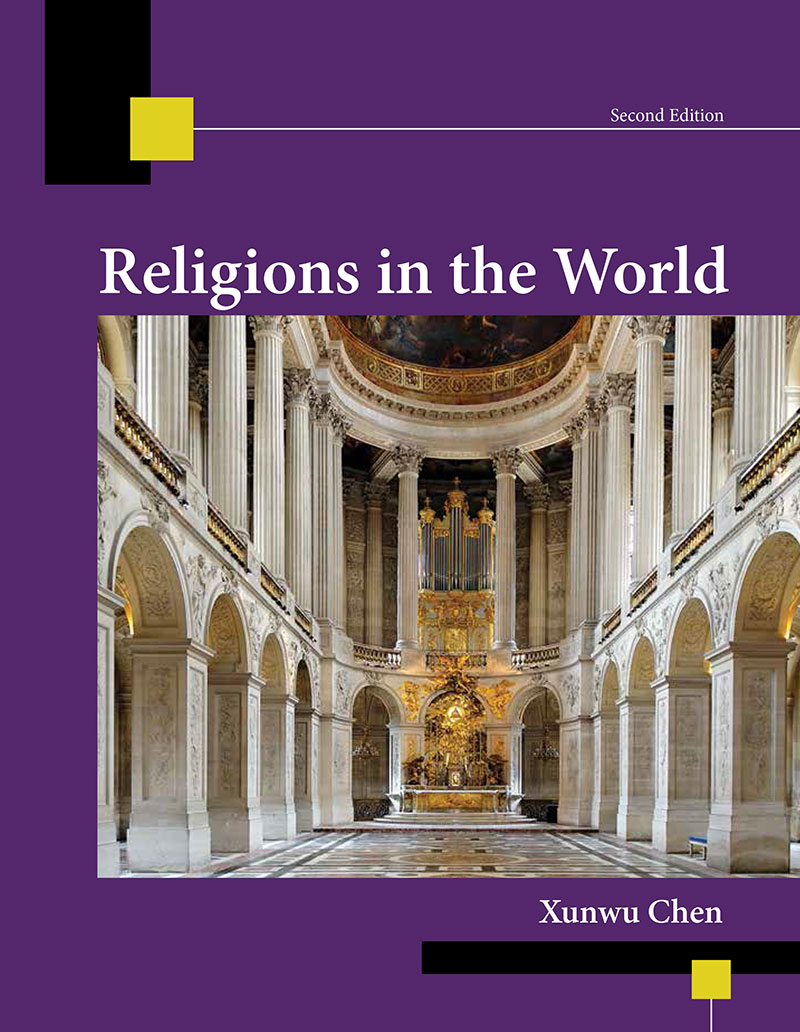
Religions in the World

Author(s): Xunwu Chen

Edition: 2

Copyright: 2013

Pages: 218

Choose Your Format

Ebook

$67.39 USD

ISBN 9781465227171

Details Electronic Delivery EBOOK 180 days

This book provides a comprehensive introduction to the world’s major religious traditions and the fundamental questions they address concerning human existence, meaning, and morality. It begins with an exploration of what religion is, its connection to human existential concerns, the challenges of religious conflict in a global context, and the importance of tolerance among diverse faith traditions. The text then examines Confucianism and Daoism, highlighting key concepts such as moral cultivation, ritual propriety, harmony with nature, and the pursuit of balance between opposing forces. It continues with an overview of Hinduism, Buddhism, Judaism, Christianity, and Islam, presenting their central beliefs, ethical teachings, sacred texts, and views on concepts such as karma, salvation, enlightenment, justice, and divine purpose. Throughout, the book emphasizes both the distinctiveness and shared concerns of these traditions, including love, duty, moral responsibility, and the search for spiritual fulfillment.eBook Version 

You will receive access to this electronic text via email after using the shopping cart above to complete your purchase. 

Chapter One: Introduction   
I. What Is Religion?    
II. Religions and Human Existential Interests    
III. Conflict of Religions: The Global Challenge 
IV. Religions and Toleration    
Chapter Two: Confucianism    
I. The Five Religious Dimensions of Confucianism 
II. Humanity 
III. Righteousness  
IV. Ritual Propriety    
V. The Feelings of Shame and Dislike    
VI. Filial Piety and Sense of Continuity    
VII. The Religious Status of Heaven     VIII.    Models of Being    
IX. Fate, Destiny, and Humanity    
Chapter Three: Daoism (Taoism)
I. A Comparison between Confucianism and Daoism (Taoism)  
II. Dao (Tao) as the Ultimate    
III. Ying, Yang, the Three Treasures, and the Harmony of Nature    
IV. Virtue, Power, and Union with the Great Ultimate    
V. The Concept of Immortality    
Chapter Four: Hinduism    
I. Hinduism Overview     
II. Brahman, Atman, and Dharma    
III. The Law of Karma    
IV. Role Duty and Selfless Service    
V. Enlightenment 
Chapter Five: Buddhism    
I. Buddhism in Overview    
II. The Four Noble Truths    
III. Karma and the Wheel of Existence    
IV. Non-Substantiality of the Self and the World    
V. Love 
VI. Happiness 
VII. Enlightenment 
Chapter Six: Judaism    
I. Judaism in Overview    
II. Creation and Its Moral-Religious Implication
III. Downfall of Mankind    
IV. Faith, Torah, and the Ten Commandments   
V. The Law of Justice: An Eye for an Eye    
Chapter Seven: Christianity    
I. Christianity in Overview    
II. Jesus Christ: The Savor, the Teacher, and the Paradigm    
III. The Concepts of Trinity and Incarnation   
IV. The Concept of Sin    
V. Love 
VI. Resurrection, Redemption, and Salvation  
Chapter Eight: Islam  
I. Islam in Overview  
II. The Fundamental Islamic Beliefs
III. The Religious Duties of Muslims: The Five Pillars     
IV. Jihad
V. The Status of Women    
Glossary 


Xunwu Chen

Xunwu Chen is a Professor of Philosophy and Classics at the University of Texas at San Antonio. His academic work engages a wide range of philosophical themes, including existentialism, phenomenology, global justice, ethics, cosmopolitanism, and East–West philosophical dialogue. He is known for integrating classical philosophical traditions with contemporary global issues, with a particular focus on moral philosophy, law, and human existence.

Professor Chen has presented his research at numerous international conferences and academic symposia across the United States, Europe, and Asia. His presentations include topics such as existentialism in modern literature, phenomenological approaches to global justice, the philosophy of law, cosmopolitan ethics, crimes against humanity, and cross-cultural philosophical perspectives.

This book provides a comprehensive introduction to the world’s major religious traditions and the fundamental questions they address concerning human existence, meaning, and morality. It begins with an exploration of what religion is, its connection to human existential concerns, the challenges of religious conflict in a global context, and the importance of tolerance among diverse faith traditions. The text then examines Confucianism and Daoism, highlighting key concepts such as moral cultivation, ritual propriety, harmony with nature, and the pursuit of balance between opposing forces. It continues with an overview of Hinduism, Buddhism, Judaism, Christianity, and Islam, presenting their central beliefs, ethical teachings, sacred texts, and views on concepts such as karma, salvation, enlightenment, justice, and divine purpose. Throughout, the book emphasizes both the distinctiveness and shared concerns of these traditions, including love, duty, moral responsibility, and the search for spiritual fulfillment.eBook Version 

You will receive access to this electronic text via email after using the shopping cart above to complete your purchase. 

Chapter One: Introduction   
I. What Is Religion?    
II. Religions and Human Existential Interests    
III. Conflict of Religions: The Global Challenge 
IV. Religions and Toleration    
Chapter Two: Confucianism    
I. The Five Religious Dimensions of Confucianism 
II. Humanity 
III. Righteousness  
IV. Ritual Propriety    
V. The Feelings of Shame and Dislike    
VI. Filial Piety and Sense of Continuity    
VII. The Religious Status of Heaven     VIII.    Models of Being    
IX. Fate, Destiny, and Humanity    
Chapter Three: Daoism (Taoism)
I. A Comparison between Confucianism and Daoism (Taoism)  
II. Dao (Tao) as the Ultimate    
III. Ying, Yang, the Three Treasures, and the Harmony of Nature    
IV. Virtue, Power, and Union with the Great Ultimate    
V. The Concept of Immortality    
Chapter Four: Hinduism    
I. Hinduism Overview     
II. Brahman, Atman, and Dharma    
III. The Law of Karma    
IV. Role Duty and Selfless Service    
V. Enlightenment 
Chapter Five: Buddhism    
I. Buddhism in Overview    
II. The Four Noble Truths    
III. Karma and the Wheel of Existence    
IV. Non-Substantiality of the Self and the World    
V. Love 
VI. Happiness 
VII. Enlightenment 
Chapter Six: Judaism    
I. Judaism in Overview    
II. Creation and Its Moral-Religious Implication
III. Downfall of Mankind    
IV. Faith, Torah, and the Ten Commandments   
V. The Law of Justice: An Eye for an Eye    
Chapter Seven: Christianity    
I. Christianity in Overview    
II. Jesus Christ: The Savor, the Teacher, and the Paradigm    
III. The Concepts of Trinity and Incarnation   
IV. The Concept of Sin    
V. Love 
VI. Resurrection, Redemption, and Salvation  
Chapter Eight: Islam  
I. Islam in Overview  
II. The Fundamental Islamic Beliefs
III. The Religious Duties of Muslims: The Five Pillars     
IV. Jihad
V. The Status of Women    
Glossary 


Xunwu Chen

Xunwu Chen is a Professor of Philosophy and Classics at the University of Texas at San Antonio. His academic work engages a wide range of philosophical themes, including existentialism, phenomenology, global justice, ethics, cosmopolitanism, and East–West philosophical dialogue. He is known for integrating classical philosophical traditions with contemporary global issues, with a particular focus on moral philosophy, law, and human existence.

Professor Chen has presented his research at numerous international conferences and academic symposia across the United States, Europe, and Asia. His presentations include topics such as existentialism in modern literature, phenomenological approaches to global justice, the philosophy of law, cosmopolitan ethics, crimes against humanity, and cross-cultural philosophical perspectives.