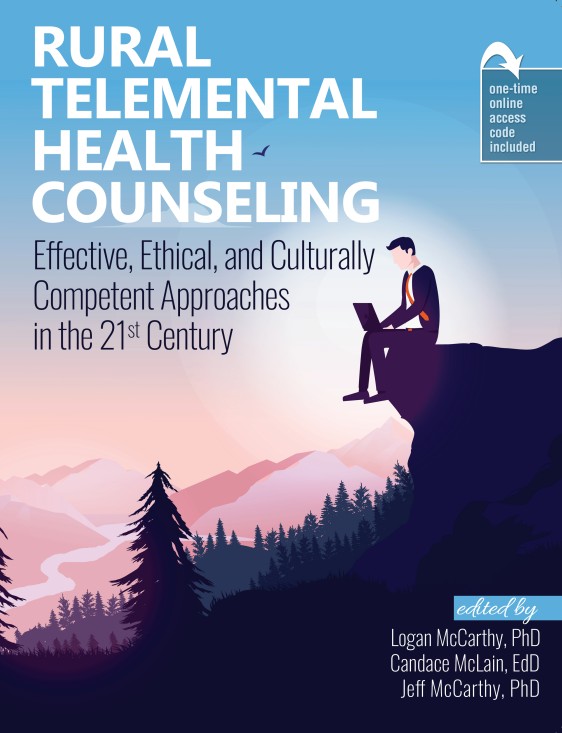
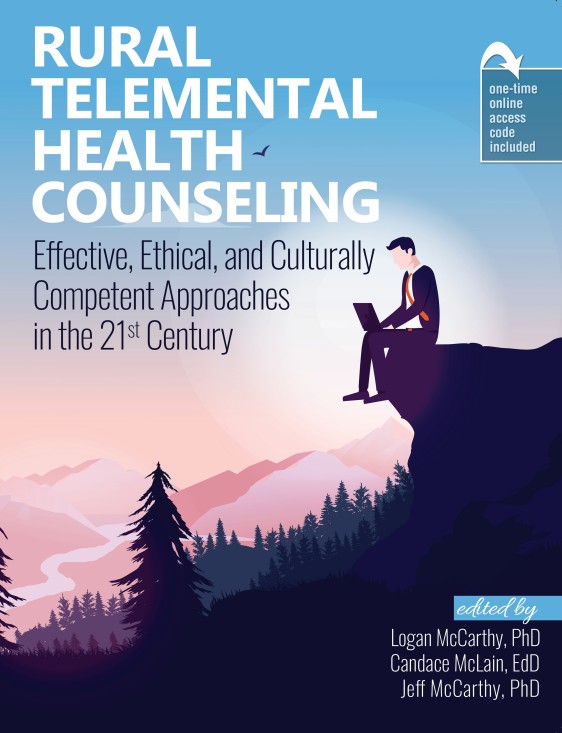
Rural Telemental Health Couseling: Effective, Ethical and Culturally Competant Approaches in the 21st Century
Edition: 1
Copyright: 2026
Pages: 528
Edition: 1
Copyright: 2026
Pages: 528
Choose Your Format
Print Package
$64.20 USD
Ebook
$53.50 USD
Rural Telemental Health Counseling is a developmental, ethics-centered training manual that reframes rural tele-mental health as a distinct clinical specialty rather than a mere extension of in-person counseling. The text advances a central premise: effective practice in rural tele-mental health requires intentional preparation, contextual awareness, and evolving competencies across the counselor’s professional lifespan.
Grounded in the lived realities of rural communities, including geographic isolation, limited access to specialty services, workforce shortages, persistent stigma, and heightened visibility in close-knit environments; the book positions rural tele-mental health as both a practical response and an ethical responsibility. Rural context is treated as an active clinical variable that shapes assessment, engagement, confidentiality, boundary management, clinical decision making, and the therapeutic relationship. Rather than assuming clinical transferability, the text illustrates how ethical and culturally responsive care must be adapted for rural settings.
A defining strength of the book is its developmental and competency-based design. Counselors of all developmental stages are provided with clear definitions, ethical grounding, and concrete examples that reduce uncertainty about rural tele-practice. Practicing clinicians receive applied guidance that bridges research, ethics, and real-world decision making, particularly around privacy challenges, dual relationships, stigma, and limited community resources. Counselor educators and supervisors are offered a structured roadmap for mentoring and evaluation, identifying the specific knowledge, skills, and professional dispositions required for competent rural tele-mental health practice.
Throughout the text, theory, ethics, technology, and rural cultural realities are integrated into actionable guidance. Case examples, reflective prompts, and practical tools move beyond abstract discussion to demonstrate how rural tele-mental health can be implemented responsibly in underserved communities. By framing rural tele-mental health as a specialized practice that evolves alongside professional development, the book equips counselors to expand access to care with clinical effectiveness, cultural humility, and ethical integrity, while honoring the lived experiences and resilience of rural clients and communities. This book could not come soon enough to address the needs of rural community needs.
Chapter 1 Introduction to Rural Telemental Health Counseling
Logan McCarthy, PhD, Candace McLain, EdD, and Jeff McCarthy, PhD
Chapter 2 Benefits and Challenges of R-TMH Counseling
Angelica Greiner, PhD, CDF and Crystal Hatton, PhD, NCC, NCSC, ACS
Chapter 3 Overview of R-TMH Technology
Diedre L. Wade, PhD
Chapter 4 Ethical and Legal Considerations With R-TMH Counseling
Robin Switzer, EdD, LPC, NCC and Tanisha N. Sapp, EdD, LPC, CST, NCC, ACS
Chapter 5 Clinical Considerations with R-TMH Counseling
Nicole Bellerose Chase, LCPC, NBCC and Jeri W. Stevens, PhD, LCPC, CCS
Chapter 6 Establishing a Strong Therapeutic Relationship With R-TMH Clients
Eric J. Camden, PhD, LPC, NCC, ACS, Christopher L. Ostrander, PhD, LCMHC, LMHC, NCC, and Brandon Waggoner, PhD, LPC, NCC
Chapter 7 Integrating Culture, Faith, and Community in R-TMH
Paula Weaver, MA, David Miller, MA, and John A. King, PhD
Chapter 8 Implementation of R-TMH
Elizabeth Brokamp, PhD, LPC, ACS, BC-TMH and Tina Pharr, PhD, LPC-MHSP (TN)
Chapter 9 R-TMH Counseling and Youth, Adolescents, and Families
Nathan Yaden PhD, LPCC-S
Chapter 10 R-TMH Counseling Older Adults and Disabled Populations
Sonya Heckler Cheyne, PhD and Benton K. Johnson, II, PhD
Chapter 11 R-TMH Counseling and Substance Use Populations
Karin Dumont, PhD School of Behavioral Sciences, Liberty University
Chapter 12 Trauma-Informed Counseling in R-TMH Settings
Erica Rhoads, PhD
Chapter 13 R-TMH Crisis Intervention
Jody Vernam, PhD
Chapter 14 R-TMH Counseling and Military Personnel and First Responders
Emily Genever, PhD, LCPC, NCC and Glen Roberts, MS, MA, MHC-LP
Chapter 15 R-TMH in School Counseling
Natae J. Feenstra, PhD, LPC (TN), NCC, CSC (TN) and Sharon Todd, PhD, LPCC-S (KY), CSC (KY), RPT, CT/RTC, NCC
Chapter 16 Evaluating R-TMH Counseling Services
Dara N. Brown, PhD, LPC, CSOTP and Katye Galloway, PhD, LPC-S, LCDC
Chapter 17 Counselor Education and Supervision Considerations with R-TMH Counseling
Candace McLain, EdD, LPC, ACS, BC-TMH and Jami Stobaugh, LPC-S, RPT-S
Chapter 18 R-TMH Credentials, Trainings, and Standards
Heyde Luz, PhD, Derek J. Parker, PhD, and Melissa Smith, PhD
Chapter 19 Sustaining Practices for R-TMH Counselors
Jessica Henderson, PhD, LPC, NCC and Hailey Martinez, PhD, LCPC, ACS
Chapter 20 The Future of R-TMH
Tracie Rutherford Self, PhD, LPCC-S, LMHC, Darcie Davis-Gage, PhD, LMHC, Jennifer Londgren, EdD, LMFT, and Lane Cavanaugh, MSW, LICSW
Conclusion Chapter The Future: Effective, Ethical, and Culturally Competent R-TMH Approaches in the 21st Century
Logan McCarthy, PhD, Candace McLain, EdD, and Jeff McCarthy, PhD
Index
Dr. Candace McLain is a professor of clinical mental health counseling at Liberty and licensed professional counselor in MI and CO. She is an ACS and board-certified tele-mental health counselor. She has immense clinical and educational experience in academic leadership, program development, curriculum and instruction and expertise in mentoring, teaching, coaching and leading counselor educator supervisors. She also has clinical expertise in working with trauma-informed care clients, counselors, and supervisors.
Dr. Jeff McCarthy is an associate professor at Liberty and LCPC in private practice specializing in treating families and children. He provides consultation and counseling to many elementary and high schools in addition to educational services to parents and students. His research interests include online learning, technology and youth, trauma exposure and reaction in youth, school-based mental health services, and youth who are at risk of not completing school.
Dr. Logan McCarthy is an assistant professor and core faculty member at Liberty University. He is a licensed clinical professional counselor (LCPC) in ME, national certified counselor, and approved clinical supervisor (ACS). He specialized in treating children and adolescents in individual outpatient and home-, community-, and school[1]based individual and group counseling services before becoming a faculty member at Liberty. He is a past copresident and current executive board member and treasurer of the Maine Mental Health Counselors Association. He is also part of numerous state, regional, and national professional counseling organizations. He resides in rural ME with his wife and two children.