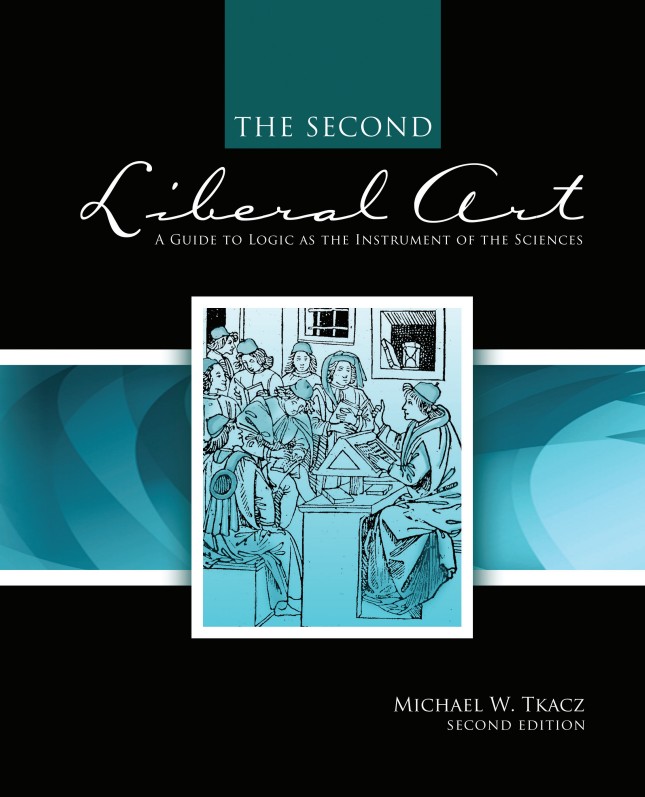

The Second Liberal Art: A Guide to Traditional Logic
Edition: 2
Copyright: 2025
Pages: 110
Edition: 2
Copyright: 2025
Pages: 110
Choose Your Format
Choose Your Platform | Help Me Choose


Ebook
$53.00 USD
$106.00 USD
The Second Liberal Art: A Guide to Traditional Logic is a comprehensive text that situates formal reasoning within the liberal arts tradition, progressing from foundational concepts through propositional and categorical logic to advanced techniques like reductio ad absurdum and scientific demonstration.
The text reflecting, Tkacz’ expertise in Thomistic philosophy and medieval thought, emphasizes logic’s integral role in a complete education, and draws on classical and medieval logical traditions.
The text covers both theoretical principles (propositions, syllogisms, complex arguments) and practical skills (argument diagramming, analyzing real-world reasoning), making it suitable for liberal arts students seeking to develop rigorous analytical capabilities.
Preface
I. Universities and the Liberal Arts Tradition
II. Reasoning and Argumentation
III. Propositions and Terms
IV. Propositional Diagrams
V. Propositional Relations
VI. Categorical Syllogisms
VII. Argument Diagrams
VIII. Elliptical Arguments
IX. Complex Categorical Arguments
X. Complex Propositions
XI. Disjunctive Arguments
XII. Conditional Arguments
XIII. Reductio ad Absurdum
XIV. Scientific Demonstration
Glossary of Logical Terms
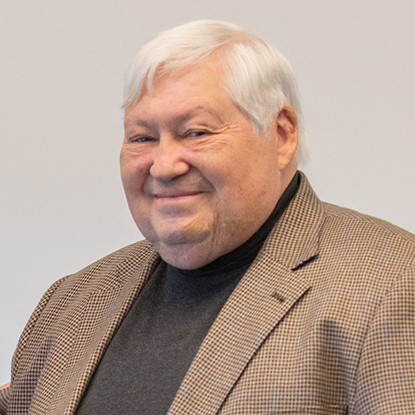
Dr. Michael W. Tkacz is the Bernard J. Coughlin, S.J. Professor of Christian Philosophy at Gonzaga University and President of the Society for Thomistic Natural Philosophy.
He did his doctoral research under the direction of the noted historian and philosopher of science William A. Wallace, O.P.
Professor Tkacz specializes in the history of medieval philosophy and the philosophy of nature.
Much of his research is devoted to recovering the ground-breaking contributions of the thirteenth-century thinker Albertus Magnus to the development of scientific method and the metaphysical foundations of empirical research.
Professor Tkacz also contributes to contemporary efforts to reestablish natural philosophy as a discipline linking scientific research and metaphysics.
The Second Liberal Art: A Guide to Traditional Logic is a comprehensive text that situates formal reasoning within the liberal arts tradition, progressing from foundational concepts through propositional and categorical logic to advanced techniques like reductio ad absurdum and scientific demonstration.
The text reflecting, Tkacz’ expertise in Thomistic philosophy and medieval thought, emphasizes logic’s integral role in a complete education, and draws on classical and medieval logical traditions.
The text covers both theoretical principles (propositions, syllogisms, complex arguments) and practical skills (argument diagramming, analyzing real-world reasoning), making it suitable for liberal arts students seeking to develop rigorous analytical capabilities.
Preface
I. Universities and the Liberal Arts Tradition
II. Reasoning and Argumentation
III. Propositions and Terms
IV. Propositional Diagrams
V. Propositional Relations
VI. Categorical Syllogisms
VII. Argument Diagrams
VIII. Elliptical Arguments
IX. Complex Categorical Arguments
X. Complex Propositions
XI. Disjunctive Arguments
XII. Conditional Arguments
XIII. Reductio ad Absurdum
XIV. Scientific Demonstration
Glossary of Logical Terms
Dr. Michael W. Tkacz is the Bernard J. Coughlin, S.J. Professor of Christian Philosophy at Gonzaga University and President of the Society for Thomistic Natural Philosophy.
He did his doctoral research under the direction of the noted historian and philosopher of science William A. Wallace, O.P.
Professor Tkacz specializes in the history of medieval philosophy and the philosophy of nature.
Much of his research is devoted to recovering the ground-breaking contributions of the thirteenth-century thinker Albertus Magnus to the development of scientific method and the metaphysical foundations of empirical research.
Professor Tkacz also contributes to contemporary efforts to reestablish natural philosophy as a discipline linking scientific research and metaphysics.