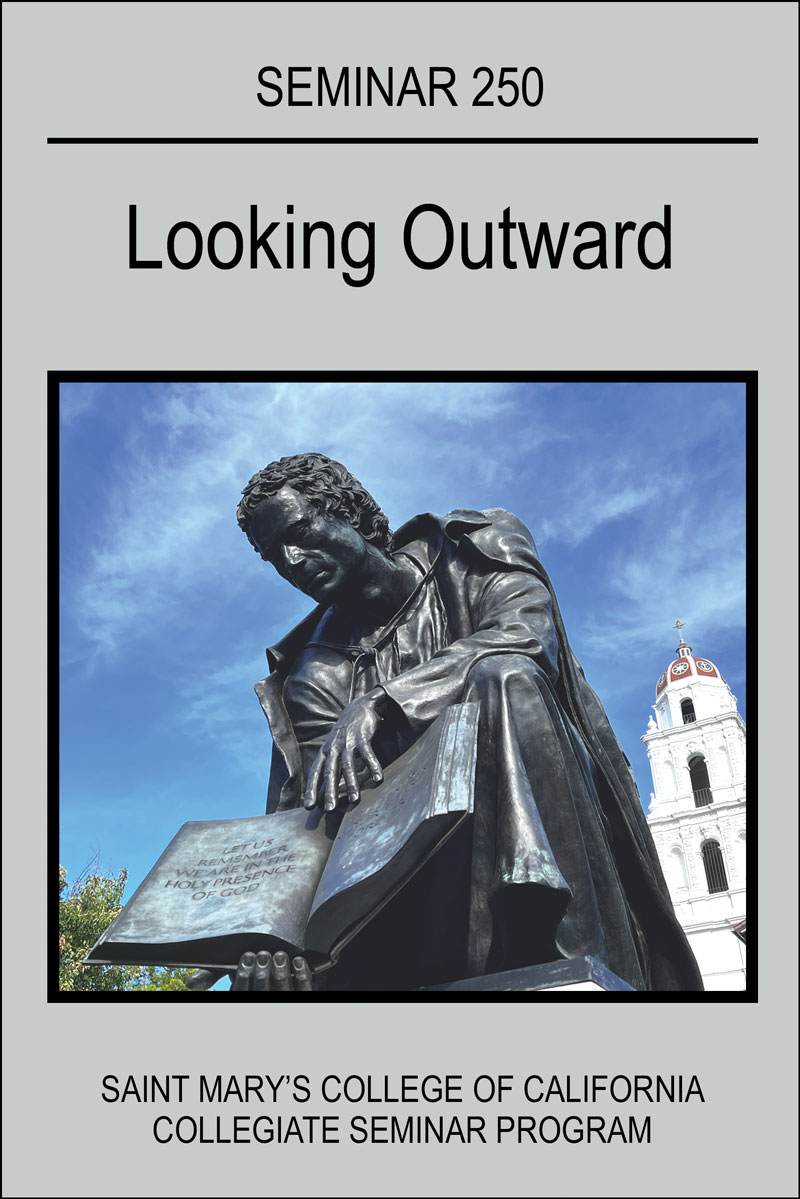
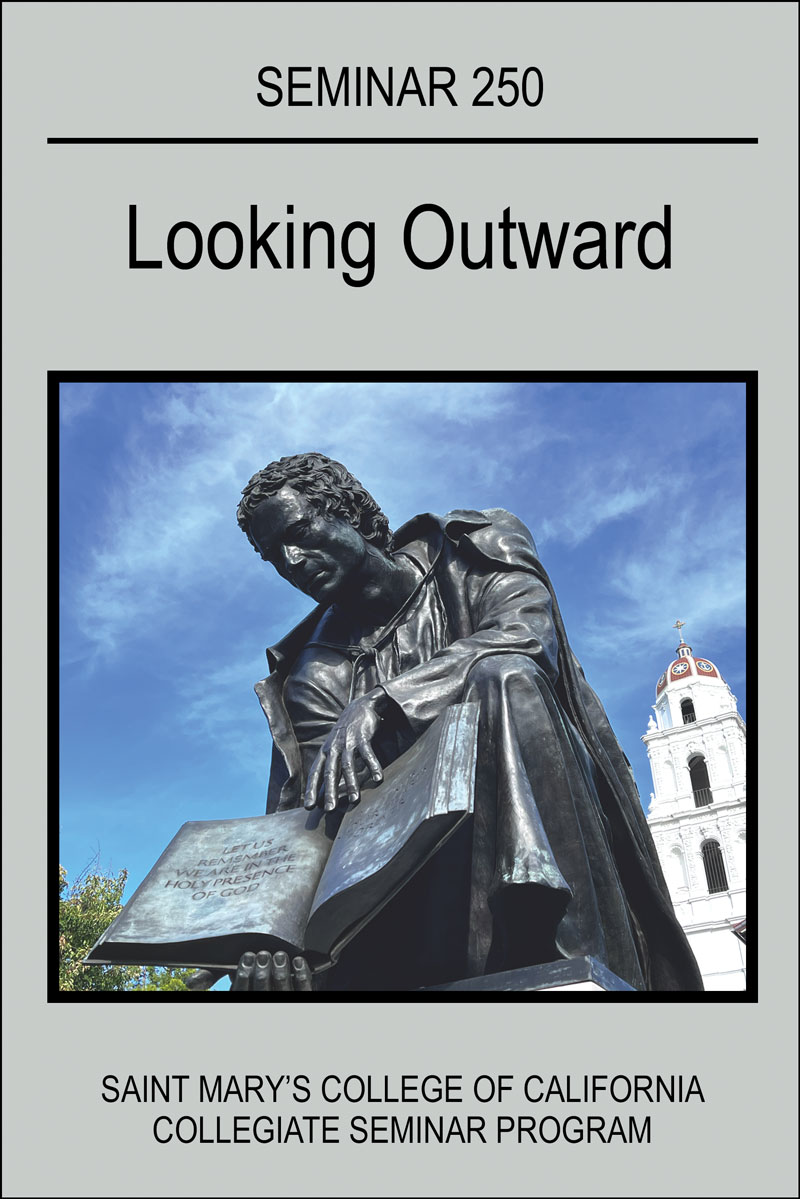
SEM 250: Looking Outward Reader
Edition: 1
Copyright: 2025
Edition: 2
Copyright: 2026
Pages: 356
Choose Your Format
$60.95 USD
$56.95 USD
This seminar explores major questions about human nature, morality, society, power, obedience, justice, religion, identity, and knowledge through foundational works of philosophy, literature, social science, history, and political thought. Readings include works by Miguel de Unamuno, Stanley Milgram, Thomas Hobbes, John Locke, Martin Luther King Jr., Homer, Thucydides, Mencius, Toni Morrison, Gloria Anzaldúa, Bernardino de Sahagún, Marx and Engels, the Second Vatican Council, Wu Cheng’en, Maxine Hong Kingston, Galileo Galilei, Ibn al-Haytham, and Marjane Satrapi. Together, the texts encourage students to examine different perspectives, question assumptions, engage in discussion, and connect historical ideas to contemporary issues.
The Seminar Classroom Mission Statement
Collegiate Seminar Program Goals and Learning Outcomes
Lasallian Core Principles
Collegiate Seminar Guidelines for Grading Oral Participation
Kinds of Questions
Timeline
Introduction to Miguel de Unamuno, Saint Emmanuel the Good, Martyr
Saint Emmanuel the Good, Martyr
Miguel de Unamuno
Introduction to Stanley Milgram, Behavioral Study of Obedience
Behavioral Study of Obedience
Stanley Milgram
Introduction to Thomas Hobbes, Leviathan
Selections from Leviathan
Thomas Hobbes
Introduction to John Locke, Essay Concerning Human Understanding and Second Treatise on Government
Selection from An Essay Concerning Human Understanding
John Locke
Selections from Second Treatise of Government
John Locke
Introduction to Supreme Court of the United States, Korematsu v. United States: 323 U.S. 214
Korematsu v. United States: 323 U.S. 214
Supreme Court of the United States
Introduction to Martin Luther King Jr., Letter from Birmingham Jail (Introduction only)
Introduction to Homer, The Odyssey (Introduction only)
Introduction to Thucydides, The History of the Peloponnesian War
Selections from History of the Peloponnesian War
Thucydides
Introduction to Mencius, Mencius (Introduction only)
Introduction to Toni Morrison, Lecture Upon the Award of the Nobel Prize in Literature
Lecture Upon the Award of the Nobel Prize in Literature
Toni Morrison
Introduction to Gloria Anzaldúa, Borderlands/La Frontera
Selections from Borderlands/La Frontera
Gloria Anzaldúa
Introduction to Bernardino de Sahagún, Florentine Codex
Selections from Florentine Codex, Book 12
Bernardino de Sahagún
Introduction to Karl Marx and Frederick Engels, The Communist Manifesto (Introduction only)
Introduction to Second Vatican Council, Gaudium et Spes
Selections from Gaudium et Spes
The Second Vatican Council
Introduction to Wu Cheng’en, Monkey King: Journey to the West (Introduction only)
Introduction to Maxine Hong Kingston, No Name Woman
No Name Woman
Maxine Hong Kingston
Introduction to Galileo Galilei, The Starry Messenger
Selections from The Starry Messenger
Galileo Galilei
Introduction to Ibn al-Haytham, Book of Optics
Selections from Book of Optics
Ibn al-Haytham
Introduction to Marjane Satrapi, Persepolis (Introduction only)
Notes from The Starry Messenger
Galileo Galilei