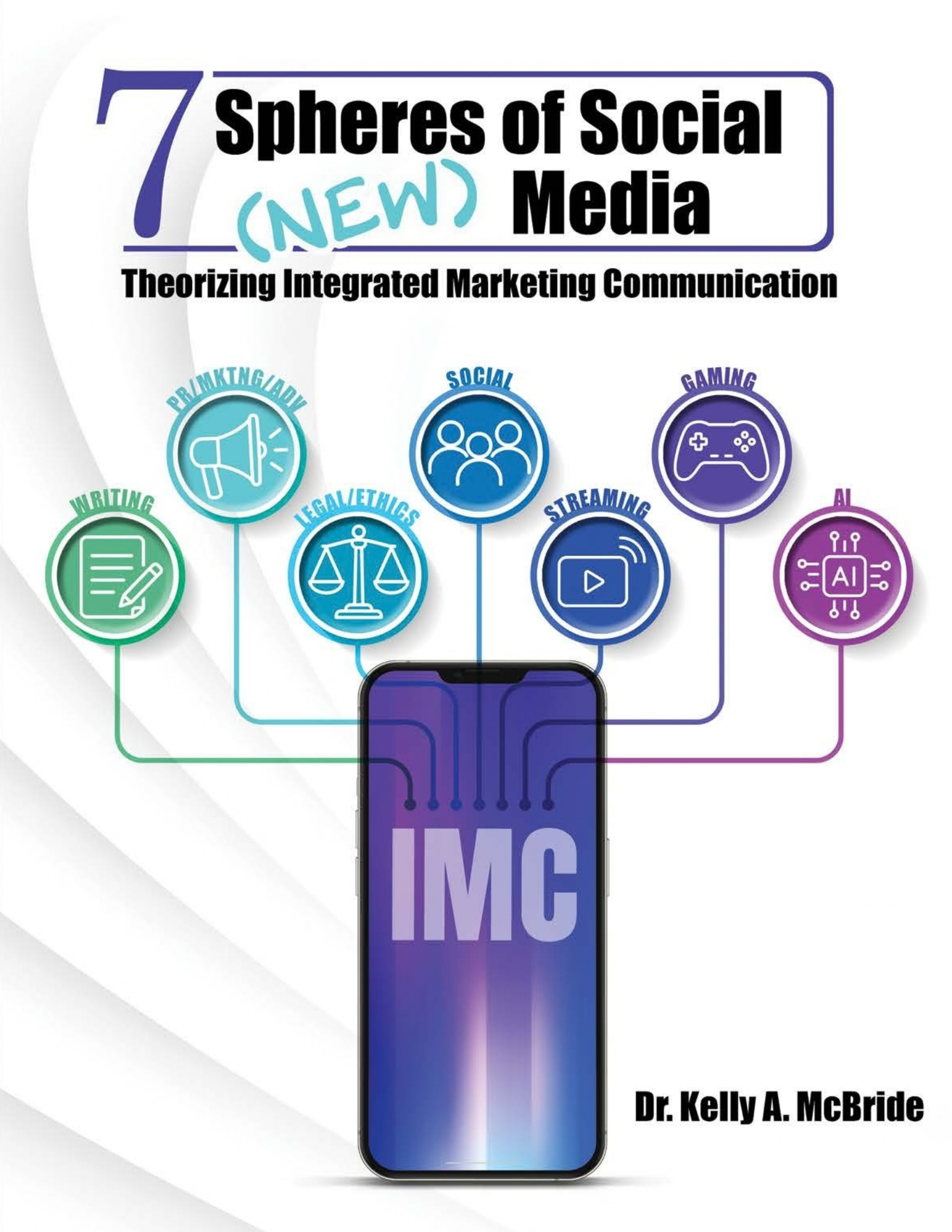
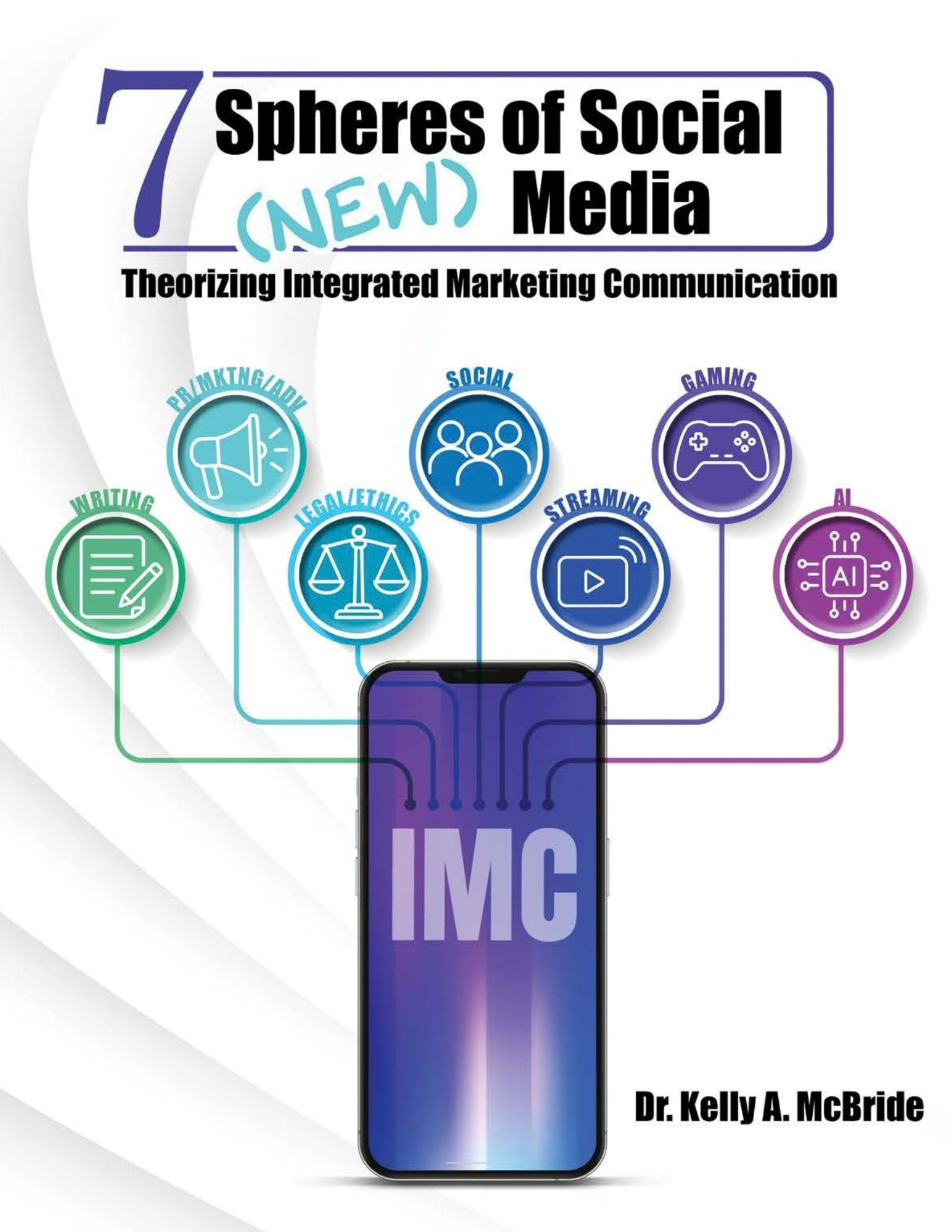
Seven Spheres of Social (New) Media: Theorizing Integrated Marketing Communication
Edition: 1
Copyright: 2026
Choose Your Format
Social (new) media, which transcends the original denotation of social media, has become THE communication and business vehicle for the 21st Century. Since its earliest inception we have experienced a proliferation of applications that begs to ask, “what is new media and what are its underpinnings?” As the number of applications increase, unique taxonomies arose into individual specialties that while contained within distinct classifications, are also supported by comparable elements. This text posits the theory of seven spheres (or segments) that postulate a comprehensive conceptualization of new media. Chapters are scaffolded so that students build knowledge through understanding the concepts and applications within each sphere as well as their intersectionality and dependency.
Chapter One – Introduction – History of the Computer and New Media
a) First, the Computer
b) So, You Want to be a Social/New Media ________________ .
c) The History of the Computer
d) The Founding of IBM and the Calculator
e) Putting a Man on the Moon
f) 3…2…1 Apple Blasts Off
g) Bill Gates and Microsoft
h) Adding Cell Phones in the Mix
i) The Internet – In the Beginning
a. The Internet – 1970’s and 80’s
b. The Internet – 1990’s and End of the 20th Century
c. The 2000’s – Dawn of a New Century
j) Social (New) Media – The Big Guys
a. HOTorNOT (2000)
b. Friendster (2002)
c. MySpace (2003)
d. Facebook (2003)
e. LinkedIn (2003)
f. YouTube (2005)
g. Twitter (X) (2006)
h. Instagram (2010)
i. TikTok (2017)
k) Technology in the 21st Century – Where do we go from Here?
l) Conclusion
m) Chapter Reflection Questions
Chapter Two – New Media Theory
a) Two-Step Flow Theory (media, which includes advertising/marketing, flows to opinion leaders –
influencers – who influence a wider audience)
a. Step One – Media Broadcast
b. Step Two – Opinion Leaders to the Public
c. Step Three – Impact on Public Relations
d. Criticism
e. Application to the Seven Spheres Theory
b) Uses and Gratification Theory (why people choose social media apps and on what devices)
a. Assumption One
b. Assumption Two
c. Assumption Three
d. Assumption Four
e. Assumption Five
f. Criticism
g. Application to the Seven Spheres Theory
c) Social Identity Theory (how people use social media to express their identities)
a. Social Categorization
b. Social Identification
c. Social Comparison
d. Criticism
e. Application to the Seven Sphere Theory
d) Cultivation Theory (prolonged exposure to media content can distort perceptions of reality)
e) Social Media Impact Theory (impact of social media can be understand through psychological,
sociological, and economic dimensions)
a. Criticism
b. Application to the Seven Spheres Theory
f) Social Media Impact Theory
a. Criticism
b. Application to the Seven Spheres Theory
g) Spiral of Silence Theory (people are less likely to express their opinions if they believe their
views are not shared by the majority)
a. Criticism
b. Application to the Seven Spheres Theory
h) Conclusion
i) Chapter Reflection (Questions)
Chapter Three – Understanding the Foundational Process in an Integrated Approach
a) Introduction
b) RACE, ROPE, or SMART?
a. RACE Framework
b. ROPE Framework
c. SMART Framework
c) Cutlip and Broom
a. PR versus advertising
b. PR versus marketing
d) What is Integrated Marketing Communication?
e) The Importance of Integrated Marketing Communication
f) The Evolution of Traditional Communication to IMC
a. Traditional Siloed Communication Model
b. Rise of Digital Media and Consumer Control
c. Fragmentation of Media Channels
d. Need for Consistent Messaging Across Touchpoints
g) Approaches to Integrated Marketing Communication
a. The Components of IMC (and Potential Jobs)
i. Advertising
ii. PR
iii. Direct Marketing
iv. Digital Marketing
v. Social Media
vi. Sales Promotion
vii. Personal Selling
viii. Content Marketing
ix. Event Marketing
x. Sponsorships
h) Message Integration vs. Channel Integration
i) Customer Journey and Touchpoints
j) Barriers to Effective IMC
a. Departmental Silos
b. Territorial Disputes
c. Budget Competition
d. Lack of Leadership Support
e. Inconsistent Branding
k) Integrated Marketing Communication – An Example of Intersectionality
a. Hallow
i. Sphere One - Writing
ii. Sphere Two - Marketing/Advertising/PR
iii. Sphere Three - Legal and Ethical
iv. Sphere Four - Social
v. Sphere Five - Streaming
vi. Sphere Six - Gaming
vii. Sphere Seven - AI
l) The Intersection of the Seven Spheres
m) Conclusion
n) Chapter Reflection Questions
Chapter Four – Sphere One - Writing
a) Introduction
b) The Evolution of Digital Writing
a. Blogging
c) The Psychology Behind Social Media Writing
a. Identity Formation
b. Belonging
c. Validation
d. Influence
e. Emotional Release
d) Platform Writing Styles
a. Instagram
b. Facebook
c. TikTok
d. LinkedIn
e. X
e) Case Study – How Micro Blogging Brought Down Justine Sacco
f) Lessons from the Case
g) Why People Make Poor Writing Decisions Online
a. Instant Publishing
b. Emotional Reactivity
c. Performance Pressure
d. Group Behavior
e. False Informality
h) Best Practices for Writing on Social Media (I show two – one needs integrated)
a. Pause Before Posting
b. Lead Strong
c. Be Concise
d. Use Tone Carefully
e. Add Value
f. Proofread
g. Protect Reputation
h. Invite Engagement
i) Social Media Writing in Crisis Communication
a. Why Speed Matters
b. Why Tone Matters
c. Ethical Considerations
d. Best Practices for Crisis Posts
j) Conclusion
k) Chapter Reflection Questions
Chapter Five – Sphere Two – PR/Marketing/Advertising - The Foundational Force Behind IMC
a) Introduction – Before the Seven Spheres Theory
b) Public Relations: The Management of Relationships
a. Pre-Modern Public Relations
b. Ivy Ledbetter Lee
c. Edward L. Bernays
c) Moving Into the Modern Era
d) Marketing: Understanding Human Needs
a. Ancient Markets and Trade
b. The Industrial Revolution
c. The Sales Era
d. The Marketing Concept
e. Relationship Marketing
f. Marketing in the Digital Age
e) Philip Kotler
f) Advertising: The Art of Persuasion
a. Ancient Advertising
b. The Print Revolution
c. The Rise of Mass Advertising
d. The Golden Age of Advertising
g) Albert Lasker
h) David Ogilvy
i) Advertising Today
j) The Birth of Integrated Marketing Communication
k) From IMC to the Seven Spheres Theory
l) Featured Example: De Beers and the Campaign that Changed Marriage Forever
m) The Dark Side of PR, Marketing, and Advertising: The Fyre Festival
n) Conclusion: Public Relations, Marketing, and Advertising as a Sphere
o) Chapter Reflection Questions
Chapter Six– Sphere Three - Legal and Ethical Challenges in Social (New) Media
a) Part I – Legal Introduction
b) Defamation
c) Suing for Defamation in Social Media
d) Intellectual Property
a. Copyrights
b. Trademarks
c. Trade Secrets
d. Patents
e. Copyright
e) In Depth Look at Trademarks
f) In Depth Look at Trade Secrets
g) In Depth Look at Patents
h) Privacy and Confidentiality
i) Data Collection
j) Social Engineering and Cyber Security
k) Cyberbullying and Harassment
l) Employment Law and Social Media
a. Employer Monitoring
b. National Labor Relations Act
c. Employee Post Liability/Anti-Discrimination
d. Anti-Discrimination and Social Media
m) Part II – Ethics
n) Kant’s Categorical Imperative
o) Aristotle’s Golden Mean
p) Bentham’s Utilitarianism
q) Privacy and Records
r) Breach of Confidentiality
s) An In Depth Look at Cyberbullying
t) AI Generated Content
u) Featured Example – TikTok livestreaming and Dr. Roxy
v) Chapter Reflection Questions
Chapter Seven – Sphere Four - Social
a) Introduction
b) Influencers and the Evolution of Persuasion
a. Rise of Influencer Marketing
b. Social Media Platforms as Social Infrastructure
c. Dark Side of Influence
i. Promotion of harmful products or services
ii. Deceptive or undisclosed sponsorship practices
iii. Dissemination of misinformation and disinformation
c) Online Communities and Discussion Boards
a. Advantage of Online Communities
b. Limitations and Risk
i. Misinformation and Echo Chambers
ii. Anonymity and Accountability
iii. Group Polarization
iv. Moderation and Platform Governance
d) Connection to the Social Sphere
e) Featured Example – Belle Gibson: Survivor or Player?
f) Structural Problems in the Social Sphere
a. Algorithmic Amplification
b. Manufactured Credibility
c. Blurred Identity Boundaries
d. Delayed Accountability
g) Conclusion: The Future of the Social Sphere
h) Chapter Reflection Questions
Chapter Eight – Sphere Five - Streaming
a) Introduction – Streaming as Continuous Communication
b) Definition of Streaming in the IMC Model
a. Real-Time Engagement
b. Consistency Across Channels
c. Dynamic Data Collection
d. Part of the Digital Mix
e. Transitioning from Scheduled Communication to Continuous Communication
c) Streaming as an Engagement Centered Sphere
d) The Evolution of Streaming
a. On-Demand Access
b. Live Streaming
c. Interactive Streaming: YouTube and Twitch
d. Subscription-Based Streaming: Netflix and Disney+
e. Free/Ad-Supported Streaming: Spotify and iHeartRadio
e) Streaming Within the IMC Sphere Universe
a. Brand Storytelling
b. Cross-Platform Communication
c. Streaming and Community Building
d. Interaction with Other IMC Spheres
f) Featured Discussion – The Dark Side of Mukbang Streaming
a. Nikocado Avocado
b. Streaming as Entertainment and Chaos
c. But We Can’t Look Away!
d. When Algorithms Reward Excess
e. The Two-Steps Ahead Reveal
f. Ethical Questions
g. Why Does This Matter in the IMC Sphere Universe?
g) Conclusion
h) Chapter Reflection Questions
Chapter Nine – Sphere Six - Gaming
a) History of Gaming
a. Game Types
i. First Person Shooter
ii. Online Casino
iii. Player Versus Environment
iv. Multiplayer Online Battle Arena
v. Battle Royale
vi. Real Time Shooter
vii. Massively Multiplayer Online
b) A Key Development – Social Gaming
c) Gaming Platforms
d) Rating Systems
a. Entertainment Software Rating Board
b. Pan European Game Information Rating System
e) Artificial Intelligence in Gaming
f) Issues in Gaming
g) Featured Example – Dark Side of Gaming – South Korea’s online gaming culture
h) Conclusion
i) Chapter Reflection Questions
Chapter Ten – Sphere Seven - Artificial Intelligence
AI: The New Communication Engine
a) Artificial Intelligence (AI)
a. Early Development of Artificial Intelligence
i. Reactive Machines
ii. Limited Memory AI
iii. Theory of Mind
b. Why AI Matters in IMC
b) AI Across the Seven Spheres
c) How AI Knows What YOU Want
a. Recommendation Algorithms
i. Collaborative Filtering
ii. Content Based Filtering
iii. Hybrid Recommendation System
b. Predicting Consumer Behavior
c. Personalization and Audience Retention
d) When AI Creates Echo Chambers
e) AI and Advertising: It’s Following You
a. Behavioral Tracking
i. Data Privacy Regulations
ii. Transparency Deficit
iii. Rise of Contextual 2.0
b. Predictive Consumer Modeling
c. Programmatic Marketing
f) I Can Hear You! – AI is Always Listening
a. Monitoring Online Conversations
b. Reputation Management
g) I See You! AI Recognizes and Tracks You
a. Facial Recognition
b. Visual AI
c. Ethics and Surveillance
Privacy vs. Personalization
h) Bots, Brands, and Fake Conversations, Oh My!
a. AI Chatbots
b. Customer Service or Customer Frustration?
c. Brand Communication Without Humans
d. Trust in Automated Interaction
i) Generative AI and Content Creation
a. Text Generation
b. Image Generation
c. Video Generation
d. Music Generation
e. Ethical Concerns and Challenges
j) Hurray for Hollywood – The Future of Entertainment
a. Digital Actors and Synthetic Celebrities
i. Purely Artificial Creators
ii. AI Clones and Digital Twins
b. Deepfakes and Hollywood
c. Trust, Transparency, and Ethics
k) The Dark Side of AI – When AI Becomes a Friend
a. Sewell Setzer Case
l) What Does the Future Hold?
m) Conclusion – Who Controls Communication – Humans or AI?
n) Chapter Reflection Questions
Chapter Eleven – Understanding the Basics of New Media Analytics and Measurement
a) Introduction
b) The importance of social media analytics
c) The Digital Data Ecosytem
d) Key Components of New Media Analytics
a. Goal Setting and KPI
b. Audience Intelligence
c. Content Performance Evaluation
d. Competitive Analysis
e. Sentiment and Brand Monitoring
e) Data Collection Methods and Tools
a. Platform-native Analytics
b. Web Analytics Tools
c. Social Listening Tools
d. Application Programming Interface (API’s)
f) Future Trends in New Media Analytics
a. AI-driven analytics
b. Multimodal Data
c. Synthetic Media Measurement
d. Immersive Analytics
g) Actual Example – Email Open Rate Analysis
h) Conclusion
i) Chapter Reflection (questions)
j) Case Study Analysis
Chapter Twelve – The Future of Social (New) Media and Internet Technology
a) Introduction
b) Virtual and Augmented Reality – Immersive Experiences
a. Augmented Reality
b. Virtual Reality
c) AI’s Role in New Media
a. Predictive AI
d) The Internet of Things (IoT)
e) Shifting Habits
f) The Future of the Future!
a. The Rise of Inequality and Growing Divid Between the Haves and Have-Nots
b. Life will not be Better Based on the Expansion and Extension of Current Trends
c. If Humans Become Cyborgs and AI Gets Smarter – What Happens?
d. Does Less Work Mean the Opposite of the Life of Leisure?
e. Who’s in Charge? Humans or Automated Digital Systems?
f. Will Corporations Self-Regulate in Market Capitalism?
g. Are Authentic Human Experiences Threatened by Digital Experiences?
h. Constant Data Monitoring and Surveillance is a Condition of Hyperconnectivity
i. Will Misinformation and Mistrust Affect Positive Internet Growth?
g) Conclusion
h) Chapter Reflection Questions
Dr. Kelly McBride has over 28 years of experience in the field of communications, including work as a Communication Director for a Pennsylvania public school district, VP of Communications and Marketing for Sovereign Bank (now Santander), Press Secretary to former Lt. Governor Mark Singel, and Director of Communications and Media for the Pennsylvania Democratic Party where she trained in media relations with former Press Secretary Mike McCurry. She also provided communication and media support for the 1996 Presidential election.
Dr. McBride has additionally taught PR, media relations, crisis communications, and social media at Virginia Tech, La Salle University, York College of PA, and Kutztown University of PA. She currently serves as an adjunct professor at the Indiana University, York College of PA, and Central Maine Community College. She holds a Bachelor's of Science in Business Administration from Lock Haven University of PA, a Master's degree in education from Alvernia University in Reading, PA, and a doctoral degree from Immaculata University in Malvern, PA.
She has two published academic titles, Media Relations: Tactical Preparation for Life (Kendall-Hunt), and her latest positing social media theory that she has developed 7 Spheres of Social Media: Theorizing Integrated Marketing Communication coming October 31, 2026.
In addition to academic writing, her first non-fiction mass market novel is scheduled for release November 1, 2026. Mountain Mercy: The Incredible Story of the Health Wagon is a story of a Catholic nun who began a mobile healthcare ministry out of the back of her Volkswagen Beetle, and the two nurse practitioners who carried her mission forward.
Dr. McBride has presented scholarly essays on social media and public and media relations in Singapore, Belfast, London, and Honolulu, and taught International Public Relations in Riva San Vitale, Switzerland. She continues to provide corporate training in media relations for professional organizations and individuals. Past clients include the Montana Department of Health, the Association of Food and Drug Officials, and the Association for Middle Level Education. She is thrilled to be back "home" in the state of Florida after growing up as a young child in Hollywood. In her spare time, she enjoys golfing, reading, and hunting for the ever-elusive Megalodon shark's tooth on the Gulf Coast beaches.