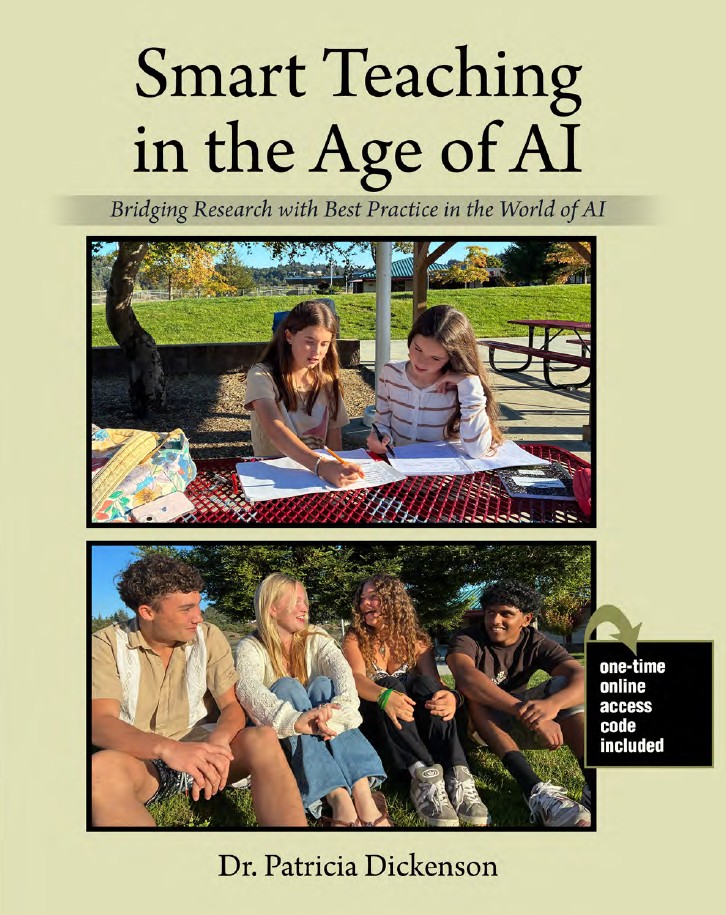
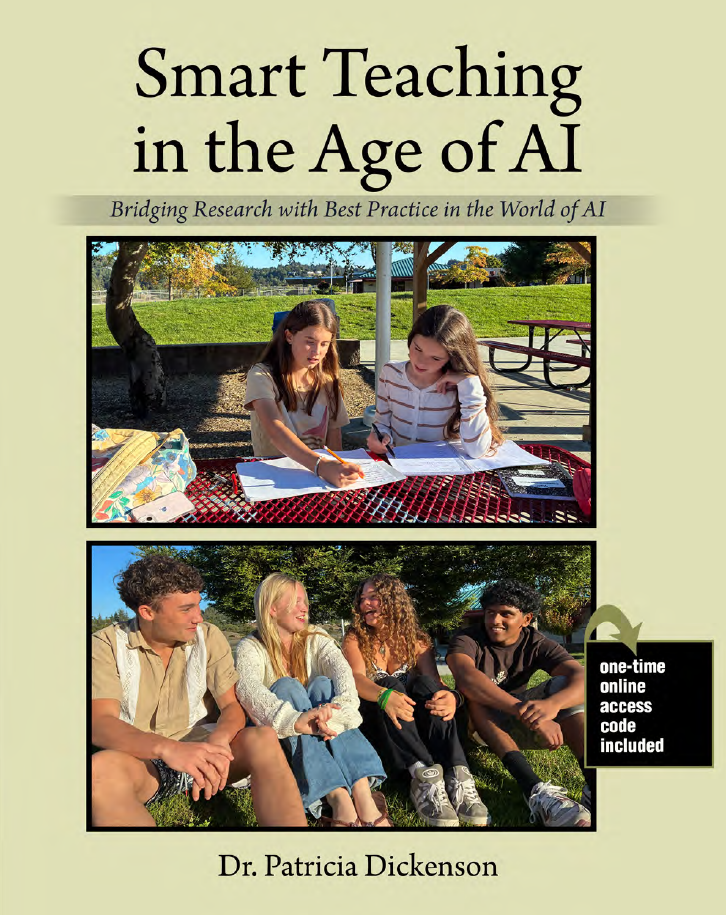
Smart Teaching in the Age of AI: Bridging Research with Best Practice in the World of AI
Edition: 1
Copyright: 2026
Edition: 1
Copyright: 2026
Choose Your Format
Choose Your Platform | Help Me Choose


Print Package
$85.00 USD
Ebook Package
$85.00 USD
Smart Teaching in the Age of AI by Dr. Patricia Dickenson is a practical, forward-thinking guide for secondary educators preparing students for a future where artificial intelligence is omnipresent. As AI becomes embedded in college, careers, and everyday life, students are already using these tools, often without guidance. This book empowers teachers to meet that reality head-on and leverage AI as a meaningful part of teaching and learning.
Grounded in research and real classroom practice, the book redefines the teacher’s role, not as a content deliverer, but as a designer of meaningful, inclusive, and engaging learning experiences. Aligned with the International Society for Technology in Education (ISTE) Standards for Educators, it positions teachers as designers, facilitators, and co-learners who use AI to enhance instruction while keeping human thinking at the center.
Readers will find actionable strategies for designing inclusive instruction, using data to support equity, and building systems like Universal Design for Learning (UDL) and MTSS to meet the needs of all learners. The book shows how to harness the power of AI to enhance what teachers are already doing: planning lessons, differentiating instruction, analyzing student data, providing feedback, and designing assessments, making these processes more efficient, responsive, and impactful.
In addition, the book highlights how students can use AI as a tool for learning, developing ideas, asking better questions, revising their thinking, and engaging in deeper problem-solving. With clear structures and examples, teachers learn how to guide students in using AI responsibly, ethically, and effectively in alignment with ISTE standards for empowered, digital-age learners.
The book also supports teachers in planning for mastery, increasing engagement, and rethinking assessment as a tool for insight, growth, and student ownership. It includes guidance on developing clear AI policies and guardrails for classroom use, helping teachers create structures that promote responsible, ethical, and transparent use of AI.
With a strong emphasis on feedback, reflection, and student agency, the book also builds AI literacy for both teachers and students, ensuring they understand not just how to use AI, but how to think critically about its outputs. It provides practical frameworks for integrating AI into everyday instruction while maintaining academic integrity and keeping human thinking at the center.
Ultimately, Smart Teaching in the Age of AI prepares educators to confidently bring AI into their classrooms ensuring students are not just users of technology, but critical thinkers ready for college, careers, and an AI-driven world
Introduction: The Case for Artificial Intelligence
Chapter 1 The Teacher as Designer: From Content to Experience
The Shift From Content Deliverer to Learning Designer
The International Society for Technology in Education Standards for Educators: A Framework for Teachers as Designers
The International Society for Technology in Education Standards in Action
Putting It All Together: A Project From Two Perspectives
Designing the Future of Learning
Chapter 2 The Learner at the Center: How Adolescents Learn
Principles of Learner-Centered Classrooms
Understanding Adolescent Development
Teacher–Mom Reflection
Early Adolescence (Ages 10–14)
Middle Adolescence (Ages 15–17)
Late Adolescence (Ages 18–21)
Knowing the Learner: Mindsets in Action
Your Mindset Matters
Mindsets, Feedback, and the Power of Belief
Teaching Grit and Growth Mindset Through Problem-Solving
Growth Mindset and Grit on the Big Screen
Try This in Your Classroom: Discussion Prompts
Connecting to Design: ISTE + Artificial Intelligence
Summary: The Learner at the Center
Final Reflection Questions
Chapter 3 Artificial Intelligence as a Cultural Tool: Designing for Today’s Learners
Why Artificial Intelligence, and Why Now
What Is Artificial Intelligence, and Why Does It Matter?
What Is Generative Artificial Intelligence?
Types of Generative Artificial Intelligence
A Brief History of Artificial Intelligence
Why Does This Matter in Education?
Artificial Intelligence Is Not Just for Teachers But Students Too
What It Looks Like When Students Use Artificial Intelligence
Why This Approach Prepares Students for the Future
How Do You Use It in Your Classroom?
Why Prompting Matters
The PARTS Framework
Breaking Down PARTS
Why This Helps Students Too
High School Prompt Examples Across Subjects
Teacher Moves: Shaping Artificial Intelligence Use in Class
Why This Matters
Subject-Specific Examples of Teacher Moves
The Teacher’s Role in Building Habits
From Product to Practice
Artificial Intelligence Mistakes and Deepfake
Keep Kids Accountable With Structures
Getting Started With Gemini: A Cultural Tool in Action
Summary: Artificial Intelligence as a Catalyst for Design: Your Human
Work Amplified
Chapter 4 Designing Inclusive Instruction
The Problem with Planning
Three Key Shifts in Reclaiming Lesson Planning
Bridging the Shift to Inclusion
What Does “Inclusive” Really Mean?
Designing Inclusive Instruction: Frameworks for Equity
The Framework in Action: Teaching Theme Through The Outsiders
Step 1: Start With Wiggins and McTighe—Backward Design
Understanding the Framework
In Practice: Unpacking the Standard
Artificial Intelligence’s Role in Co-Planning
Step 2: Apply Vygotsky’s Zone of Proximal Development
Understanding the Framework
In Practice
Step 3: Sequence Cognitive Growth With Webb’s Depth of Knowledge
Understanding the Framework
In Practice
Step 4: Embed Hattie’s Visible Learning Strategies
Understanding the Framework
In Practice
Step 5: Deepen Thinking With Costa’s Levels of Questioning
Understanding the Framework
In Practice
Designing With Intention
Inclusive Lesson Design Planning Template
STEP 1—Clarify Goals
STEP 2—Know Your Learners
STEP 3—Sequence Thinking
STEP 4—Maximize Impact
STEP 5—Deepen Inquiry
Conclusion: Teaching With Equity, Evidence, and Efficiency
Preview of Chapter 5—Differentiation
Chapter 5 Data for Equity
From Numbers to Narratives: Seeing the Whole Child Through Data
What Is Universal Design for Learning?
1. Multiple Means of Engagement—The Why of Learning
2. Multiple Means of Representation—The What of Learning
3. Multiple Means of Action and Expression—The How of Learning
Applying UDL Across a Unit
Engagement: The Why of Learning
Representation: The What of Learning
Action and Expression: The How of Learning
Across the Content Area
UDL Checklist
Multitiered System of Supports: Meeting Every Learner Where They Are
The Three Tiers of MTSS
Tier 1: Universal Supports
Tier 2: Targeted Supports
Tier 3: Intensive Supports
UDL + MTSS: A Powerful Partnership
Co-Teaching: The Engine That Powers UDL and MTSS
Co-Teaching as the Bridge Between UDL and MTSS
Where AI Strengthens the Collaborative Process
In Essence
Common Co-Teaching Models That Align With MTSS
Bringing It All Together: UDL, MTSS, and AI for Equity
Data as a Driver for Decision-Making
Using Data and Design to Support Every Learner
Reading the Story Behind the Scores
The Three I’s: Identify, Interpret, and Implement
Step 1: Identify: Look for Patterns and Possibilities
Step 2: Interpret: Ask “Why?” and “What Does This Mean?”
Step 3: Implement: Take Action With Intention
Putting It All Together
Chapter 6 Designing the Year for Mastery—Mapping Standards, Skills, and Assessments
Mastery Takes Time
The Purpose of Yearlong Design
Steps for Designing the Year for Mastery
Applying What You’re Learning
Step 1: Plan the Zero Unit (Zero Floor)
Step 2: Build the Foundation: Prioritize Power Standards
Example: Unpacking a Power Standard Across Grade Spans
Example: From Power Standard to Inquiry (Mathematics—Grade 9)
Example: From Power Standard to Inquiry (Science—Grade 8)
Step 3: Establish the Zero-to-Activation Window
Putting the Zero-to-Activation Window Into Practice
Cognitive Science: The Brain’s Need for a Hook
Pro Tip for New Teachers
Step 4: Plan to Reteach Before You Need To
Build Flex Days Into Your Yearlong Map
The Purpose of Flex Days
Step 5: Map Assessments Across the Year
Make the Year Visible
Step 6: Sequence for Coherence (the Unit Chain)
Step 7: Year at a Glance → The Syllabus (Making Learning Visible)
Universal Student-Centered Syllabus Template
Welcome Statement
Course Overview
Essential Questions
Enduring Understandings
Learning Goals/Standards
Unit Overview and Major Assignments
What We’ll Do in This Class
Assessment and Feedback (Mastery-Based)
Support Systems (UDL + MTSS)
AI Use and Academic Integrity Policy
Class Norms (We Statements)
Student Reflection and Ownership
Families and Caregivers: How to Stay Connected
Closing Invitation
Putting It All Together
Chapter 7 The Art and Science of Engagement
Engagement as Identity
Seeing Ourselves in the Numbers: Turning Interest Into Impact
Key Concepts From Immordino-Yang’s Work
The Role of Artificial Intelligence in Human-Centered Teaching
Why This Matters in the Age of Artificial Intelligence
The Wax Museum: Artificial Intelligence as Accessibility
Teaching With Artificial Intelligence: Tools That Humanize, Not Replace
Engagement Across the Arc of Instruction
Gamifying Instruction: Play, Purpose, and Participation
The Day Math Met Physical Education, Trivia, and Geography
Classroom Resource: The Amazing Race—Exponent Edition
Why Games Work: The Research Behind Play
Artificial Intelligence Co-Teacher: Powering Play With Purpose
Digital Escape Rooms: Learning Through Play and Problem-Solving
Scavenger Hunts: Movement, Mystery, and Meaning
Movement, Collaboration, and the Thinking Classroom
Building Thinking Classrooms Across the Curriculum
Artificial Intelligence Teacher Bestie: Your Creative Brainstormer
From Energy to Meaning
Try This: Bring Movement Into Learning Tomorrow
Creating to Learn
The Power of Student-Designed Logos
Across the Content Areas: Transformations in Motion
Why Writing Movement as Coordinates Builds Mastery
Interdisciplinary Creation Across Content Areas
English Language Arts: Visualizing Literary Concepts Through Art and Tableau
Science: Modeling Phenomena Through Movement and Skits
Social Studies: Representing Historical Change Through Drama
Physical Education/Performing Arts: Connecting Physical Literacy With Conceptual Thinking
Why This Works
Turn Learning Into Music With Suno Artificial Intelligence
The Explainer Video
Creating With Artificial Intelligence: Student-Built Chatbots as Learning Tools
How It Works
Why It Works
From Design to Daily Practice
The Science of Engagement
Closing: Engagement as the Heartbeat of Learning
What’s Ahead: Assessment as Reflection and Growth
Chapter 8 From Data to Insight: Rethinking Assessment With Artificial Intelligence
Rethinking Assessment: From Judgment to Insight
Assessment as Part of Learning, Not After It
Formative, Summative, and Diagnostic Assessment: Understanding the Difference
Diagnostic Assessment
Formative Assessment
Summative Assessment
Assessment as the Engine of Learning
Why Diagnostics Matter in a Mastery Approach
How to Assess for Mastery: A Classroom Example
Example: Power Standard in English Language Arts/Literacy
Why This Cycle Matters
Using SMART Goals to Build Student Ownership
A Story About Rethinking Assessment
Act 2
From Snapshot to Narrative
How Artificial Intelligence Changes the Assessment Landscape
Diagnostic Assessment in the Age of Artificial Intelligence
Formative Assessment in the Age of Artificial Intelligence
Summative Assessment in the Age of Artificial Intelligence
1. Supporting Authentic, Real-World Performance Tasks
2. Enhancing Rubrics and Scoring Consistency
3. Helping Students Evaluate and Improve Their Final Products
4. Supporting Multilingual Learners and Students With Disabilities
5. Creating Summative Portfolios and Growth Artifacts
Designing Assessments That Are Artificial Intelligence-Proof
Teacher-Friendly Checklist: Is This Assessment Artificial Intelligence-Proof?
How to Create Rubrics That Measure Higher-Order Thinking
Step 1: Start With the Learning Goal (Not the Assignment)
Step 2: Choose Three to Five “Big Thinking” Criteria
Step 3: Write Each Criterion in Student-Friendly Language
Step 4: Define Three to Four Performance Levels for Each Criterion
Step 5: Make Sure You’re Rewarding Process, Not Just Product
Step 6: Build in Authenticity and Student Voice
Student Checklist: Before Submitting Artificial Intelligence-Assisted Work
1. Understanding
2. Personal Thinking
3. Evidence and Reasoning
4. Originality
5. Accuracy and Quality
6. Transparency
7. Final Self-Evaluation
When Artificial Intelligence Joined the Dream Home Project
Artificial Intelligence as a Creative Launchpad
Artificial Intelligence as a Research and Analysis Tool
Artificial Intelligence and Canva: A New Layer of Design Thinking
Artificial Intelligence as a Thinking Partner
A New View of Assessment
Conclusion: Assessment as Insight, Artificial Intelligence as a Partner
Chapter 9 When Feedback Isn’t Enough: The Power of Reflection in Moving Learning Forward
Opening: When Feedback Isn’t Enough
The Feedback to Action Protocol: Four Moves That Turn Insight Into Improvement
Scaling What Matters: How Artificial Intelligence Helps Teachers Give Better, More Meaningful Feedback
Using Artificial Intelligence to Make Feedback More Actionable
What Reflection Is, and Why It Matters
Moving Students From “IDK” to Insight
Why Reflection Matters
Reflection + AI: Scaling Metacognition, Not Replacing It
AI Tools to Support Teacher Workflow
Practical Ways to Use AI to Strengthen Reflection
How Feedback, Reflection, and AI Work Together
Setting the Stage for the PAIRR Model
STEP 1: DRAFT (Student Voice First)
STEP 2: PEER FEEDBACK (Community and Discourse)
STEP 3: AI FEEDBACK (A Second Perspective)
STEP 4: REFLECT (Discernment and Metacognition)
STEP 5: REVISE (Purposeful Improvement)
Classroom Routines That Build a Feedback–Reflection Culture
Reflection as an Equity Practice
AI Tools That Expand Access to Reflection
Bringing It All Together: Feedback and Reflection That Move
Learning Forward
Chapter 10 Human Thinking First: Artificial Intelligence Literacy, Agency, and the Future of Teaching
The Only Tool We’ve Never Had: Why Artificial Intelligence Is the Ultimate Differentiator
Knowledge Asymmetry and the Illusion of Understanding
What Artificial Intelligence Literacy Really Means
Engaging With Artificial Intelligence
Creating With Artificial Intelligence
Classroom Examples
Managing Artificial Intelligence
Classroom Examples
Understanding How Artificial Intelligence Works
Classroom Examples
When Artificial Intelligence Misleads: Teaching Students to Recognize and Respond
Deepfakes: When What Looks Real Isn’t
Example: In Event of Moon Disaster (MIT)
How to Teach This
Example: Pope Francis “Puffer Jacket” Image (2023)
How to Teach This
Example: Fake Image of an Explosion Near the Pentagon (2023)
How to Teach This
Example 1: Career Descriptions and Stereotypes (CTE, Science, and Social Studies)
Example 2: Literary Interpretation and Missing Perspectives (ELA)
Example 3: Data, Statistics, and Representation (Math)
Teaching Takeaway for Secondary Classrooms
Artificial Intelligence Literacy as a Developmental Progression
Why This Progression Matters
Six Steps Forward: Moving From Artificial Intelligence Theory to Human-Centered Practice
Step 1: Start With You—Developing Your Own Artificial Intelligence Literacy
Step 2: Begin With Human Thinking Before Turning to Artificial Intelligence
Step 3: Don’t Just Evaluate the Polish—Value the Process
Step 4: Teach Students How to Think About Artificial Intelligence Output
Step 5: Design for Thinking, Not Just Efficiency
Step 6: Guide Students Forward, They Are Still Becoming Learners
From Policy to Practice: Transparency as Artificial Intelligence Literacy
A Framework for Responsible Artificial Intelligence Use in Schools
The Teacher You Are Becoming
A Call to Action for Future Teachers
Appendix
References
Index

Dr. Patricia Dickenson is an Associate Professor of Teacher Education at National University. She is the Program Lead for the Bachelors of Arts In Interdisciplinary Studies with the Preliminary Multiple and Single Subject Credential. Her research area focuses on mathematics professional development and technology. She has worked in higher education for the past 8 years and was a mathematics coach, middle school teacher, and elementary school teacher for the Los Angeles Unified school district for over ten years. Dr. Dickenson has published two books and has over 12 book chapters and articles. She recently received the National Council of Teaching Mathematics Grant for Classroom research. Dr. Dickenson has posted over 80 blog posts on her blog: www.teacherpreptech.com and can be followed on twitter @teacherpreptech. She has written three Guest Blog posts in Education Week
Smart Teaching in the Age of AI by Dr. Patricia Dickenson is a practical, forward-thinking guide for secondary educators preparing students for a future where artificial intelligence is omnipresent. As AI becomes embedded in college, careers, and everyday life, students are already using these tools, often without guidance. This book empowers teachers to meet that reality head-on and leverage AI as a meaningful part of teaching and learning.
Grounded in research and real classroom practice, the book redefines the teacher’s role, not as a content deliverer, but as a designer of meaningful, inclusive, and engaging learning experiences. Aligned with the International Society for Technology in Education (ISTE) Standards for Educators, it positions teachers as designers, facilitators, and co-learners who use AI to enhance instruction while keeping human thinking at the center.
Readers will find actionable strategies for designing inclusive instruction, using data to support equity, and building systems like Universal Design for Learning (UDL) and MTSS to meet the needs of all learners. The book shows how to harness the power of AI to enhance what teachers are already doing: planning lessons, differentiating instruction, analyzing student data, providing feedback, and designing assessments, making these processes more efficient, responsive, and impactful.
In addition, the book highlights how students can use AI as a tool for learning, developing ideas, asking better questions, revising their thinking, and engaging in deeper problem-solving. With clear structures and examples, teachers learn how to guide students in using AI responsibly, ethically, and effectively in alignment with ISTE standards for empowered, digital-age learners.
The book also supports teachers in planning for mastery, increasing engagement, and rethinking assessment as a tool for insight, growth, and student ownership. It includes guidance on developing clear AI policies and guardrails for classroom use, helping teachers create structures that promote responsible, ethical, and transparent use of AI.
With a strong emphasis on feedback, reflection, and student agency, the book also builds AI literacy for both teachers and students, ensuring they understand not just how to use AI, but how to think critically about its outputs. It provides practical frameworks for integrating AI into everyday instruction while maintaining academic integrity and keeping human thinking at the center.
Ultimately, Smart Teaching in the Age of AI prepares educators to confidently bring AI into their classrooms ensuring students are not just users of technology, but critical thinkers ready for college, careers, and an AI-driven world
Introduction: The Case for Artificial Intelligence
Chapter 1 The Teacher as Designer: From Content to Experience
The Shift From Content Deliverer to Learning Designer
The International Society for Technology in Education Standards for Educators: A Framework for Teachers as Designers
The International Society for Technology in Education Standards in Action
Putting It All Together: A Project From Two Perspectives
Designing the Future of Learning
Chapter 2 The Learner at the Center: How Adolescents Learn
Principles of Learner-Centered Classrooms
Understanding Adolescent Development
Teacher–Mom Reflection
Early Adolescence (Ages 10–14)
Middle Adolescence (Ages 15–17)
Late Adolescence (Ages 18–21)
Knowing the Learner: Mindsets in Action
Your Mindset Matters
Mindsets, Feedback, and the Power of Belief
Teaching Grit and Growth Mindset Through Problem-Solving
Growth Mindset and Grit on the Big Screen
Try This in Your Classroom: Discussion Prompts
Connecting to Design: ISTE + Artificial Intelligence
Summary: The Learner at the Center
Final Reflection Questions
Chapter 3 Artificial Intelligence as a Cultural Tool: Designing for Today’s Learners
Why Artificial Intelligence, and Why Now
What Is Artificial Intelligence, and Why Does It Matter?
What Is Generative Artificial Intelligence?
Types of Generative Artificial Intelligence
A Brief History of Artificial Intelligence
Why Does This Matter in Education?
Artificial Intelligence Is Not Just for Teachers But Students Too
What It Looks Like When Students Use Artificial Intelligence
Why This Approach Prepares Students for the Future
How Do You Use It in Your Classroom?
Why Prompting Matters
The PARTS Framework
Breaking Down PARTS
Why This Helps Students Too
High School Prompt Examples Across Subjects
Teacher Moves: Shaping Artificial Intelligence Use in Class
Why This Matters
Subject-Specific Examples of Teacher Moves
The Teacher’s Role in Building Habits
From Product to Practice
Artificial Intelligence Mistakes and Deepfake
Keep Kids Accountable With Structures
Getting Started With Gemini: A Cultural Tool in Action
Summary: Artificial Intelligence as a Catalyst for Design: Your Human
Work Amplified
Chapter 4 Designing Inclusive Instruction
The Problem with Planning
Three Key Shifts in Reclaiming Lesson Planning
Bridging the Shift to Inclusion
What Does “Inclusive” Really Mean?
Designing Inclusive Instruction: Frameworks for Equity
The Framework in Action: Teaching Theme Through The Outsiders
Step 1: Start With Wiggins and McTighe—Backward Design
Understanding the Framework
In Practice: Unpacking the Standard
Artificial Intelligence’s Role in Co-Planning
Step 2: Apply Vygotsky’s Zone of Proximal Development
Understanding the Framework
In Practice
Step 3: Sequence Cognitive Growth With Webb’s Depth of Knowledge
Understanding the Framework
In Practice
Step 4: Embed Hattie’s Visible Learning Strategies
Understanding the Framework
In Practice
Step 5: Deepen Thinking With Costa’s Levels of Questioning
Understanding the Framework
In Practice
Designing With Intention
Inclusive Lesson Design Planning Template
STEP 1—Clarify Goals
STEP 2—Know Your Learners
STEP 3—Sequence Thinking
STEP 4—Maximize Impact
STEP 5—Deepen Inquiry
Conclusion: Teaching With Equity, Evidence, and Efficiency
Preview of Chapter 5—Differentiation
Chapter 5 Data for Equity
From Numbers to Narratives: Seeing the Whole Child Through Data
What Is Universal Design for Learning?
1. Multiple Means of Engagement—The Why of Learning
2. Multiple Means of Representation—The What of Learning
3. Multiple Means of Action and Expression—The How of Learning
Applying UDL Across a Unit
Engagement: The Why of Learning
Representation: The What of Learning
Action and Expression: The How of Learning
Across the Content Area
UDL Checklist
Multitiered System of Supports: Meeting Every Learner Where They Are
The Three Tiers of MTSS
Tier 1: Universal Supports
Tier 2: Targeted Supports
Tier 3: Intensive Supports
UDL + MTSS: A Powerful Partnership
Co-Teaching: The Engine That Powers UDL and MTSS
Co-Teaching as the Bridge Between UDL and MTSS
Where AI Strengthens the Collaborative Process
In Essence
Common Co-Teaching Models That Align With MTSS
Bringing It All Together: UDL, MTSS, and AI for Equity
Data as a Driver for Decision-Making
Using Data and Design to Support Every Learner
Reading the Story Behind the Scores
The Three I’s: Identify, Interpret, and Implement
Step 1: Identify: Look for Patterns and Possibilities
Step 2: Interpret: Ask “Why?” and “What Does This Mean?”
Step 3: Implement: Take Action With Intention
Putting It All Together
Chapter 6 Designing the Year for Mastery—Mapping Standards, Skills, and Assessments
Mastery Takes Time
The Purpose of Yearlong Design
Steps for Designing the Year for Mastery
Applying What You’re Learning
Step 1: Plan the Zero Unit (Zero Floor)
Step 2: Build the Foundation: Prioritize Power Standards
Example: Unpacking a Power Standard Across Grade Spans
Example: From Power Standard to Inquiry (Mathematics—Grade 9)
Example: From Power Standard to Inquiry (Science—Grade 8)
Step 3: Establish the Zero-to-Activation Window
Putting the Zero-to-Activation Window Into Practice
Cognitive Science: The Brain’s Need for a Hook
Pro Tip for New Teachers
Step 4: Plan to Reteach Before You Need To
Build Flex Days Into Your Yearlong Map
The Purpose of Flex Days
Step 5: Map Assessments Across the Year
Make the Year Visible
Step 6: Sequence for Coherence (the Unit Chain)
Step 7: Year at a Glance → The Syllabus (Making Learning Visible)
Universal Student-Centered Syllabus Template
Welcome Statement
Course Overview
Essential Questions
Enduring Understandings
Learning Goals/Standards
Unit Overview and Major Assignments
What We’ll Do in This Class
Assessment and Feedback (Mastery-Based)
Support Systems (UDL + MTSS)
AI Use and Academic Integrity Policy
Class Norms (We Statements)
Student Reflection and Ownership
Families and Caregivers: How to Stay Connected
Closing Invitation
Putting It All Together
Chapter 7 The Art and Science of Engagement
Engagement as Identity
Seeing Ourselves in the Numbers: Turning Interest Into Impact
Key Concepts From Immordino-Yang’s Work
The Role of Artificial Intelligence in Human-Centered Teaching
Why This Matters in the Age of Artificial Intelligence
The Wax Museum: Artificial Intelligence as Accessibility
Teaching With Artificial Intelligence: Tools That Humanize, Not Replace
Engagement Across the Arc of Instruction
Gamifying Instruction: Play, Purpose, and Participation
The Day Math Met Physical Education, Trivia, and Geography
Classroom Resource: The Amazing Race—Exponent Edition
Why Games Work: The Research Behind Play
Artificial Intelligence Co-Teacher: Powering Play With Purpose
Digital Escape Rooms: Learning Through Play and Problem-Solving
Scavenger Hunts: Movement, Mystery, and Meaning
Movement, Collaboration, and the Thinking Classroom
Building Thinking Classrooms Across the Curriculum
Artificial Intelligence Teacher Bestie: Your Creative Brainstormer
From Energy to Meaning
Try This: Bring Movement Into Learning Tomorrow
Creating to Learn
The Power of Student-Designed Logos
Across the Content Areas: Transformations in Motion
Why Writing Movement as Coordinates Builds Mastery
Interdisciplinary Creation Across Content Areas
English Language Arts: Visualizing Literary Concepts Through Art and Tableau
Science: Modeling Phenomena Through Movement and Skits
Social Studies: Representing Historical Change Through Drama
Physical Education/Performing Arts: Connecting Physical Literacy With Conceptual Thinking
Why This Works
Turn Learning Into Music With Suno Artificial Intelligence
The Explainer Video
Creating With Artificial Intelligence: Student-Built Chatbots as Learning Tools
How It Works
Why It Works
From Design to Daily Practice
The Science of Engagement
Closing: Engagement as the Heartbeat of Learning
What’s Ahead: Assessment as Reflection and Growth
Chapter 8 From Data to Insight: Rethinking Assessment With Artificial Intelligence
Rethinking Assessment: From Judgment to Insight
Assessment as Part of Learning, Not After It
Formative, Summative, and Diagnostic Assessment: Understanding the Difference
Diagnostic Assessment
Formative Assessment
Summative Assessment
Assessment as the Engine of Learning
Why Diagnostics Matter in a Mastery Approach
How to Assess for Mastery: A Classroom Example
Example: Power Standard in English Language Arts/Literacy
Why This Cycle Matters
Using SMART Goals to Build Student Ownership
A Story About Rethinking Assessment
Act 2
From Snapshot to Narrative
How Artificial Intelligence Changes the Assessment Landscape
Diagnostic Assessment in the Age of Artificial Intelligence
Formative Assessment in the Age of Artificial Intelligence
Summative Assessment in the Age of Artificial Intelligence
1. Supporting Authentic, Real-World Performance Tasks
2. Enhancing Rubrics and Scoring Consistency
3. Helping Students Evaluate and Improve Their Final Products
4. Supporting Multilingual Learners and Students With Disabilities
5. Creating Summative Portfolios and Growth Artifacts
Designing Assessments That Are Artificial Intelligence-Proof
Teacher-Friendly Checklist: Is This Assessment Artificial Intelligence-Proof?
How to Create Rubrics That Measure Higher-Order Thinking
Step 1: Start With the Learning Goal (Not the Assignment)
Step 2: Choose Three to Five “Big Thinking” Criteria
Step 3: Write Each Criterion in Student-Friendly Language
Step 4: Define Three to Four Performance Levels for Each Criterion
Step 5: Make Sure You’re Rewarding Process, Not Just Product
Step 6: Build in Authenticity and Student Voice
Student Checklist: Before Submitting Artificial Intelligence-Assisted Work
1. Understanding
2. Personal Thinking
3. Evidence and Reasoning
4. Originality
5. Accuracy and Quality
6. Transparency
7. Final Self-Evaluation
When Artificial Intelligence Joined the Dream Home Project
Artificial Intelligence as a Creative Launchpad
Artificial Intelligence as a Research and Analysis Tool
Artificial Intelligence and Canva: A New Layer of Design Thinking
Artificial Intelligence as a Thinking Partner
A New View of Assessment
Conclusion: Assessment as Insight, Artificial Intelligence as a Partner
Chapter 9 When Feedback Isn’t Enough: The Power of Reflection in Moving Learning Forward
Opening: When Feedback Isn’t Enough
The Feedback to Action Protocol: Four Moves That Turn Insight Into Improvement
Scaling What Matters: How Artificial Intelligence Helps Teachers Give Better, More Meaningful Feedback
Using Artificial Intelligence to Make Feedback More Actionable
What Reflection Is, and Why It Matters
Moving Students From “IDK” to Insight
Why Reflection Matters
Reflection + AI: Scaling Metacognition, Not Replacing It
AI Tools to Support Teacher Workflow
Practical Ways to Use AI to Strengthen Reflection
How Feedback, Reflection, and AI Work Together
Setting the Stage for the PAIRR Model
STEP 1: DRAFT (Student Voice First)
STEP 2: PEER FEEDBACK (Community and Discourse)
STEP 3: AI FEEDBACK (A Second Perspective)
STEP 4: REFLECT (Discernment and Metacognition)
STEP 5: REVISE (Purposeful Improvement)
Classroom Routines That Build a Feedback–Reflection Culture
Reflection as an Equity Practice
AI Tools That Expand Access to Reflection
Bringing It All Together: Feedback and Reflection That Move
Learning Forward
Chapter 10 Human Thinking First: Artificial Intelligence Literacy, Agency, and the Future of Teaching
The Only Tool We’ve Never Had: Why Artificial Intelligence Is the Ultimate Differentiator
Knowledge Asymmetry and the Illusion of Understanding
What Artificial Intelligence Literacy Really Means
Engaging With Artificial Intelligence
Creating With Artificial Intelligence
Classroom Examples
Managing Artificial Intelligence
Classroom Examples
Understanding How Artificial Intelligence Works
Classroom Examples
When Artificial Intelligence Misleads: Teaching Students to Recognize and Respond
Deepfakes: When What Looks Real Isn’t
Example: In Event of Moon Disaster (MIT)
How to Teach This
Example: Pope Francis “Puffer Jacket” Image (2023)
How to Teach This
Example: Fake Image of an Explosion Near the Pentagon (2023)
How to Teach This
Example 1: Career Descriptions and Stereotypes (CTE, Science, and Social Studies)
Example 2: Literary Interpretation and Missing Perspectives (ELA)
Example 3: Data, Statistics, and Representation (Math)
Teaching Takeaway for Secondary Classrooms
Artificial Intelligence Literacy as a Developmental Progression
Why This Progression Matters
Six Steps Forward: Moving From Artificial Intelligence Theory to Human-Centered Practice
Step 1: Start With You—Developing Your Own Artificial Intelligence Literacy
Step 2: Begin With Human Thinking Before Turning to Artificial Intelligence
Step 3: Don’t Just Evaluate the Polish—Value the Process
Step 4: Teach Students How to Think About Artificial Intelligence Output
Step 5: Design for Thinking, Not Just Efficiency
Step 6: Guide Students Forward, They Are Still Becoming Learners
From Policy to Practice: Transparency as Artificial Intelligence Literacy
A Framework for Responsible Artificial Intelligence Use in Schools
The Teacher You Are Becoming
A Call to Action for Future Teachers
Appendix
References
Index
Dr. Patricia Dickenson is an Associate Professor of Teacher Education at National University. She is the Program Lead for the Bachelors of Arts In Interdisciplinary Studies with the Preliminary Multiple and Single Subject Credential. Her research area focuses on mathematics professional development and technology. She has worked in higher education for the past 8 years and was a mathematics coach, middle school teacher, and elementary school teacher for the Los Angeles Unified school district for over ten years. Dr. Dickenson has published two books and has over 12 book chapters and articles. She recently received the National Council of Teaching Mathematics Grant for Classroom research. Dr. Dickenson has posted over 80 blog posts on her blog: www.teacherpreptech.com and can be followed on twitter @teacherpreptech. She has written three Guest Blog posts in Education Week