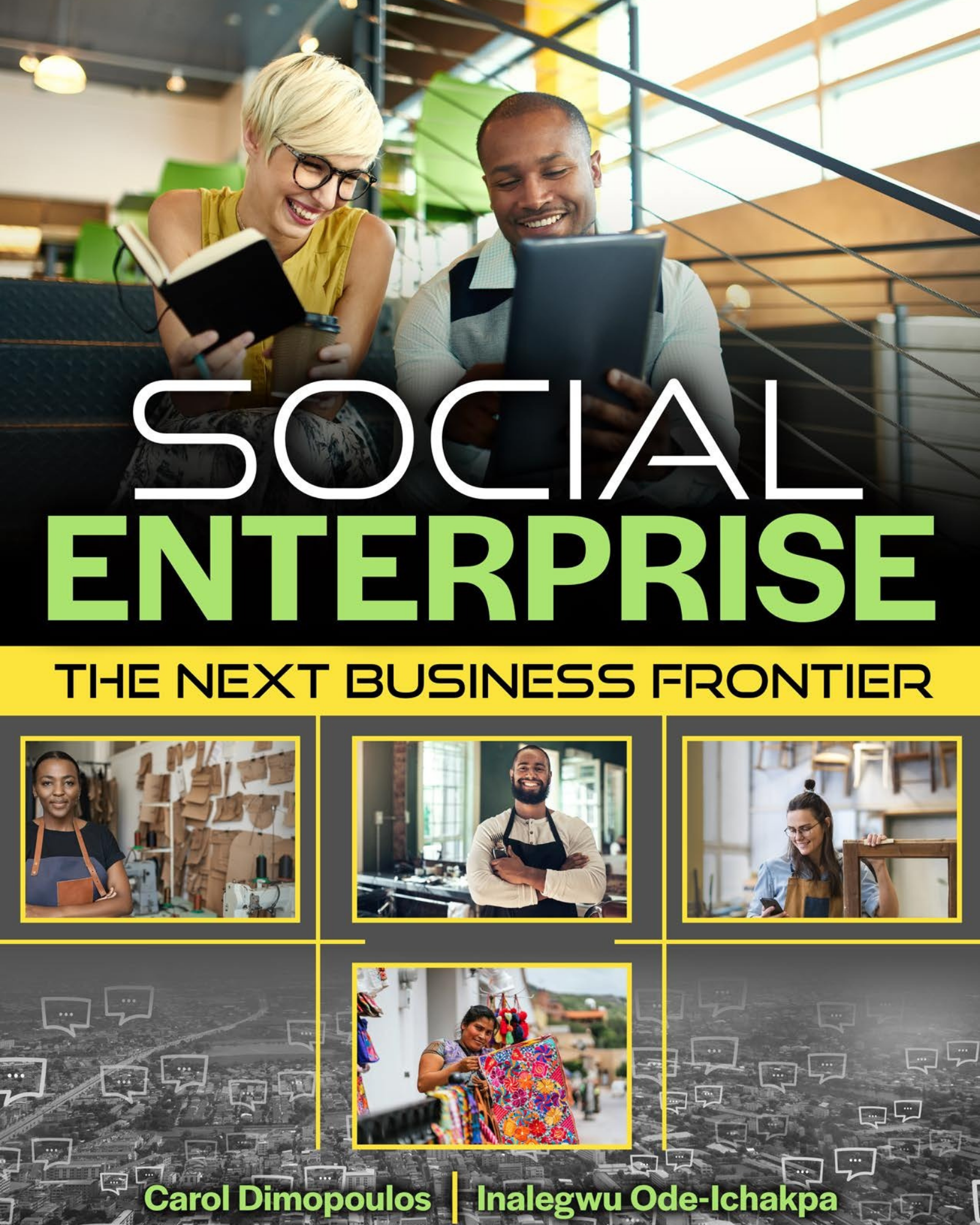
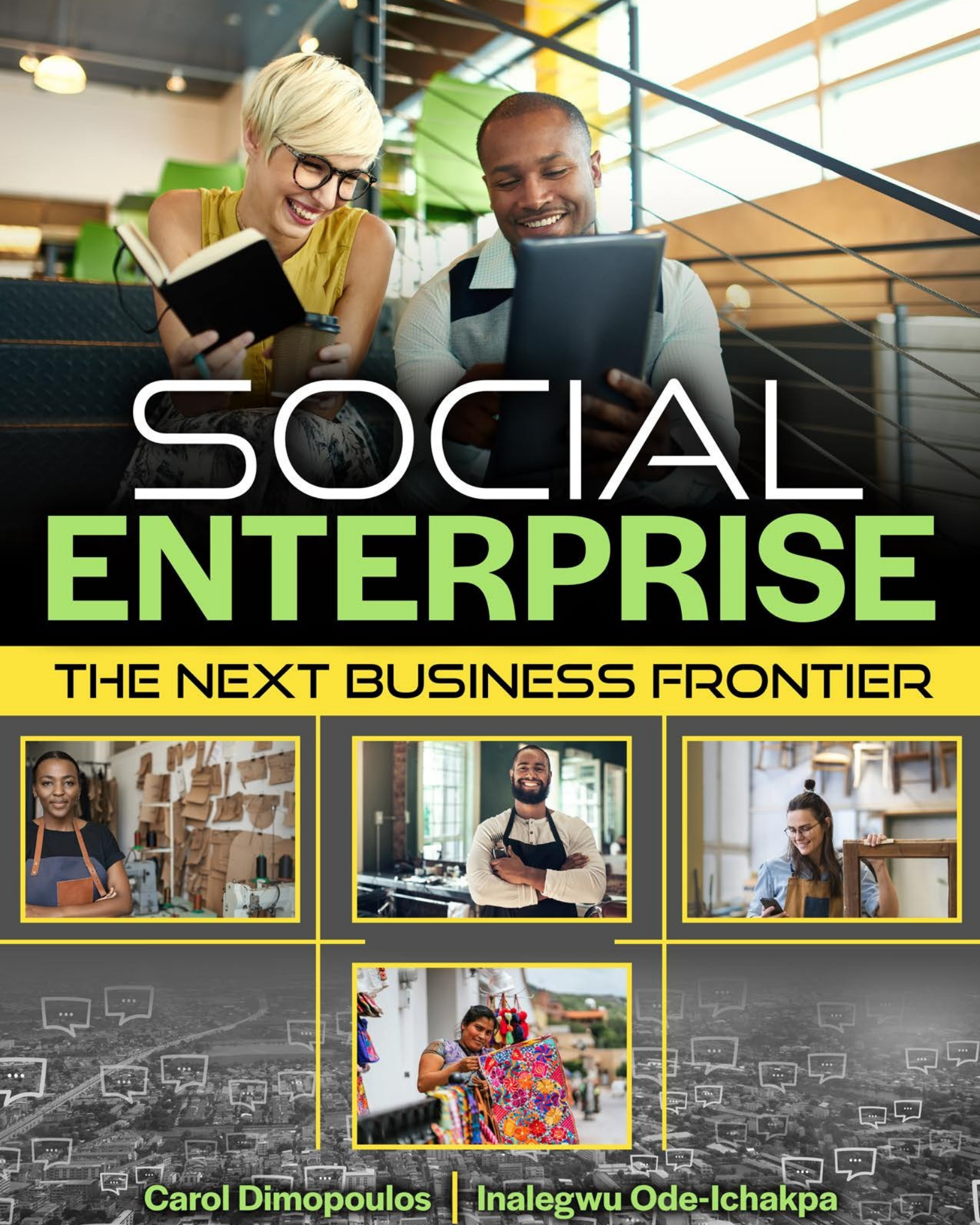
Social Enterprise: The Next Business Frontier

Edition: 1

Copyright: 2026

Pages: 205

Choose Your Format

Choose Your Platform | Help Me Choose

Ebook Package

$59.95 USD

ISBN 9798385177257

Details eBook w/Ancillary Site 180 days

Social Enterprise: The Next Business Frontier provides an engaging examination of the subject of social enterprise. The student-friendly text provides a deep dive into the early origins, historical growth, modern conditions, and future projections of the movement. Original case studies highlight the applications of the concepts in the text, helping students to contextualize the theoretical and practical application of practice.

Social enterprises have emerged as a powerful force for change, blending the innovation and efficiency of business with the mission-driven focus of the social sector. This textbook is designed to provide a comprehensive understanding of the social enterprise movement—its past, present, and future—by guiding readers through foundational concepts, diverse business models, global impacts, and practical strategies for launching and scaling sustainable ventures.

Part One: Past & Present offers a historical lens through which we trace the evolution of social enterprises, from early philanthropic efforts to today’s mission-oriented, sustainable business models. It defines the essence of social enterprise and explores current global trends, setting the stage for a deeper exploration of their economic and societal roles.

Part Two: Business Models & Economic Structures dives into the mechanics of how social enterprises operate. It presents various organizational forms—like cooperatives, B Corps, and fair-trade initiatives—while emphasizing the importance of sustainable practices and effective impact measurement to maintain integrity and long-term viability.

Part Three: Economic Benefits & Global Perspectives broadens the scope, examining how social enterprises function across cultures and contribute to global goals like the United Nations’ Sustainable Development Goals (SDGs). The Part also highlights the significance of partnerships and foreign investment in scaling impact and fostering inclusive economic growth.

Part Four: Building & Managing a Social Enterprise turns theory into action, equipping aspiring social entrepreneurs with a practical toolkit for starting and managing mission-driven businesses. From ideation and project management to securing foreign investment, this Part provides the strategic and operational insights needed to thrive in a competitive environment.

Part Five: Future Trends & Innovations looks ahead to the next frontier of social enterprise, where technology and innovation will reshape the landscape. It also offers a grounded look at the real-world challenges social entrepreneurs face—and how to overcome them with resilience, creativity, and purpose.


Together, these Parts form a roadmap for understanding, building, and growing social enterprises that not only generate economic value but also create lasting social and environmental impact. Whether you are a student, educator, practitioner, or policymaker, this text invites you to engage with the dynamic world of social enterprise and become part of a movement that is redefining the purpose of business in society.


About the Authors 
Introduction 

Chapter 1: Historical Background and Evolution of Social Enterprises 
1.1 Introduction 
1.2 Early Origins 
1.3 Key Milestones in the Social Enterprise Movement 
1.4 Evolution from Charity to Sustainability 
1.5 Influential Figures and Organizations 
1.6 Policy and Institutional Support 
1.7 Defining the Modern Social Enterprise 

Chapter 2: Definition and Key Characteristics 
2.1 Key Characteristics of Social Enterprises 
2.2 Social Enterprise—Approaches 
2.3 Evaluating and Supporting Social Enterprises 
2.4 Shifting Impact Metrics 
2.5 Why Social Enterprises Are Unique 
2.6 Application to Modern Business 
2.7 Impact-Growth of Networks Like the B Corporation Movement 
2.8 Defining the Modern Social Enterprise 

Chapter 3: Trends and Future Trajectories 
3.1 Introduction 
3.2 Current Global Growth Trends 
3.3 Economic Drivers of Growth 
3.4 Social Influences on Development 
3.5 Environmental Imperatives 
3.6 Future Projections 
3.7 Challenges and Opportunities Ahead 

Chapter 4: Types of Social Enterprises 
4.1 Introduction 
4.2 Primary Business Models 
4.3 Characteristics of Social Entrepreneurship 
4.4 Examples of Social Enterprises 
4.5 Limitations of Business Models 

Chapter 5: Business Ethics in Social Enterprises: Embedding Sustainable & Ethical Practices 
5.1 Introduction 
5.2 Ethics Defined 
5.3 Definition of Ethics in Social Enterprise 
5.4 Ethics Applied to the Pillars of Social Enterprise
5.5 Why Ethics Are Sometimes Overlooked 
5.6  The Role of Collaboration in Ethical Decision-Making
5.7 Limitations in Ethical Decision-Making 

Chapter 6: Impact Measurement and Evaluation 
6.1 Introduction 
6.2 Introduction to Impact Measurement 
6.3 Key Measurement Frameworks 
6.4  Quantitative vs. Qualitative Measurement Approaches 
6.5 Challenges in Impact Measurement 
6.6 Best Practices for Effective Impact Evaluation 

Chapter 7: Social Enterprise Global Movements and Cross-Cultural Considerations 
7. 1 Introduction 
7.2 Cross-Cultural Considerations in Social Enterprises 
7.3 Cultural Values and Local Context 
7.4 Globalization vs. Localization 
7.5 Legal Frameworks and Governance Structures 

Chapter 8: SDGs and Economic Impact 
8.1 Introduction 
8.2  Overview of the Sustainable Development Goals (SDGs) 
8.3 Social Enterprise Activities Aligned with SDGs 
8.4 Measuring Economic Impact of Social Enterprises 
8.5 Case Studies of Social Enterprises Advancing SDGs 
8.6 Challenges and Opportunities 
8.7 Strategies for Enhancing SDG Contributions 
8.8 Future Outlook 
8.9 Case Study: SolarAid’s Future Outlook 

Chapter 9: Collaboration and Partnership in Social Enterprises 
9.1 Introduction 
9.2 Types of Collaborations in Social Enterprises 
9.3 Strategic Benefits and Challenges of Partnership 
9.4 Governance and Trust-Building in Partnerships 
9.5 Case Studies in Partnership 
9.6 Best Practices for Collaborative Success 

Chapter 10: Start-Up Guide 
10.1 Introduction 
10.2 Defining the Social Enterprise Concept 
10.3 Identifying the Problem 
10.4 Developing an Entrepreneurial Mindset 
10.5 The Entrepreneurial Process 
10.6 Feasibility Analysis 
10.7 Building a Business Plan 
10.8  Ideation and Innovation: Aligning Personal Values with the Identified Issue 
10.9 Marketing and Brand Positioning 
10.10 Legal Structure and Organizational Design 
10.11 Legal Structure and Organizational Design 
10.12 Measuring Impact and Continuous Improvement 
10.13 Scaling the Social Enterprise 

Chapter 11: Project Management in Social Enterprises 
11.1  Introduction to Project Management in Social Enterprises 
11.2 Project Life Cycle Phases 
11.3 Project Management Methodologies 
11.4 Managing Teams and Stakeholders 
Case Study: Tourism Cares—A Nonprofit Championing Social Entrepreneurship in Sustainable Tourism 
11.5 Resource Optimization and Scaling 
11.6 Aligning Projects with Mission and Impact 
11.7 Monitoring, Evaluation, and Learning (MEL) 

Chapter 12: Foreign Direct Investment (FDI) in Social Enterprises 
12.1 Introduction 
12.2  Limiting Factors of FDI as a Social Enterprise in an Economy 
12.3  Problems of FDI as a Social Enterprise in an Economy 
12.4 FDI and Its Role in the Nigerian Economy 

Chapter 13: Technology and Innovation in Social Enterprise 
13.1 Introduction 
13.2  The Role of Technology and Innovation in Social Enterprise 
13.3 Essential Technologies Used in Social Enterprises 
13.4 Future Outlook and Challenges 

Chapter 14: Challenges, Solutions, and Practical Guide for Aspiring Entrepreneurs 
14.1 Introduction 
14.2  Challenges in Social Entrepreneurship: Key Issues and Case Studies 
14.3  Financial and Operational Solutions for Social Enterprises 
14.4 Lessons from Successful Social Entrepreneurs 
Case Study 1: Overcoming Financial Barriers—How a Social Enterprise Secured Sustainable Funding 
Case Study 2: Scaling with Purpose—Expanding Globally Without Compromising Mission Case Study 3: Innovating for Social Change—Leveraging Technology to Disrupt Traditional Markets 
14.5  Collaboration and Policy Support for Social Enterprises 

Index

Carol Dimopoulos

Dr. Carol Dimopoulos has unique background which bridges global social entrepreneurship and academia. She has over 20 years of experience as a high-profile global business executive, and 15+ years in academia. She earned her doctorate from the University of Illinois Urbana Champaign in Education Policy, Organization & Leadership-Global Studies in Education and an MBA (Strategy Concentration) from Sage Graduate School and a certification from Harvard Medical School in Lifestyle and Wellness Coaching.

In her industry role, she serves as CEO and founder of Learning Journeys, a social enterprise focused on global transformational journeys which encourage participants to immerse in their interests and passions. The brand focuses on incorporating opportunities for personal growth and restoration into the global travel platform as well as creating social exchanges which initiate economic opportunities through social entrepreneurship. Through her extensive cultural immersions in developing countries and rural indigenous societies she discovered what drives human empowerment at a core level. Her work has been featured in publications such as Newsweek, Women’s Health, The Boston Globe, The LA Times, and numerous industry publications. Dr. Dimopoulos was selected by the Islands of Malta to serve as a Travel Ambassador, filming a video series to highlight the destination’s cultural preservation, local small business, and sustainable practices to preserve the islands’ natural beauty and history. She is an international speaker, expert in the application of social entrepreneurship, and served on the board of directors of the United States Tourism Association (USTOA).

She is also a respected academic and scholar, serving as Assistant Professor of Entrepreneurship at East Stroudsburg University. In addition, she is a published researcher and a scholar on the subjects of social entrepreneurship, innovation, work-based and service learning, leadership, self-agency, and mindfulness. She has received multiple grants to study equity in entrepreneurship and social enterprise. She has presented at numerous global conferences, and her research has been published in both conference papers and an ABS journal publication. She is a member of the Association of College and University Educators (ACUE) and a digital scholar fellow.

Inalegwu Ode Ichakpa

Dr. Inalegwu Ode-Ichakpa is an esteemed academic and professional in the fields of Accounting and Finance. Holding a PhD in Accounting & Finance and an MBA, he is a Fellow of the Association of Chartered Certified Accountants (ACCA), a licensed CPA in British Columbia, Canada, and a Fellow of the Higher Education Academy (FHEA). Additionally, he is a member of the Association of College and University Educators (ACUE).

With over 15 years of experience in higher education, Dr. Ode-Ichakpa has made significant contributions as both an educator and a researcher. His academic interests are vast,

spanning Corporate Governance, Corporate Social Responsibility (CSR), IFRS & US GAAP, Circular Economy, Sustainability, and Corporate Finance. He has supervised more than 100 master’s theses and completed the supervision of two PhD candidates, helping to shape the future of accounting and finance research.

Dr. Ode-Ichakpa’s research has been published in prestigious ABS and ABDC ranked journals, where he continues to advance the discourse on critical accounting and finance issues. He has also served as an Examiner and Marker for various business and accounting professional bodies, further cementing his position as a thought leader in his field.

His extensive teaching experience includes roles in Europe, China, and Russia, where he has had the opportunity to influence a diverse range of students, preparing them for careers in business, accounting, and finance. Dr. Ode-Ichakpa’s dedication to education and his international experience makes him a sought-after expert in his field, committed to both advancing academic knowledge and preparing future generations of business leaders.

Social Enterprise: The Next Business Frontier provides an engaging examination of the subject of social enterprise. The student-friendly text provides a deep dive into the early origins, historical growth, modern conditions, and future projections of the movement. Original case studies highlight the applications of the concepts in the text, helping students to contextualize the theoretical and practical application of practice.

Social enterprises have emerged as a powerful force for change, blending the innovation and efficiency of business with the mission-driven focus of the social sector. This textbook is designed to provide a comprehensive understanding of the social enterprise movement—its past, present, and future—by guiding readers through foundational concepts, diverse business models, global impacts, and practical strategies for launching and scaling sustainable ventures.

Part One: Past & Present offers a historical lens through which we trace the evolution of social enterprises, from early philanthropic efforts to today’s mission-oriented, sustainable business models. It defines the essence of social enterprise and explores current global trends, setting the stage for a deeper exploration of their economic and societal roles.

Part Two: Business Models & Economic Structures dives into the mechanics of how social enterprises operate. It presents various organizational forms—like cooperatives, B Corps, and fair-trade initiatives—while emphasizing the importance of sustainable practices and effective impact measurement to maintain integrity and long-term viability.

Part Three: Economic Benefits & Global Perspectives broadens the scope, examining how social enterprises function across cultures and contribute to global goals like the United Nations’ Sustainable Development Goals (SDGs). The Part also highlights the significance of partnerships and foreign investment in scaling impact and fostering inclusive economic growth.

Part Four: Building & Managing a Social Enterprise turns theory into action, equipping aspiring social entrepreneurs with a practical toolkit for starting and managing mission-driven businesses. From ideation and project management to securing foreign investment, this Part provides the strategic and operational insights needed to thrive in a competitive environment.

Part Five: Future Trends & Innovations looks ahead to the next frontier of social enterprise, where technology and innovation will reshape the landscape. It also offers a grounded look at the real-world challenges social entrepreneurs face—and how to overcome them with resilience, creativity, and purpose.


Together, these Parts form a roadmap for understanding, building, and growing social enterprises that not only generate economic value but also create lasting social and environmental impact. Whether you are a student, educator, practitioner, or policymaker, this text invites you to engage with the dynamic world of social enterprise and become part of a movement that is redefining the purpose of business in society.


About the Authors 
Introduction 

Chapter 1: Historical Background and Evolution of Social Enterprises 
1.1 Introduction 
1.2 Early Origins 
1.3 Key Milestones in the Social Enterprise Movement 
1.4 Evolution from Charity to Sustainability 
1.5 Influential Figures and Organizations 
1.6 Policy and Institutional Support 
1.7 Defining the Modern Social Enterprise 

Chapter 2: Definition and Key Characteristics 
2.1 Key Characteristics of Social Enterprises 
2.2 Social Enterprise—Approaches 
2.3 Evaluating and Supporting Social Enterprises 
2.4 Shifting Impact Metrics 
2.5 Why Social Enterprises Are Unique 
2.6 Application to Modern Business 
2.7 Impact-Growth of Networks Like the B Corporation Movement 
2.8 Defining the Modern Social Enterprise 

Chapter 3: Trends and Future Trajectories 
3.1 Introduction 
3.2 Current Global Growth Trends 
3.3 Economic Drivers of Growth 
3.4 Social Influences on Development 
3.5 Environmental Imperatives 
3.6 Future Projections 
3.7 Challenges and Opportunities Ahead 

Chapter 4: Types of Social Enterprises 
4.1 Introduction 
4.2 Primary Business Models 
4.3 Characteristics of Social Entrepreneurship 
4.4 Examples of Social Enterprises 
4.5 Limitations of Business Models 

Chapter 5: Business Ethics in Social Enterprises: Embedding Sustainable & Ethical Practices 
5.1 Introduction 
5.2 Ethics Defined 
5.3 Definition of Ethics in Social Enterprise 
5.4 Ethics Applied to the Pillars of Social Enterprise
5.5 Why Ethics Are Sometimes Overlooked 
5.6  The Role of Collaboration in Ethical Decision-Making
5.7 Limitations in Ethical Decision-Making 

Chapter 6: Impact Measurement and Evaluation 
6.1 Introduction 
6.2 Introduction to Impact Measurement 
6.3 Key Measurement Frameworks 
6.4  Quantitative vs. Qualitative Measurement Approaches 
6.5 Challenges in Impact Measurement 
6.6 Best Practices for Effective Impact Evaluation 

Chapter 7: Social Enterprise Global Movements and Cross-Cultural Considerations 
7. 1 Introduction 
7.2 Cross-Cultural Considerations in Social Enterprises 
7.3 Cultural Values and Local Context 
7.4 Globalization vs. Localization 
7.5 Legal Frameworks and Governance Structures 

Chapter 8: SDGs and Economic Impact 
8.1 Introduction 
8.2  Overview of the Sustainable Development Goals (SDGs) 
8.3 Social Enterprise Activities Aligned with SDGs 
8.4 Measuring Economic Impact of Social Enterprises 
8.5 Case Studies of Social Enterprises Advancing SDGs 
8.6 Challenges and Opportunities 
8.7 Strategies for Enhancing SDG Contributions 
8.8 Future Outlook 
8.9 Case Study: SolarAid’s Future Outlook 

Chapter 9: Collaboration and Partnership in Social Enterprises 
9.1 Introduction 
9.2 Types of Collaborations in Social Enterprises 
9.3 Strategic Benefits and Challenges of Partnership 
9.4 Governance and Trust-Building in Partnerships 
9.5 Case Studies in Partnership 
9.6 Best Practices for Collaborative Success 

Chapter 10: Start-Up Guide 
10.1 Introduction 
10.2 Defining the Social Enterprise Concept 
10.3 Identifying the Problem 
10.4 Developing an Entrepreneurial Mindset 
10.5 The Entrepreneurial Process 
10.6 Feasibility Analysis 
10.7 Building a Business Plan 
10.8  Ideation and Innovation: Aligning Personal Values with the Identified Issue 
10.9 Marketing and Brand Positioning 
10.10 Legal Structure and Organizational Design 
10.11 Legal Structure and Organizational Design 
10.12 Measuring Impact and Continuous Improvement 
10.13 Scaling the Social Enterprise 

Chapter 11: Project Management in Social Enterprises 
11.1  Introduction to Project Management in Social Enterprises 
11.2 Project Life Cycle Phases 
11.3 Project Management Methodologies 
11.4 Managing Teams and Stakeholders 
Case Study: Tourism Cares—A Nonprofit Championing Social Entrepreneurship in Sustainable Tourism 
11.5 Resource Optimization and Scaling 
11.6 Aligning Projects with Mission and Impact 
11.7 Monitoring, Evaluation, and Learning (MEL) 

Chapter 12: Foreign Direct Investment (FDI) in Social Enterprises 
12.1 Introduction 
12.2  Limiting Factors of FDI as a Social Enterprise in an Economy 
12.3  Problems of FDI as a Social Enterprise in an Economy 
12.4 FDI and Its Role in the Nigerian Economy 

Chapter 13: Technology and Innovation in Social Enterprise 
13.1 Introduction 
13.2  The Role of Technology and Innovation in Social Enterprise 
13.3 Essential Technologies Used in Social Enterprises 
13.4 Future Outlook and Challenges 

Chapter 14: Challenges, Solutions, and Practical Guide for Aspiring Entrepreneurs 
14.1 Introduction 
14.2  Challenges in Social Entrepreneurship: Key Issues and Case Studies 
14.3  Financial and Operational Solutions for Social Enterprises 
14.4 Lessons from Successful Social Entrepreneurs 
Case Study 1: Overcoming Financial Barriers—How a Social Enterprise Secured Sustainable Funding 
Case Study 2: Scaling with Purpose—Expanding Globally Without Compromising Mission Case Study 3: Innovating for Social Change—Leveraging Technology to Disrupt Traditional Markets 
14.5  Collaboration and Policy Support for Social Enterprises 

Index

Carol Dimopoulos

Dr. Carol Dimopoulos has unique background which bridges global social entrepreneurship and academia. She has over 20 years of experience as a high-profile global business executive, and 15+ years in academia. She earned her doctorate from the University of Illinois Urbana Champaign in Education Policy, Organization & Leadership-Global Studies in Education and an MBA (Strategy Concentration) from Sage Graduate School and a certification from Harvard Medical School in Lifestyle and Wellness Coaching.

In her industry role, she serves as CEO and founder of Learning Journeys, a social enterprise focused on global transformational journeys which encourage participants to immerse in their interests and passions. The brand focuses on incorporating opportunities for personal growth and restoration into the global travel platform as well as creating social exchanges which initiate economic opportunities through social entrepreneurship. Through her extensive cultural immersions in developing countries and rural indigenous societies she discovered what drives human empowerment at a core level. Her work has been featured in publications such as Newsweek, Women’s Health, The Boston Globe, The LA Times, and numerous industry publications. Dr. Dimopoulos was selected by the Islands of Malta to serve as a Travel Ambassador, filming a video series to highlight the destination’s cultural preservation, local small business, and sustainable practices to preserve the islands’ natural beauty and history. She is an international speaker, expert in the application of social entrepreneurship, and served on the board of directors of the United States Tourism Association (USTOA).

She is also a respected academic and scholar, serving as Assistant Professor of Entrepreneurship at East Stroudsburg University. In addition, she is a published researcher and a scholar on the subjects of social entrepreneurship, innovation, work-based and service learning, leadership, self-agency, and mindfulness. She has received multiple grants to study equity in entrepreneurship and social enterprise. She has presented at numerous global conferences, and her research has been published in both conference papers and an ABS journal publication. She is a member of the Association of College and University Educators (ACUE) and a digital scholar fellow.

Inalegwu Ode Ichakpa

Dr. Inalegwu Ode-Ichakpa is an esteemed academic and professional in the fields of Accounting and Finance. Holding a PhD in Accounting & Finance and an MBA, he is a Fellow of the Association of Chartered Certified Accountants (ACCA), a licensed CPA in British Columbia, Canada, and a Fellow of the Higher Education Academy (FHEA). Additionally, he is a member of the Association of College and University Educators (ACUE).

With over 15 years of experience in higher education, Dr. Ode-Ichakpa has made significant contributions as both an educator and a researcher. His academic interests are vast,

spanning Corporate Governance, Corporate Social Responsibility (CSR), IFRS & US GAAP, Circular Economy, Sustainability, and Corporate Finance. He has supervised more than 100 master’s theses and completed the supervision of two PhD candidates, helping to shape the future of accounting and finance research.

Dr. Ode-Ichakpa’s research has been published in prestigious ABS and ABDC ranked journals, where he continues to advance the discourse on critical accounting and finance issues. He has also served as an Examiner and Marker for various business and accounting professional bodies, further cementing his position as a thought leader in his field.

His extensive teaching experience includes roles in Europe, China, and Russia, where he has had the opportunity to influence a diverse range of students, preparing them for careers in business, accounting, and finance. Dr. Ode-Ichakpa’s dedication to education and his international experience makes him a sought-after expert in his field, committed to both advancing academic knowledge and preparing future generations of business leaders.
