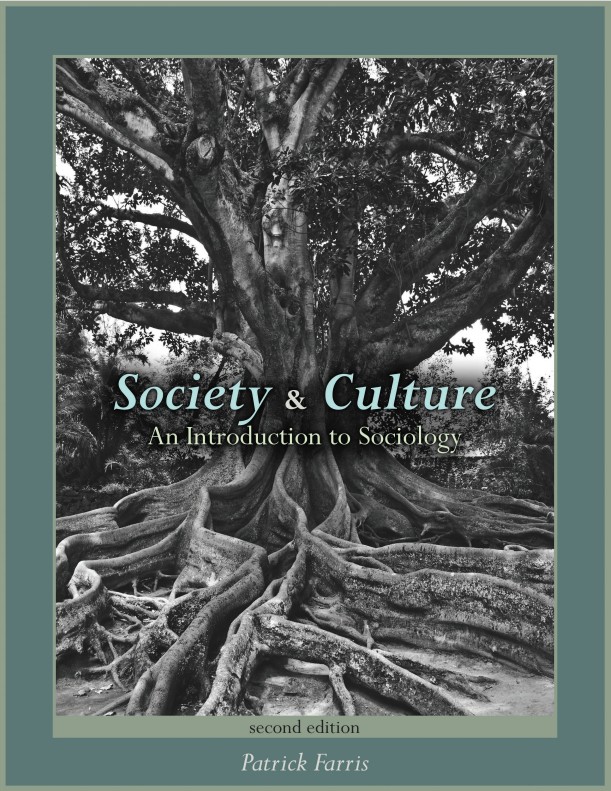
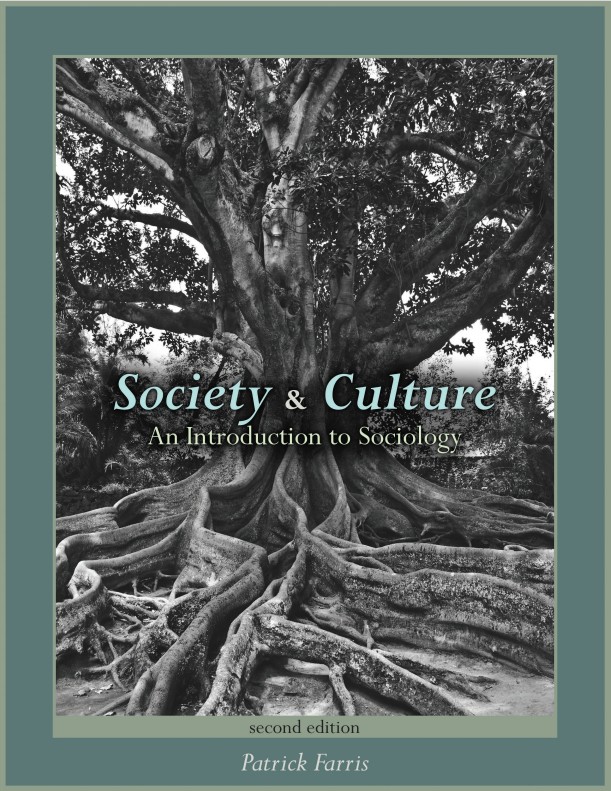
Society & Culture: An Introduction to Sociology

Author(s): Patrick Farris

Edition: 2

Copyright: 2025

Pages: 256

Choose Your Format

Ebook

$59.00 USD

ISBN 9798385180486

Details Electronic Delivery EBOOK 180 days

Sociology and anthropology emerged in the late nineteenth century from older humanistic inquiries stretching back through the Enlightenment, Renaissance, and into the ancient traditions of cultures worldwide. Whether preserved in writing or oral tradition, every society has pursued the same fundamental questions about human behavior and the forces shaping our lives. This universal curiosity reflects a deeper truth: humans are inherently social. Just as squirrels raised away from their own kind cannot survive in the wild, people cannot exist apart from society—it is the framework on which individuality is built. 

Society & Culture: An Introduction to Sociology begins from that premise, using it to connect all topics to the central question of what it means to be human. It blends sociology and anthropology, rejecting their arbitrary separation and including subjects like archaeology and human evolution to enrich sociological study. By addressing the questions students naturally bring—often crossing disciplinary lines—it offers both learners and instructors a broader, more practical foundation for understanding humanity.

Part I: The Science of Sociology and the Human Species 
Chapter 1: The Sociocultural Approach 
History of Sociological Thought and the Discipline of Sociology 
Sociological Perspective 
Sociological Methods
Exercises 

Chapter 2: Language 
Sociolinguistics 
Language and Culture 
Nonverbal Communication 
Language Evolution, Language Families & Human Diaspora 
Exercises 

Chapter 3: Evolution of Homo sapiens 
Natural Selection, Genetics & Macroevolution 
Ancestral & Living Primates, Hominoids, Hominids & Hominins 
Dispersal of Modern Humans & Microevolution 
Exercises 

Chapter 4: Past Societies 
Archaeology
Field and Laboratory Methods 
Reconstructing Culture 
Past Societies of Africa, Eurasia, Oceana and the Americas 
Exercises 

Part II: Societal Identities 
Chapter 5: Individual & Group Identity 
Culture & Social Structure 
Social Groups 
Social Organizations 
Social Control 
Exercises 

Chapter 6: Family & Kinship Identity 
Sex & Gender 
Family 
Kinship 
Socialization 
Exercises 

Chapter 7: Racial & Ethnic Identity
Social Constructs of Race 
Social Constructs of Ethnicity 
Racism and Ethnocentrism: Othering 
Exercises 

Part III: Societal Systems 
Chapter 8: Ecological Systems 
Ecology 
Subsistence Strategies 
Population 
Exercises 

Chapter 9: Economic Systems 
Economy 
Economic Groups 
Economic Systems 
Exercises 

Chapter 10: Religious Systems 
Religion 
Religious Groups 
Religious Systems 
Exercises 

Chapter 11: Societal Systems 
Social Groups
Social Stratification 
Life Chances 
Exercises 

Chapter 12: Political Systems 
Law 
Politics 
Political Groups 
Political Systems 
Exercises 

Chapter 13: Educational Systems
Education 
Educational Groups 
Educational Systems 
Exercises 

Chapter 14: Health Systems 
Illness and Disease 
Healthcare Groups 
Healthcare Systems 
Exercises 

Part IV: Sociology and Culture Change 
Chapter 15: Societal Change 
Change in Culture and Society 
Social Movements 
Conclusion 
Exercises 

Acknowledgements

Patrick Farris

Sociology and anthropology emerged in the late nineteenth century from older humanistic inquiries stretching back through the Enlightenment, Renaissance, and into the ancient traditions of cultures worldwide. Whether preserved in writing or oral tradition, every society has pursued the same fundamental questions about human behavior and the forces shaping our lives. This universal curiosity reflects a deeper truth: humans are inherently social. Just as squirrels raised away from their own kind cannot survive in the wild, people cannot exist apart from society—it is the framework on which individuality is built. 

Society & Culture: An Introduction to Sociology begins from that premise, using it to connect all topics to the central question of what it means to be human. It blends sociology and anthropology, rejecting their arbitrary separation and including subjects like archaeology and human evolution to enrich sociological study. By addressing the questions students naturally bring—often crossing disciplinary lines—it offers both learners and instructors a broader, more practical foundation for understanding humanity.

Part I: The Science of Sociology and the Human Species 
Chapter 1: The Sociocultural Approach 
History of Sociological Thought and the Discipline of Sociology 
Sociological Perspective 
Sociological Methods
Exercises 

Chapter 2: Language 
Sociolinguistics 
Language and Culture 
Nonverbal Communication 
Language Evolution, Language Families & Human Diaspora 
Exercises 

Chapter 3: Evolution of Homo sapiens 
Natural Selection, Genetics & Macroevolution 
Ancestral & Living Primates, Hominoids, Hominids & Hominins 
Dispersal of Modern Humans & Microevolution 
Exercises 

Chapter 4: Past Societies 
Archaeology
Field and Laboratory Methods 
Reconstructing Culture 
Past Societies of Africa, Eurasia, Oceana and the Americas 
Exercises 

Part II: Societal Identities 
Chapter 5: Individual & Group Identity 
Culture & Social Structure 
Social Groups 
Social Organizations 
Social Control 
Exercises 

Chapter 6: Family & Kinship Identity 
Sex & Gender 
Family 
Kinship 
Socialization 
Exercises 

Chapter 7: Racial & Ethnic Identity
Social Constructs of Race 
Social Constructs of Ethnicity 
Racism and Ethnocentrism: Othering 
Exercises 

Part III: Societal Systems 
Chapter 8: Ecological Systems 
Ecology 
Subsistence Strategies 
Population 
Exercises 

Chapter 9: Economic Systems 
Economy 
Economic Groups 
Economic Systems 
Exercises 

Chapter 10: Religious Systems 
Religion 
Religious Groups 
Religious Systems 
Exercises 

Chapter 11: Societal Systems 
Social Groups
Social Stratification 
Life Chances 
Exercises 

Chapter 12: Political Systems 
Law 
Politics 
Political Groups 
Political Systems 
Exercises 

Chapter 13: Educational Systems
Education 
Educational Groups 
Educational Systems 
Exercises 

Chapter 14: Health Systems 
Illness and Disease 
Healthcare Groups 
Healthcare Systems 
Exercises 

Part IV: Sociology and Culture Change 
Chapter 15: Societal Change 
Change in Culture and Society 
Social Movements 
Conclusion 
Exercises 

Acknowledgements

Patrick Farris