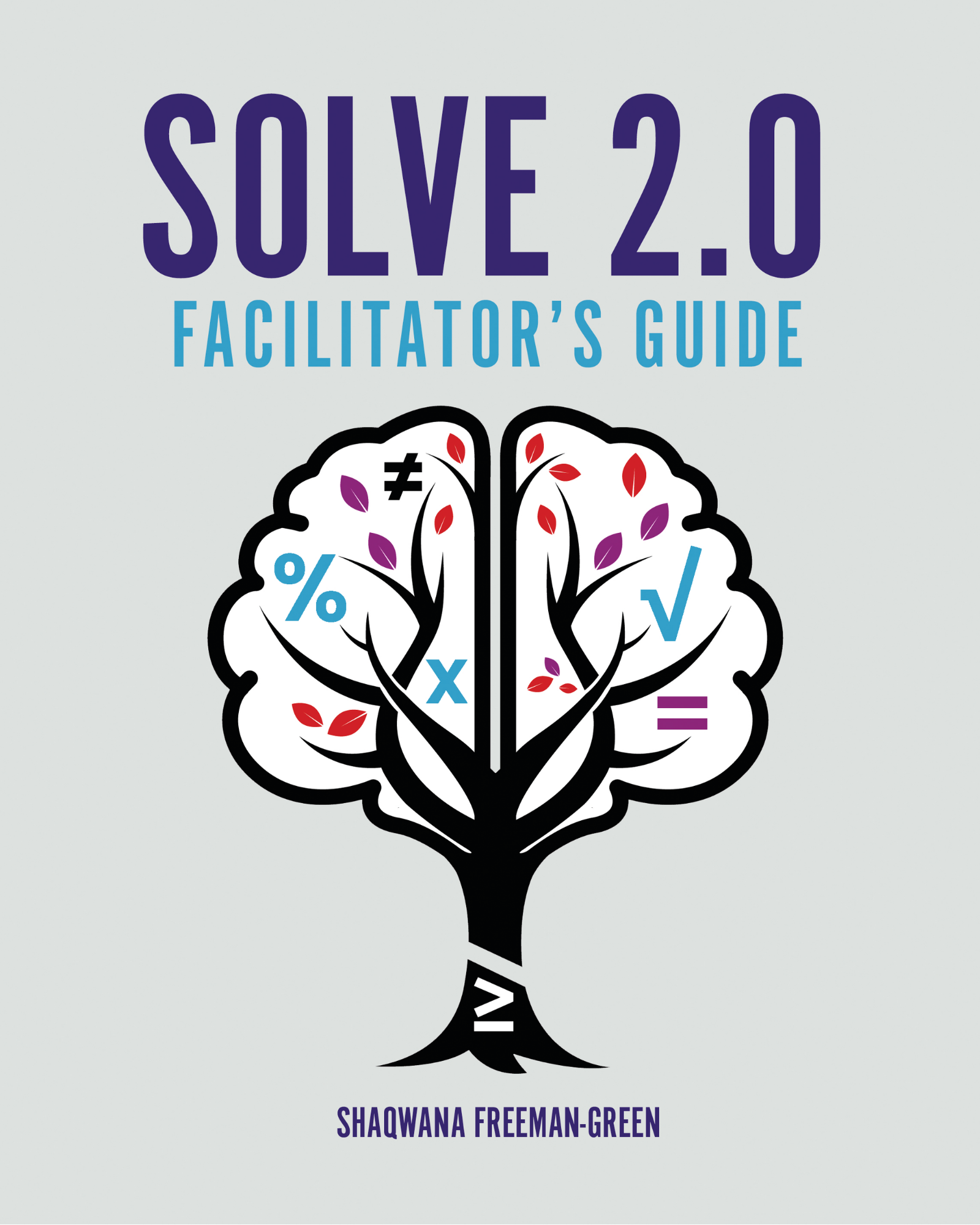
SOLVE 2.0 Facilitator's Guide
Edition: 1
Copyright: 2026
Pages: 74
Edition: 1
Copyright: 2026
Choose Your Format
$23.00 USD
Ebook
$15.00 USD
SOLVE 2.0 Facilitator's Guide provides educators, instructional coaches, and professional development leaders with an adaptable, modular approach to training and supporting teachers in implementing SOLVE 2.0 effectively and with confidence.
Grounded in explicit instruction and aligned with the Eight Stages of Instruction, this guide moves beyond introducing the strategy to supporting meaningful classroom application. It provides facilitators with the tools needed to guide teacher learning, structure coaching conversations, and promote fidelity across classrooms.
Inside this guide, you will find:
- Step-by-step facilitation support for each phase of teacher training
- Guidance for describing and modeling each component of the SOLVE 2.0 strategy Highlighted supports for multilingual learners and diverse classrooms
- Tools for monitoring progress and providing specific feedback
Designed for use alongside the SOLVE 2.0 Teacher's Manual.
Dr. Shaqwana Freeman-Green is an educator, researcher, and author in the field of special education. She earned her doctorate in special education from the University of North Carolina at Charlotte and has over 20 years of experience working with students with disabilities, families, schools, and teacher candidates.
Dr. Freeman-Green’s research and professional work focus on teacher preparation and the implementation of evidence-based instructional practices that support students with learning disabilities. Her work emphasizes mathematical problem solving, innovative instructional approaches, technology integration, and culturally sustaining practices that help bridge the gap between research and classroom instruction.
Dr. Freeman-Green currently serves as Chairperson of the Cultural and Linguistic Diversity (CLD) Committee within the Division for Learning Disabilities (DLD) of the Council for Exceptional Children and is coeditor of TEACHING Exceptional Children.
Through her scholarship, coaching, and professional learning initiatives, Dr. Freeman-Green remains committed to helping educators translate evidence-based practices into meaningful classroom instruction that strengthens mathematical problem-solving and supports diverse learners.
SOLVE 2.0 Facilitator's Guide provides educators, instructional coaches, and professional development leaders with an adaptable, modular approach to training and supporting teachers in implementing SOLVE 2.0 effectively and with confidence.
Grounded in explicit instruction and aligned with the Eight Stages of Instruction, this guide moves beyond introducing the strategy to supporting meaningful classroom application. It provides facilitators with the tools needed to guide teacher learning, structure coaching conversations, and promote fidelity across classrooms.
Inside this guide, you will find:
- Step-by-step facilitation support for each phase of teacher training
- Guidance for describing and modeling each component of the SOLVE 2.0 strategy Highlighted supports for multilingual learners and diverse classrooms
- Tools for monitoring progress and providing specific feedback
Designed for use alongside the SOLVE 2.0 Teacher's Manual.
Dr. Shaqwana Freeman-Green is an educator, researcher, and author in the field of special education. She earned her doctorate in special education from the University of North Carolina at Charlotte and has over 20 years of experience working with students with disabilities, families, schools, and teacher candidates.
Dr. Freeman-Green’s research and professional work focus on teacher preparation and the implementation of evidence-based instructional practices that support students with learning disabilities. Her work emphasizes mathematical problem solving, innovative instructional approaches, technology integration, and culturally sustaining practices that help bridge the gap between research and classroom instruction.
Dr. Freeman-Green currently serves as Chairperson of the Cultural and Linguistic Diversity (CLD) Committee within the Division for Learning Disabilities (DLD) of the Council for Exceptional Children and is coeditor of TEACHING Exceptional Children.
Through her scholarship, coaching, and professional learning initiatives, Dr. Freeman-Green remains committed to helping educators translate evidence-based practices into meaningful classroom instruction that strengthens mathematical problem-solving and supports diverse learners.