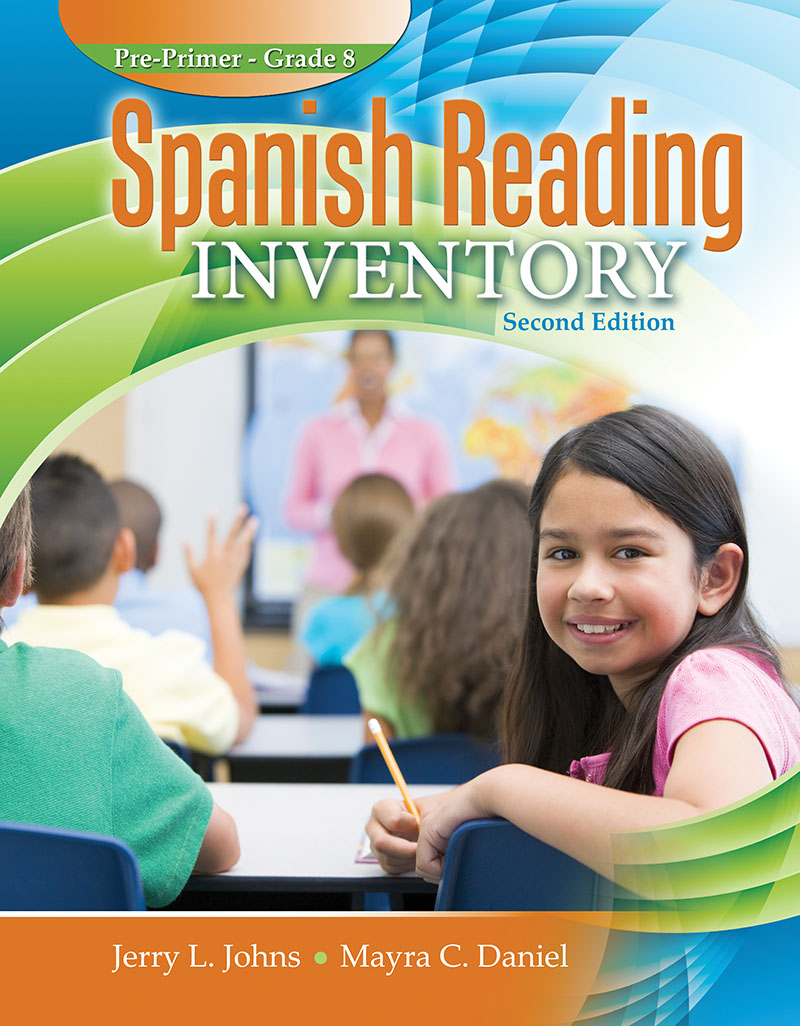
Spanish Reading Inventory
Edition: 2
Copyright: 2010
Pages: 162
Edition: 2
Copyright: 2010
Pages: 166
Choose Your Format
Ebook
$53.49 USD
$100.89 USD
Spanish Reading Inventory (Pre-Primer to Grade 8) is a collection of individually administered informal reading tests designed to help teachers and other professionals determine a student's reading proficiency in Spanish.
A series of word lists and passages ranging from the early stages of reading (pre-primer) through eighth grade are read by the student. Based on the student's comprehension and word recognition, an assessment can be made of his or her reading ability.
NEW TO THIS EDITION
- A helpful Instructional Interventions Grid for responsive and differentiated instruction to help students strengthen their reading.
- Two forms of graded word lists ranging from beginning reading through thrid grade.
- Two forms of graded passages (narrative and informational): Beginning reading through eighth grade.
Preface
Acknowledgments
About the Authors
PART 1 Spanish Reading Inventory Manual
Section 1. Overview of the Spanish Reading Inventory
Assessing English Language Learners (ELLs) in Spanish
Making Instruction and Interventions Responsive to Students
Components of the Spanish Reading Inventory
Purposes of the Spanish Reading Inventory
Background Information on Reading Levels and the Listening Level
Preparation for Assessment
Overview of Administration and Scoring Procedures
How to Use This Manual
Section 2. Administration and Scoring Procedures
Establishing Rapport and Gaining Some Insights
Administering, Scoring, and Determining Reading Levels from the Graded Word Lists
Administering the Graded Word Lists
Scoring the Graded Word Lists
An Example of Scoring the Graded Word Lists
Recording Word Recognition Scores for the Word Lists
Administering, Scoring, and Determining Reading Levels from the Graded Passages
Procedure for Administering the Graded Passages
Recording Miscues During Oral Reading and Timing the Reading
Three Ways to Assess Comprehension
Scoring Felipe's Graded Passage
Counting Significant Miscues
Scoring Felipe's Oral Reading
Observation of Reading Behaviors and Other Evidence
Determining Reading Levels from the Comprehension Questions or Retelling
Recording Felipe's Comprehension Scores for the Graded Passages
Determining Reading Levels?Silent Reading
Rate of Reading
Norms for Oral and Silent Reading Rates
The Listening Level
Determining the Listening Level
Scoring Juan's Listening Level
Section 3. Determining the Student's Three Reading Levels and Instructional Uses
Assimilating the Results
Estimating Mario's Reading Levels
Estimating Pablo's Three Reading Levels
Determining Word Identifi cation Strategies
Miscue Analysis Tally
Analyzing Comprehension
Analysis of Comprehension by Question Type
Fluency Considerations
Important Points to Remember about Fluency
Instructional Interventions Chart
How Using the Spanish Reading Inventory Can Help Your Students
PART 2 Spanish Reading Inventory Forms and Performance Booklet
Form A: Narrative
Graded Word Lists (Student Copy)
PP AA
P A
1 A 7141
2 A 8224
3 A 3183
Graded Passages (Student Copy)
PP1 AAA La Ranita Verde
PP2 AA Un Paseo en el Otoño
P A La Primera Nevada
1 A 7141 Duque Nada
2 A 8224 Jorge está en las Montañas
3 A 3183 El Oso Hambriento
4 A 5414 El Incendio y los Animales
5 A 8595 El Misterio
6 A 6867 Manten la Distancia
7 A 3717 La Inminente Amenaza
8 A 8183 La Búsqueda del Científi co
Performance Booklet (Teacher Copy)
Form B: Informational
Graded Word Lists (Student Copy)
PP BB
P B
1 B 7141
2 B 8224
3 B 3183
Graded Passages (Student Copy)
PP1 BBB El Perro de Beto
PP2 BB La Pelota Roja de Pedrín
P B El Huevo de Ani
1 B 7141 En el Zoológico
2 B 8224 Una Araña Amigable
3 B 3183 El Canto del Grillo
4 B 5414 Las Plantas Maravillosas
5 B 8595 El Vuelo
6 B 6867 Los Girasoles
7 B 3717 Celebraciones Indígenas
8 B 8183 Nuestro Medio Ambiente
Performance Booklet (Teacher Copy)
Appendix A
Miscue Tally and Reading Behavior Summary Charts
Summary of Student?s Comprehension Performance
Class Summary Chart
Appendix B
Development of the Spanish Reading Inventory
Description and Rationale for Word List Development
Reading Passages and Questions
References

Jerry L. Johns has been recognized as a distinguished teacher, writer, outstanding teacher educator, and professional development speaker for schools, school districts, and conferences. He has taught students from kindergarten through graduate school and also served as a reading teacher. Jerry spent his career at Northern Illinois University. He served in leadership positions at the local, state, national, and international levels. He has been the president of the International Literacy Association, the Illinois Reading Council, the Association of Literacy Educators and Researchers, and the Northern Illinois Reading Council. He also served on the board of directors for each of these organizations, as well as the American Reading Forum. Jerry has authored or co-authored nearly 300 articles, monographs, and research studies as well as over 40 professional books and instructional materials for students.
Jerry has been the recipient of numerous awards for his contributions to various professional organizations. He received the Outstanding Service Award from the Association of Literacy Educators and Researchers and was honored by the Illinois Reading Council (IRC) with induction into the IRC Reading Hall of Fame. Other recognitions include the Alpha Delta Literacy Award for Scholarship, Leadership, and Service to Adult Learners, the A.B. Herr Award for outstanding contributions to the field of reading, and the Laureate Award for life-long contributions to the field of reading presented by the Association of Literacy Educators and Researchers. The International Literacy Association renamed the Outstanding Teacher Educator in Reading Award in his honor. Most recently, he has been elected to the International Reading Hall of Fame and selected to receive the William S. Gray Citation of Merit from the International Literacy Association.
Spanish Reading Inventory (Pre-Primer to Grade 8) is a collection of individually administered informal reading tests designed to help teachers and other professionals determine a student's reading proficiency in Spanish.
A series of word lists and passages ranging from the early stages of reading (pre-primer) through eighth grade are read by the student. Based on the student's comprehension and word recognition, an assessment can be made of his or her reading ability.
NEW TO THIS EDITION
- A helpful Instructional Interventions Grid for responsive and differentiated instruction to help students strengthen their reading.
- Two forms of graded word lists ranging from beginning reading through thrid grade.
- Two forms of graded passages (narrative and informational): Beginning reading through eighth grade.
Preface
Acknowledgments
About the Authors
PART 1 Spanish Reading Inventory Manual
Section 1. Overview of the Spanish Reading Inventory
Assessing English Language Learners (ELLs) in Spanish
Making Instruction and Interventions Responsive to Students
Components of the Spanish Reading Inventory
Purposes of the Spanish Reading Inventory
Background Information on Reading Levels and the Listening Level
Preparation for Assessment
Overview of Administration and Scoring Procedures
How to Use This Manual
Section 2. Administration and Scoring Procedures
Establishing Rapport and Gaining Some Insights
Administering, Scoring, and Determining Reading Levels from the Graded Word Lists
Administering the Graded Word Lists
Scoring the Graded Word Lists
An Example of Scoring the Graded Word Lists
Recording Word Recognition Scores for the Word Lists
Administering, Scoring, and Determining Reading Levels from the Graded Passages
Procedure for Administering the Graded Passages
Recording Miscues During Oral Reading and Timing the Reading
Three Ways to Assess Comprehension
Scoring Felipe's Graded Passage
Counting Significant Miscues
Scoring Felipe's Oral Reading
Observation of Reading Behaviors and Other Evidence
Determining Reading Levels from the Comprehension Questions or Retelling
Recording Felipe's Comprehension Scores for the Graded Passages
Determining Reading Levels?Silent Reading
Rate of Reading
Norms for Oral and Silent Reading Rates
The Listening Level
Determining the Listening Level
Scoring Juan's Listening Level
Section 3. Determining the Student's Three Reading Levels and Instructional Uses
Assimilating the Results
Estimating Mario's Reading Levels
Estimating Pablo's Three Reading Levels
Determining Word Identifi cation Strategies
Miscue Analysis Tally
Analyzing Comprehension
Analysis of Comprehension by Question Type
Fluency Considerations
Important Points to Remember about Fluency
Instructional Interventions Chart
How Using the Spanish Reading Inventory Can Help Your Students
PART 2 Spanish Reading Inventory Forms and Performance Booklet
Form A: Narrative
Graded Word Lists (Student Copy)
PP AA
P A
1 A 7141
2 A 8224
3 A 3183
Graded Passages (Student Copy)
PP1 AAA La Ranita Verde
PP2 AA Un Paseo en el Otoño
P A La Primera Nevada
1 A 7141 Duque Nada
2 A 8224 Jorge está en las Montañas
3 A 3183 El Oso Hambriento
4 A 5414 El Incendio y los Animales
5 A 8595 El Misterio
6 A 6867 Manten la Distancia
7 A 3717 La Inminente Amenaza
8 A 8183 La Búsqueda del Científi co
Performance Booklet (Teacher Copy)
Form B: Informational
Graded Word Lists (Student Copy)
PP BB
P B
1 B 7141
2 B 8224
3 B 3183
Graded Passages (Student Copy)
PP1 BBB El Perro de Beto
PP2 BB La Pelota Roja de Pedrín
P B El Huevo de Ani
1 B 7141 En el Zoológico
2 B 8224 Una Araña Amigable
3 B 3183 El Canto del Grillo
4 B 5414 Las Plantas Maravillosas
5 B 8595 El Vuelo
6 B 6867 Los Girasoles
7 B 3717 Celebraciones Indígenas
8 B 8183 Nuestro Medio Ambiente
Performance Booklet (Teacher Copy)
Appendix A
Miscue Tally and Reading Behavior Summary Charts
Summary of Student?s Comprehension Performance
Class Summary Chart
Appendix B
Development of the Spanish Reading Inventory
Description and Rationale for Word List Development
Reading Passages and Questions
References
Jerry L. Johns has been recognized as a distinguished teacher, writer, outstanding teacher educator, and professional development speaker for schools, school districts, and conferences. He has taught students from kindergarten through graduate school and also served as a reading teacher. Jerry spent his career at Northern Illinois University. He served in leadership positions at the local, state, national, and international levels. He has been the president of the International Literacy Association, the Illinois Reading Council, the Association of Literacy Educators and Researchers, and the Northern Illinois Reading Council. He also served on the board of directors for each of these organizations, as well as the American Reading Forum. Jerry has authored or co-authored nearly 300 articles, monographs, and research studies as well as over 40 professional books and instructional materials for students.
Jerry has been the recipient of numerous awards for his contributions to various professional organizations. He received the Outstanding Service Award from the Association of Literacy Educators and Researchers and was honored by the Illinois Reading Council (IRC) with induction into the IRC Reading Hall of Fame. Other recognitions include the Alpha Delta Literacy Award for Scholarship, Leadership, and Service to Adult Learners, the A.B. Herr Award for outstanding contributions to the field of reading, and the Laureate Award for life-long contributions to the field of reading presented by the Association of Literacy Educators and Researchers. The International Literacy Association renamed the Outstanding Teacher Educator in Reading Award in his honor. Most recently, he has been elected to the International Reading Hall of Fame and selected to receive the William S. Gray Citation of Merit from the International Literacy Association.