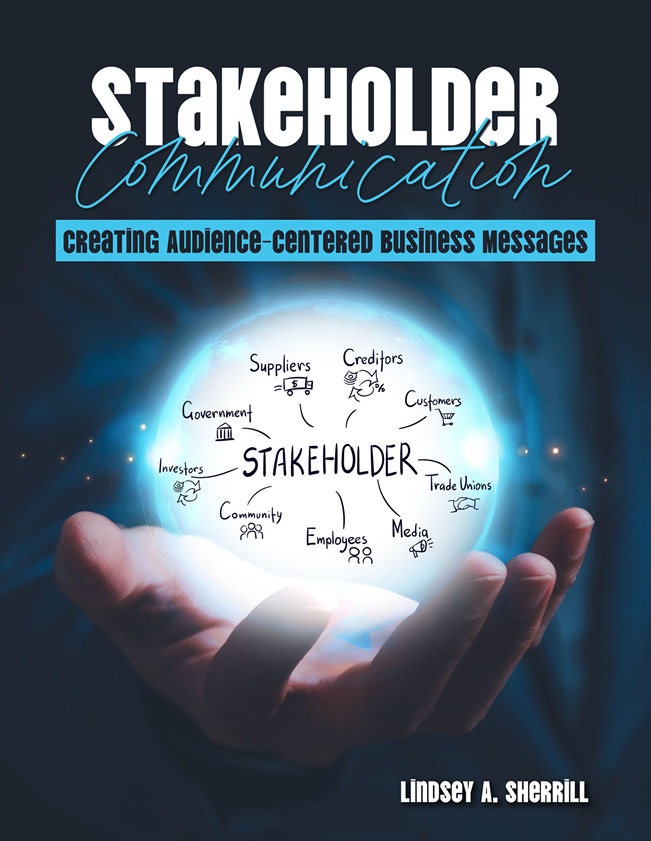
Stakeholder Communication: Creating Audience-Centered Business Messages
Edition: 1
Copyright: 2026
Pages: 382
Choose Your Format
Choose Your Platform | Help Me Choose


Ebook
$70.00 USD
In business, effective communication with stake holders is vital for success. So, who are stakehold ers? Stakeholders include all of the people or groups that may be affected by the words or actions of an organization. Every group of stakeholders will have different needs, desires, or levels of understanding; it is imperative for organizations to understand their various stakeholders when crafting messages.
Stakeholders may be internal or external to the organization. Internal stakeholders are individuals or groups who have direct involvement with an organization. Employees and managers are internal stakeholders because they are responsible for day to-day tasks and decision-making in an organization. Shareholders are also con sidered internal stakeholders; while they may not be directly involved in decisions or operations, they have a direct financial stake in the company. External stake holders are a much broader group and can include customers, competitors, suppli ers, regulatory agencies, and communities. While these external stakeholders may not be directly involved with daily operations, they can be affected in large and small ways by the messaging and actions of an organization
Author Bio
CHAPTER 1: Introduction to Stakeholder Communication
CHAPTER 2: Building Blocks of Business Communication: Verbal, Nonverbal, and Group Communication
CHAPTER 3: Crafting Your Message
CHAPTER 4: Identifying and Adapting to the Audience
CHAPTER 5: Conducting Ethical and Effective Business Research
CHAPTER 6: Intercultural and Inclusive Communication
CHAPTER 7: Crafting Positive and Negative Business Messages
CHAPTER 8: Persuasive Messages
CHAPTER 9: Organizational and Crisis Communication
CHAPTER 10: Designing and Delivering Effective Oral Presentations
CHAPTER 11: Delivering Business Presentations
Appendix A Easy Grammar
Appendix B Job Search: Pre-Interview Steps
Appendix C Credible Sources and APA Style Quick Hints

Dr. Lindsey A. Sherrill is an Associate Professor of Business Communication at the University of North Alabama’s Sanders College of Business and Technology. She earned her Ph.D. in Communication and Information Sciences from the University of Alabama, along with an MBA and a BS in Communication Studies and Theatre from the University of Montevallo. Her research and teaching interests include business communication, crisis communication, podcasting, media culture, audience engagement, and emerging media.
She is the author of Entertainment, Journalism, and Advocacy: Competing Motivations in the True Crime Podcast Ecosystem and co-editor of the forthcoming Sports Podcasting: Game Changers in Sonic Storytelling. Her research has been published in journals such as Journal of Communication, New Media & Society, Journalism Practice, Journal of Public Relations Education, and Mass Communication & Society. Her work often explores how people, organizations, and media communities build trust, legitimacy, and connection in changing communication environments.
Dr. Sherrill has presented research at national and international conferences and has served in leadership roles with organizations including the Broadcast Education Association, the Association for Education in Journalism and Mass Communication, and the Alabama Communication Association. Her TEDx talk on ethical true crime consumption has received more than one million views online.
In addition to teaching, she enjoys mentoring doctoral and undergraduate students in research, writing, and professional development. Before entering academia full time, she worked in news, management, and public relations—experiences that continue to shape her practical, audience-centered approach to communication.
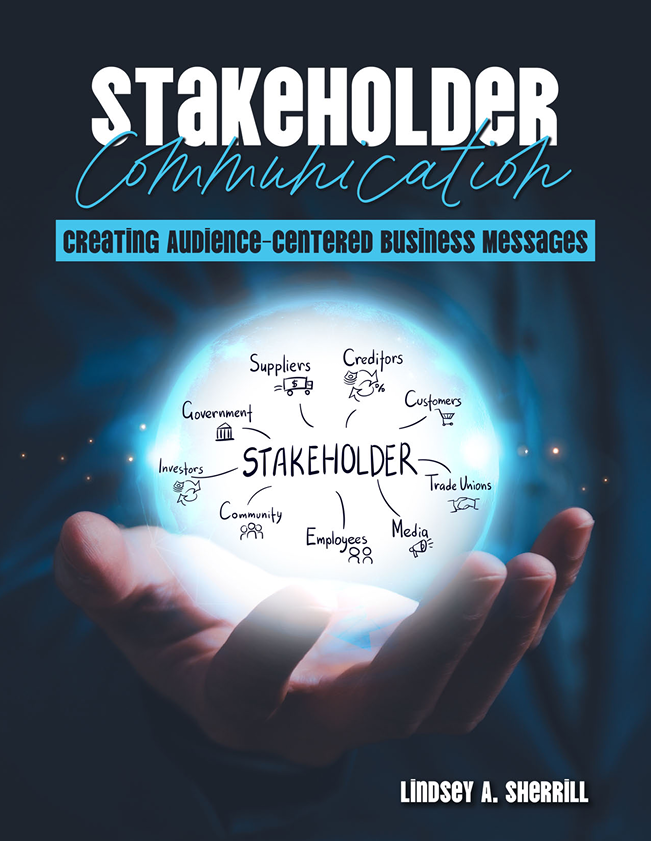
In business, effective communication with stake holders is vital for success. So, who are stakehold ers? Stakeholders include all of the people or groups that may be affected by the words or actions of an organization. Every group of stakeholders will have different needs, desires, or levels of understanding; it is imperative for organizations to understand their various stakeholders when crafting messages.
Stakeholders may be internal or external to the organization. Internal stakeholders are individuals or groups who have direct involvement with an organization. Employees and managers are internal stakeholders because they are responsible for day to-day tasks and decision-making in an organization. Shareholders are also con sidered internal stakeholders; while they may not be directly involved in decisions or operations, they have a direct financial stake in the company. External stake holders are a much broader group and can include customers, competitors, suppli ers, regulatory agencies, and communities. While these external stakeholders may not be directly involved with daily operations, they can be affected in large and small ways by the messaging and actions of an organization
Author Bio
CHAPTER 1: Introduction to Stakeholder Communication
CHAPTER 2: Building Blocks of Business Communication: Verbal, Nonverbal, and Group Communication
CHAPTER 3: Crafting Your Message
CHAPTER 4: Identifying and Adapting to the Audience
CHAPTER 5: Conducting Ethical and Effective Business Research
CHAPTER 6: Intercultural and Inclusive Communication
CHAPTER 7: Crafting Positive and Negative Business Messages
CHAPTER 8: Persuasive Messages
CHAPTER 9: Organizational and Crisis Communication
CHAPTER 10: Designing and Delivering Effective Oral Presentations
CHAPTER 11: Delivering Business Presentations
Appendix A Easy Grammar
Appendix B Job Search: Pre-Interview Steps
Appendix C Credible Sources and APA Style Quick Hints
Dr. Lindsey A. Sherrill is an Associate Professor of Business Communication at the University of North Alabama’s Sanders College of Business and Technology. She earned her Ph.D. in Communication and Information Sciences from the University of Alabama, along with an MBA and a BS in Communication Studies and Theatre from the University of Montevallo. Her research and teaching interests include business communication, crisis communication, podcasting, media culture, audience engagement, and emerging media.
She is the author of Entertainment, Journalism, and Advocacy: Competing Motivations in the True Crime Podcast Ecosystem and co-editor of the forthcoming Sports Podcasting: Game Changers in Sonic Storytelling. Her research has been published in journals such as Journal of Communication, New Media & Society, Journalism Practice, Journal of Public Relations Education, and Mass Communication & Society. Her work often explores how people, organizations, and media communities build trust, legitimacy, and connection in changing communication environments.
Dr. Sherrill has presented research at national and international conferences and has served in leadership roles with organizations including the Broadcast Education Association, the Association for Education in Journalism and Mass Communication, and the Alabama Communication Association. Her TEDx talk on ethical true crime consumption has received more than one million views online.
In addition to teaching, she enjoys mentoring doctoral and undergraduate students in research, writing, and professional development. Before entering academia full time, she worked in news, management, and public relations—experiences that continue to shape her practical, audience-centered approach to communication.