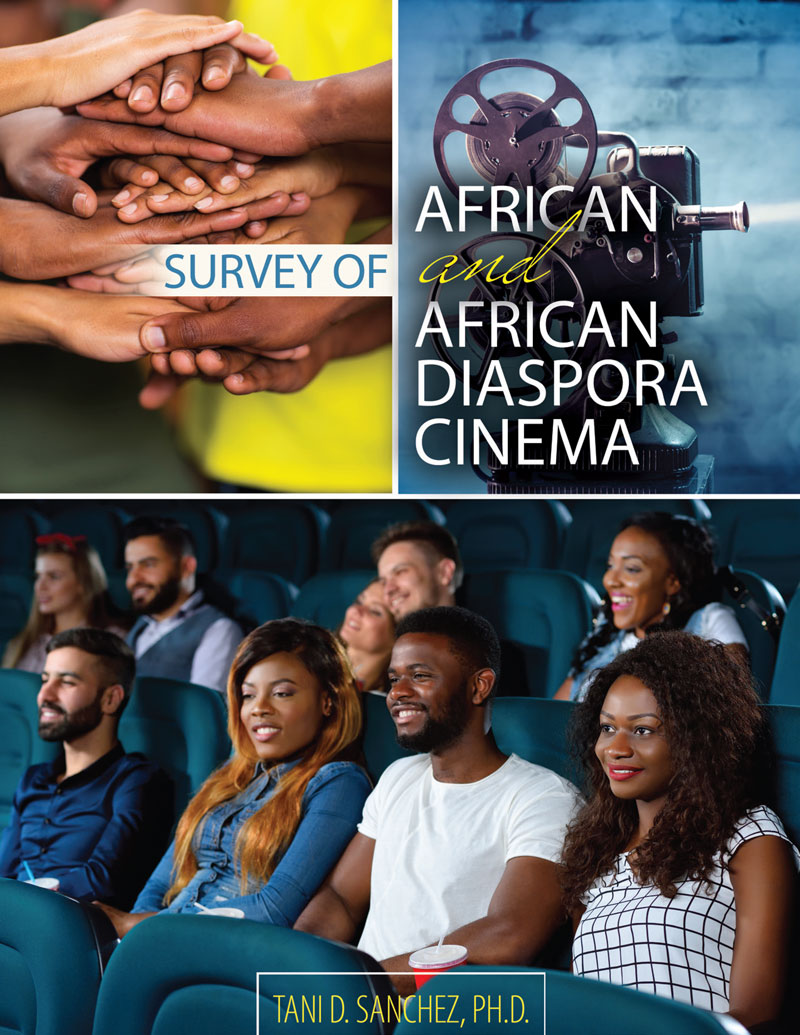
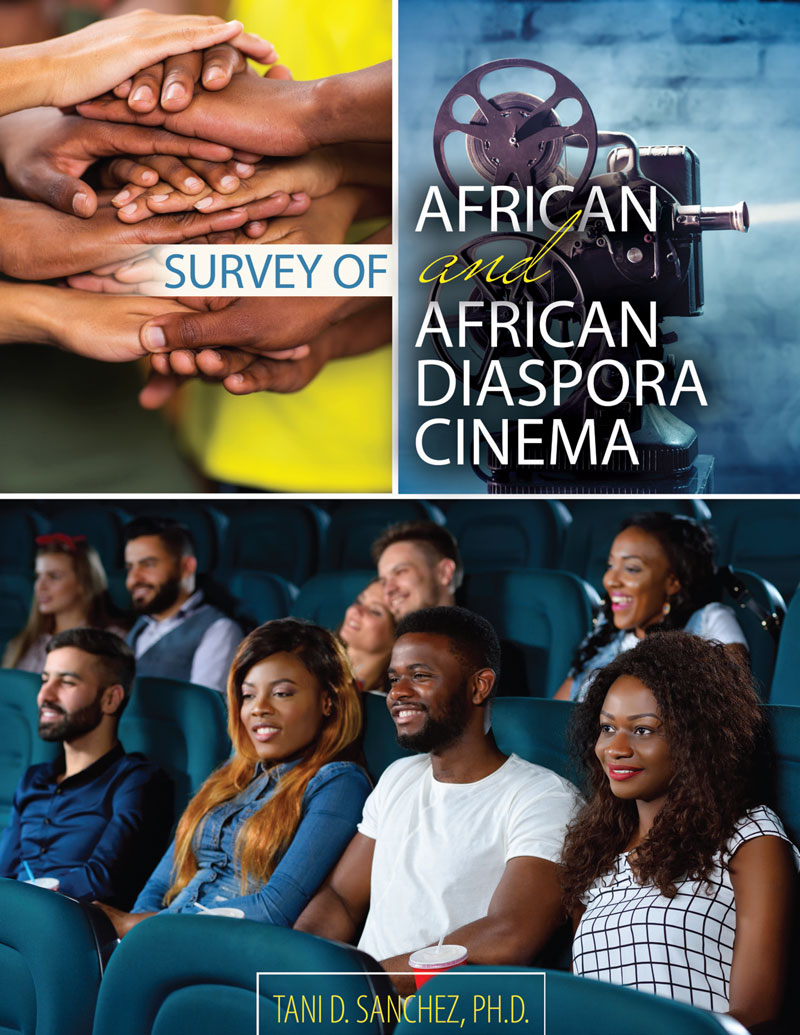
Survey of African and African Diaspora Cinema
Edition: 1
Copyright: 2019
Pages: 103
Choose Your Format
Choose Your Platform | Help Me Choose


Ebook
$87.98 USD
New Publication Now Available!
There is a connection between culture and the movies we watch. Cinema is everywhere and it influences and reflects how we understand the world. Survey of African and African Diaspora Cinema offers both a survey of and a historical context for understanding films about African and African Diaspora Cinema. Written as a review of theoretical positions, histories, and summaries from some of the top film academicians and from others involved in filmic production, key concepts are introduced contextualizing black cinema development and the participation of black people within its industry. The films discussed are placed within a framework that tries to explain why and how.
Cinemas from Nigeria and Senegal, from England and France, the Caribbean, South America, and the United States are explored. The films serve to materialize ideas about race, class, gender, social relationships, stereotyping, and other topics. Films that are part of the body of well-known filmic tradition will be introduced and newer ones identified.
This is important, because filmic representations are part of our larger understanding of people, histories, and how we perceive. It matters because we have the ability to be sophisticated about understanding what we see rather than assuming it is all a simple part of a natural process that can’t be critiqued and understood. Without deeper examination, we do not understand nuances, or the culture/history associated with meanings of the images. Knowing about film makes our appreciation of black film richer and more enjoyable.
Weaved within Survey of African and African Diaspora Cinema are ideas about Pan-Africanism and post-colonialism. The objective of this publication is to present a basic foundation. Readers will gain a perspective allowing them to connect Africa and African diaspora films with a body of critique and history. Readers will also learn to see symbolic meaning, particularly indigenous cultural sensibilities, as crucial to comprehending film.
Introduction
Chapter 1 Historical Background of Cinemas of Africa and the African Diaspora
- Overview and Historical Background: Perceptions, Limitations, and Opportunities
- African Films: Xala, Yeelen, Sia: The Dream of the Python, La Pirogue, Living in Bondage, The Figurine
Chapter 2 African Diaspora Cinema and Filmmaking in Latin America
- Overview and Historical Background
- Films of Brazil: Quilimbo, City of God
- Films of the Caribbean and Cuba: Sugar Cane Alley, The Harder They Fall
Chapter 3 African Diaspora Cinema in England and France
- Overview and Historical Background
- English Films: Handsworth Songs, The Passion of Remembrance, Welcome II the Terrordome, Where Hands Touch, Dirty Pretty Things, 12 Years a Slave
- French Films: La Haine, The Untouchables
Chapter 4 African Diaspora Cinema in the United States
- Overview and Historical Background: US Film Dominance, Race Films/Independent Black Productions, Mid-Century Films, Blaxploitation, the L.A. Rebellion and Hood Films
- Films: Birth of a Nation, Within Our Gates, The Defiant Ones, Stormy Weather, Sweet Sweetbacks’s Baadass Song, Do the Right Thing, Diary of a Mad Black Woman, Black Panther
Epilogue—Viewing Films
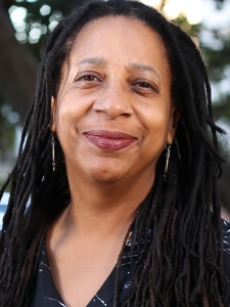
Dr. Sanchez is primarily interested in racial representations in the media and in the study of African American history and culture. She worked for a number of years as an editor, broadcast journalist and as a media information specialist. She is also the first president of the Tucson Chapter Afro-American Historical and Genealogical Society (founded by Gloria Smith), an active member of the Tucson Black Film Club and is a member of the Womens Progressive and Civic Club. She has served as a State President of the National Association of Colored Women’s Clubs. Dr. Sanchez has a doctorate in Comparative Cultural and Literary studies; her masters degree focused on visual culture/art history while her undergraduate studies included Radio and Television.
She has lectured in Tucson and other cities on Black history, racial representations in film, and on African American family history and genealogy. Her wide-ranging background in broadcast and written journalism as well as in public affairs has included overseas assignments in the U.S. Army and a stint in the Arizona National Guard. Her academic writings have been published in two anthologies; she has created political videos and has written and edited books and newsletters for community based associations. In addition to classes in Africana Studies, Dr. Sanchez has also taught art history and art appreciation courses.
She believes, “It is especially important for people to be educated in Africana studies subjects because our everyday lives are heavily influenced by racism and the impact of centuries of colonialism. However, many people are not exposed to the insightful types of analysis that comes from the view point of the subjugated. Some students believe learning about race and the history of it in America perpetuates racism. I sometimes hear them say ‘if you just don’t talk about it, it will go away’ or they say discussing racial history creates racism and bad feelings. But if racial problems and their origins are simply ignored, long-standing continuing oppression will persist. Many will continue to perceive ordinary, everyday discriminatory practices as normal, not realizing how they affect others. They won't understand the impact on our collective lives or how we can all, regardless of race, participate in something that is oppressive or liberating. The disparity in wealth among races is just one of many statistics clearly indicating something is clearly out of balance! We need black theoretical perspectives and a more complete history factored into our learning.
She adds, "How can anyone critically assess what is happening today in our society and find solutions with only a portion of the picture?”
New Publication Now Available!
There is a connection between culture and the movies we watch. Cinema is everywhere and it influences and reflects how we understand the world. Survey of African and African Diaspora Cinema offers both a survey of and a historical context for understanding films about African and African Diaspora Cinema. Written as a review of theoretical positions, histories, and summaries from some of the top film academicians and from others involved in filmic production, key concepts are introduced contextualizing black cinema development and the participation of black people within its industry. The films discussed are placed within a framework that tries to explain why and how.
Cinemas from Nigeria and Senegal, from England and France, the Caribbean, South America, and the United States are explored. The films serve to materialize ideas about race, class, gender, social relationships, stereotyping, and other topics. Films that are part of the body of well-known filmic tradition will be introduced and newer ones identified.
This is important, because filmic representations are part of our larger understanding of people, histories, and how we perceive. It matters because we have the ability to be sophisticated about understanding what we see rather than assuming it is all a simple part of a natural process that can’t be critiqued and understood. Without deeper examination, we do not understand nuances, or the culture/history associated with meanings of the images. Knowing about film makes our appreciation of black film richer and more enjoyable.
Weaved within Survey of African and African Diaspora Cinema are ideas about Pan-Africanism and post-colonialism. The objective of this publication is to present a basic foundation. Readers will gain a perspective allowing them to connect Africa and African diaspora films with a body of critique and history. Readers will also learn to see symbolic meaning, particularly indigenous cultural sensibilities, as crucial to comprehending film.
Introduction
Chapter 1 Historical Background of Cinemas of Africa and the African Diaspora
- Overview and Historical Background: Perceptions, Limitations, and Opportunities
- African Films: Xala, Yeelen, Sia: The Dream of the Python, La Pirogue, Living in Bondage, The Figurine
Chapter 2 African Diaspora Cinema and Filmmaking in Latin America
- Overview and Historical Background
- Films of Brazil: Quilimbo, City of God
- Films of the Caribbean and Cuba: Sugar Cane Alley, The Harder They Fall
Chapter 3 African Diaspora Cinema in England and France
- Overview and Historical Background
- English Films: Handsworth Songs, The Passion of Remembrance, Welcome II the Terrordome, Where Hands Touch, Dirty Pretty Things, 12 Years a Slave
- French Films: La Haine, The Untouchables
Chapter 4 African Diaspora Cinema in the United States
- Overview and Historical Background: US Film Dominance, Race Films/Independent Black Productions, Mid-Century Films, Blaxploitation, the L.A. Rebellion and Hood Films
- Films: Birth of a Nation, Within Our Gates, The Defiant Ones, Stormy Weather, Sweet Sweetbacks’s Baadass Song, Do the Right Thing, Diary of a Mad Black Woman, Black Panther
Epilogue—Viewing Films
Dr. Sanchez is primarily interested in racial representations in the media and in the study of African American history and culture. She worked for a number of years as an editor, broadcast journalist and as a media information specialist. She is also the first president of the Tucson Chapter Afro-American Historical and Genealogical Society (founded by Gloria Smith), an active member of the Tucson Black Film Club and is a member of the Womens Progressive and Civic Club. She has served as a State President of the National Association of Colored Women’s Clubs. Dr. Sanchez has a doctorate in Comparative Cultural and Literary studies; her masters degree focused on visual culture/art history while her undergraduate studies included Radio and Television.
She has lectured in Tucson and other cities on Black history, racial representations in film, and on African American family history and genealogy. Her wide-ranging background in broadcast and written journalism as well as in public affairs has included overseas assignments in the U.S. Army and a stint in the Arizona National Guard. Her academic writings have been published in two anthologies; she has created political videos and has written and edited books and newsletters for community based associations. In addition to classes in Africana Studies, Dr. Sanchez has also taught art history and art appreciation courses.
She believes, “It is especially important for people to be educated in Africana studies subjects because our everyday lives are heavily influenced by racism and the impact of centuries of colonialism. However, many people are not exposed to the insightful types of analysis that comes from the view point of the subjugated. Some students believe learning about race and the history of it in America perpetuates racism. I sometimes hear them say ‘if you just don’t talk about it, it will go away’ or they say discussing racial history creates racism and bad feelings. But if racial problems and their origins are simply ignored, long-standing continuing oppression will persist. Many will continue to perceive ordinary, everyday discriminatory practices as normal, not realizing how they affect others. They won't understand the impact on our collective lives or how we can all, regardless of race, participate in something that is oppressive or liberating. The disparity in wealth among races is just one of many statistics clearly indicating something is clearly out of balance! We need black theoretical perspectives and a more complete history factored into our learning.
She adds, "How can anyone critically assess what is happening today in our society and find solutions with only a portion of the picture?”