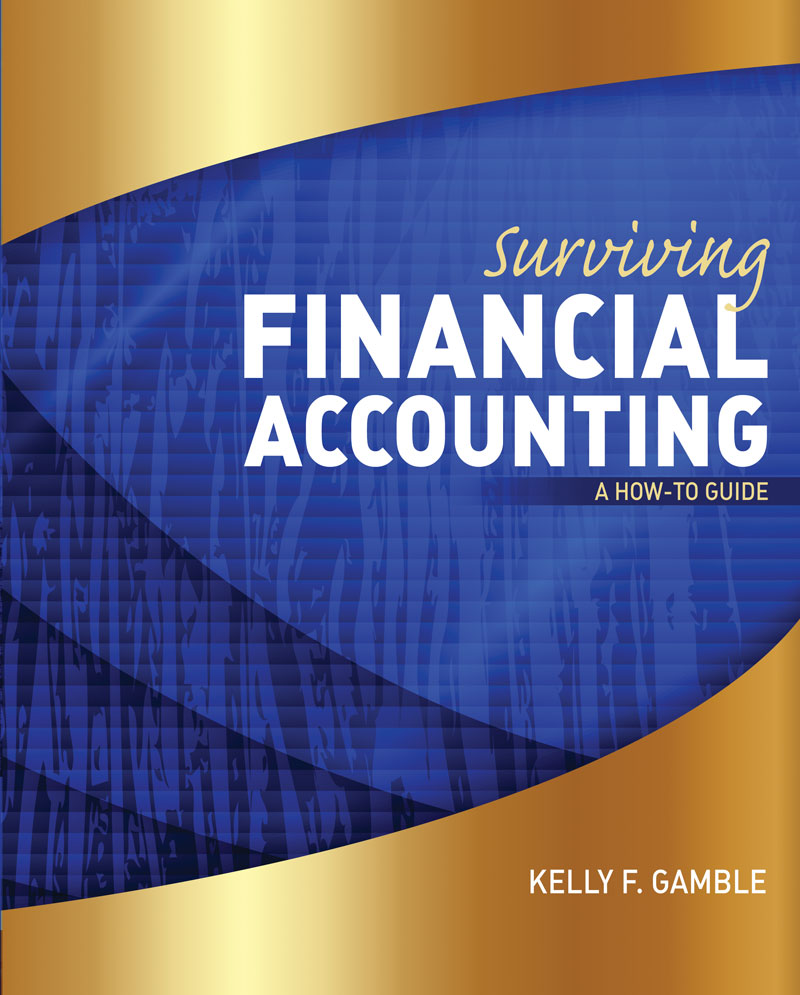
Surviving Financial Accounting: A How-to Guide

Author(s): Kelly Gamble

Edition: 1

Copyright: 2017

Pages: 94

Choose Your Format

Ebook

$28.67 USD

ISBN 9781524919610

Details Electronic Delivery EBOOK 180 days

Surviving Financial Accounting: A How-to Guide is a practical resource designed to help students navigate the fundamentals of financial accounting with confidence. Rather than focusing solely on theory, the book breaks down essential accounting concepts into clear, manageable lessons, covering topics such as the accounting equation, debits and credits, adjusting entries, financial statements, bank reconciliations, receivables, inventory, depreciation, and liabilities. Each chapter emphasizes real-world understanding and common challenges that students encounter in introductory accounting courses.

In addition to explaining core accounting principles, the guide provides practice solutions and a structured study plan to reinforce learning and improve exam preparation. Written in an approachable and student-friendly style, the book serves as both a classroom companion and a self-study guide, helping readers develop the skills needed to understand financial accounting concepts and apply them successfully in academic and professional settings.

INTRODUCTION – WHY DO I HAVE TO TAKE THIS CLASS?

SECTION ONE – WORKING THROUGH THE DETAILS

1.         Understanding and Using the Accounting Equation

2.         The Dreaded Debits and Credits

3.         Those Annoying Adjusting Entries

4.         What Are Financial Statements?

5.         Closing the Books

6.         Reconciling Bank Statements (This Can Save You Money!)

7.         Demystifying Receivables

8.         Inventory Issues

9.         What Depreciation Is (and Is Not)

10.       Liabilities (We Owe, We Owe, So Off We Go…)

SECTION TWO – A FEW MORE THINGS

11.       Practice Solutions

12.       Suggested Study Plan

Kelly Gamble

Surviving Financial Accounting: A How-to Guide is a practical resource designed to help students navigate the fundamentals of financial accounting with confidence. Rather than focusing solely on theory, the book breaks down essential accounting concepts into clear, manageable lessons, covering topics such as the accounting equation, debits and credits, adjusting entries, financial statements, bank reconciliations, receivables, inventory, depreciation, and liabilities. Each chapter emphasizes real-world understanding and common challenges that students encounter in introductory accounting courses.

In addition to explaining core accounting principles, the guide provides practice solutions and a structured study plan to reinforce learning and improve exam preparation. Written in an approachable and student-friendly style, the book serves as both a classroom companion and a self-study guide, helping readers develop the skills needed to understand financial accounting concepts and apply them successfully in academic and professional settings.

INTRODUCTION – WHY DO I HAVE TO TAKE THIS CLASS?

SECTION ONE – WORKING THROUGH THE DETAILS

1.         Understanding and Using the Accounting Equation

2.         The Dreaded Debits and Credits

3.         Those Annoying Adjusting Entries

4.         What Are Financial Statements?

5.         Closing the Books

6.         Reconciling Bank Statements (This Can Save You Money!)

7.         Demystifying Receivables

8.         Inventory Issues

9.         What Depreciation Is (and Is Not)

10.       Liabilities (We Owe, We Owe, So Off We Go…)

SECTION TWO – A FEW MORE THINGS

11.       Practice Solutions

12.       Suggested Study Plan

Kelly Gamble