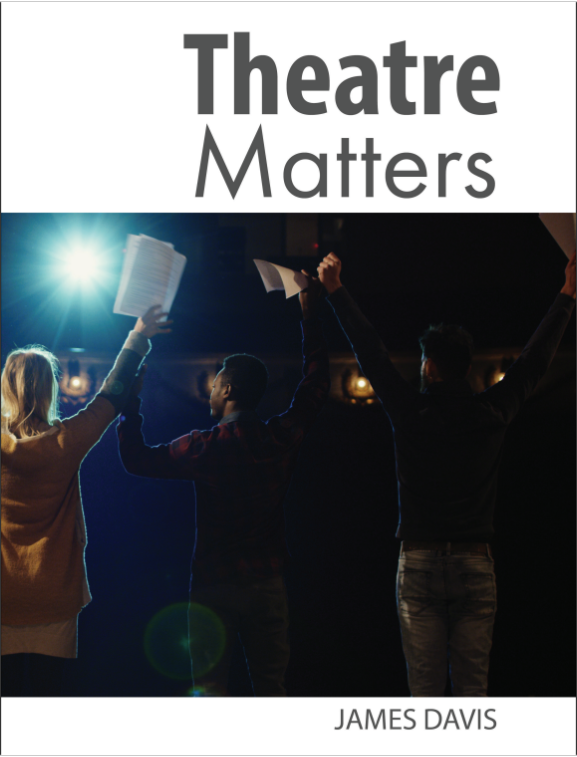
Theatre Matters
Edition: 1
Copyright: 2026
Pages: 84
Edition: 1
Copyright: 2026
Pages: 84
Choose Your Format
Choose Your Platform | Help Me Choose


$70.00 USD
Ebook
$39.99 USD
Acknowledgments
Introduction
Chapter 1 Art ➔ Performance ➔ Theatre
Introduction
Art: What Is It?
Product of Creative Effort
Generally Metaphorical
Has a Critical Perspective
Context Creates Meaning
Performance
Theatre
Art and Performance in the “Real World”
In Conclusion
Theatre Interview—VP of Sales and Marketing, Stephanie Roppolo
Chapter 2 The Ancient Greeks: The Roots of Western Theatre
Introduction
The Greeks Didn’t Invent Theatre
Greek Crossroads
The Greek Gods!
The Greek God: Dionysus
Greek Theatre and Democracy
The Four Greek Playwrights
Ancient Greek Theatre in the “Real World”
In Conclusion
Theatre Interview—Deputy Director, Innovation and Technology Division,
Thom Sukalac
Chapter 3 Acting
Introduction
The Cultural Roots of Realism
The Science of Applied Aesthetics
“In theater, I hate the theater”
Method Acting
Beyond Stanislavsky
Acting in the “Real World”
In Conclusion
Theatre Interview—Attorney Gabriella Henriquez Chavez
Chapter 4 Directing
Introduction
Directors Direct?
A Brief History of Directing
The Father of Modern Directing
The Return of Konstantin Stanislavsky
The Director’s Job
Directing in the “Real World”
In Conclusion
Theatre Interview—Accountant/Actor Dean Coutris
Chapter 5 Playwrights and Genre
Introduction
The Playwright’s Unique Challenge
The Role of the Playwright
A Script as a Recipe: Cupcakes and Chili
What Makes a Script Work?
Conflict
Theatrical Genre: Types of Scripts
Shakespeare: He’s His Own Genre
Scripts and Playwrights in the “Real World”
In Conclusion
Theatre Interview—Vice President of Disney Live Entertainment,
Matt Conover
Chapter 6 Design
Introduction
The Roots of Theatrical Design
What Gets Designed
The Designer’s Job
Four Most Common Staging Formats
Four Important Designers
Theatrical Design in the “Real World”
In Conclusion…
How To See a Play
Jim Davis is an Associate Professor of Theatre & Performance Studies. He teaches Theatre History/Theory, American Performance Traditions, Introduction to Theatre Studies and is the course coordinator for Theatre in Society, the TPS General Education course. Much of his teaching and research focuses specifically on the experience of first-year college students.
He's a theatre generalist who works as an actor, director, deviser, dramaturg and puppeteer. Jim has also published and presented research on the history of comic books, musical theatre in the Harlem Renaissance, fandom culture, and the intersections of performance and professional sports.