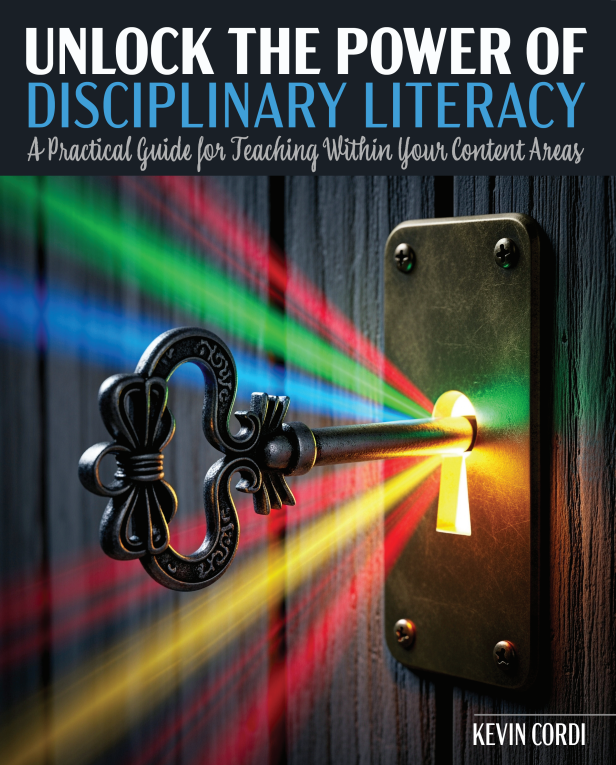
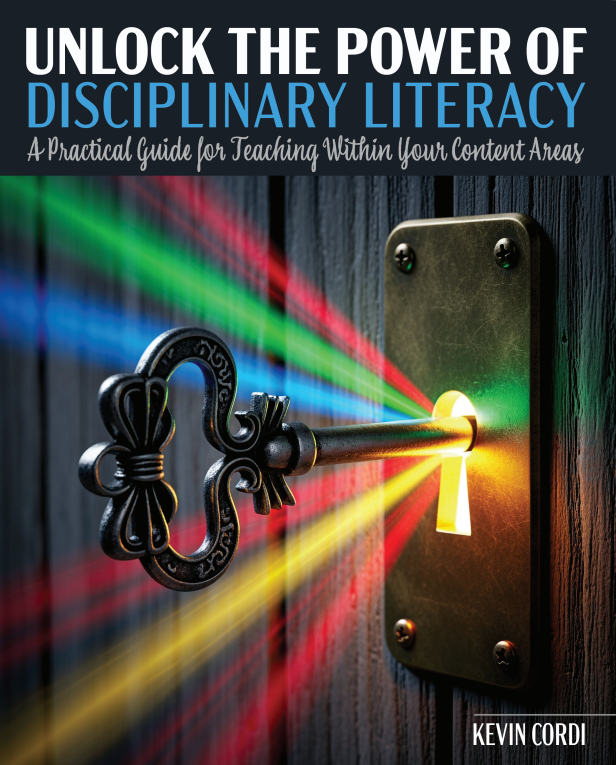
Unlock the Power of Disciplinary Literacy: A Practical Guide for Teaching Within Your Content Areas
Edition: 1
Copyright: 2026
Pages: 386
Edition: 1
Copyright: 2026
Pages: 300
Choose Your Format
Print Package
$90.00 USD
Ebook Package
$45.00 USD
How do we help students truly read, think, and learn like experts in our disciplines?
For years, educators relied on content area literacy as the primary approach to supporting comprehension across subjects. Recent research, however, points to a more powerful shift: disciplinary literacy—teaching students how reading, writing, thinking, and communicating look within specific fields such as English, science, mathematics, and social studies.
While teachers are experts in their content, many feel unsure about how to connect that expertise to the distinct literacy demands of their disciplines. Where do you start? What strategies actually work? How do you move from theory to classroom practice?
Unlocking the Power of Disciplinary Literacy is a practical, research-based guide designed to answer those questions. Written for both practicing educators and pre-service teachers, this text provides clear “keys” for beginning and sustaining disciplinary literacy instruction in middle schools, high schools, and postsecondary classrooms.
Inside, you’ll find:
- Practical, classroom-ready literacy strategies tailored to specific disciplines
- Clear learning objectives that guide each chapter
- Dedicated chapters focused on core subject areas
- Spotlights on leading researchers and disciplinary literacy experts
- Multiple field-specific examples that bring theory to life
- Guidance on technology integration, writing instruction, and engaging students in meaningful discussions with disciplinary texts
- Assessment strategies designed for disciplinary contexts
- Classroom vignettes showing what disciplinary literacy looks like in action
- Access to an interactive companion website with ready-to-use resources
Friendly in tone and grounded in evidence, this book is a hands-on manual for educators ready to take the next step in their teaching practice. It supports both those new to the classroom and experienced teachers—offering tools that can transform instruction and deepen student understanding.
Unlocking the Power of Disciplinary Literacy opens a new doorway to student engagement and comprehension. By helping students understand the how and why of reading and thinking in your discipline, you empower them to work like historians, scientists, mathematicians, and literary scholars. With thoughtful guidance and practical support, this shift becomes not only manageable—but rewarding.
Chapter 1 The Transition from Content Area Literacy with Disciplinary Literacy
Chapter 2 The Lens in Reading—Adapting a Disciplinary Lens (Establishing Reading Presence, Mindset, Habit, Practice)
Chapter 3 Planning for Disciplinary Literacy Framing Pre-Reading, Reading, and Post-Reading through the Lens of Your Discipline
Chapter 4 Social Studies and Disciplinary Literacy
Chapter 5 Disciplinary Literacy and Math
Chapter 6 Disciplinary Literacy and Science
Chapter 7 English Language Arts and Discipline Literacy
Chapter 8 Discussion and Disciplinary Literacy
Chapter 9 Disciplinary Literacy and Writing
Chapter 10 Technology and Disciplinary Literacy
Chapter 11 Unlocking the Power of Picture Books, Process Drama, and Purposeful Design in Disciplinary Literacy

Dr. Kevin Cordi serves as an Associate Professor at Ohio University, Lancaster. He is the author of books on storytelling as a teaching pedagogy. He teaches literacy, children’s and young adult literature, and storytelling at the university. He has taught in three different schools in Ohio and California. He is also a nationally known professional storyteller and serves as a narrative consultant both nation-wide and internationally. He has presented in over 44 states, England, Japan, Canada, Scotland, and Qatar. He believes teaching and learning are powerful when we add the stories of our students. You can reach him at www.kevincordi.com
Unlock the Power of Disciplinary Literacy: A Practical Guide for Teaching Within Your Content Areas by Kevin Cordi is a great resource for educators across all disciplines. In this practical and engaging guide, Dr. Cordi addresses the oft-repeated notion that “all teachers are reading teachers” in a way that honors the expertise of content-area educators while recognizing the important role that literacy plays in every classroom.
Dr. Cordi makes it clear that while reading and writing are integral to all disciplines, many teachers have not been explicitly taught how to create opportunities for students to develop these skills in authentic ways that align with the given content. This is where the book shines. He presents disciplinary literacy as a “both-and” approach: literacy practices overlap across disciplines in a meaningful and holistic fashion, while each content area also possesses patterns, purposes, and styles. Throughout the book, Dr. Cordi skillfully navigates these simultaneous truths with an approachable and accessible voice.
Grounded in research and informed by leading scholars in literacy, the book translates theory into practical classroom application. Dr. Cordi consistently returns readers to the importance of the verb, reminding us that literacy is an active process. Through this lens, he highlights the many actions readers can take as they interact with texts, encouraging educators to Dr. Cordi includes snapshots of helping students become more intentional and engaged thinkers.
The book is enriched with classroom snapshots, reflective prompts, and open-ended questions that inspire deeper thinking and meaningful conversations around text.
Dr. Cordi also introduces a thoughtful framework—a code—for reading the book itself, using “locks,” “unlocks,” and four types of keys (silver, brass, skeleton, and gold) to encourage readers to reflect, connect, extend, and lock-in ideas as they move through the text.
Perhaps one of the book’s greatest strengths is Dr. Cordi’s voice. Reading Unlock the Power of Disciplinary Literacy: A Practical Guide for Teaching Within Your Content Areas feels less like working through an academic text and more like sitting at the table with a trusted colleague—the teacher down the hall whose wisdom, enthusiasm, and practical advice always leave you inspired to try something new.
Whether you are a classroom teacher, an instructional coach, or school leader, Unlock the Power of Disciplinary Literacy: A Practical Guide for Teaching Within Your Content Areas offers valuable insights and actionable strategies for strengthening literacy practices within every content area.
Julie Hoffman, Ed.D., Springfield Public Schools
How do we help students truly read, think, and learn like experts in our disciplines?
For years, educators relied on content area literacy as the primary approach to supporting comprehension across subjects. Recent research, however, points to a more powerful shift: disciplinary literacy—teaching students how reading, writing, thinking, and communicating look within specific fields such as English, science, mathematics, and social studies.
While teachers are experts in their content, many feel unsure about how to connect that expertise to the distinct literacy demands of their disciplines. Where do you start? What strategies actually work? How do you move from theory to classroom practice?
Unlocking the Power of Disciplinary Literacy is a practical, research-based guide designed to answer those questions. Written for both practicing educators and pre-service teachers, this text provides clear “keys” for beginning and sustaining disciplinary literacy instruction in middle schools, high schools, and postsecondary classrooms.
Inside, you’ll find:
- Practical, classroom-ready literacy strategies tailored to specific disciplines
- Clear learning objectives that guide each chapter
- Dedicated chapters focused on core subject areas
- Spotlights on leading researchers and disciplinary literacy experts
- Multiple field-specific examples that bring theory to life
- Guidance on technology integration, writing instruction, and engaging students in meaningful discussions with disciplinary texts
- Assessment strategies designed for disciplinary contexts
- Classroom vignettes showing what disciplinary literacy looks like in action
- Access to an interactive companion website with ready-to-use resources
Friendly in tone and grounded in evidence, this book is a hands-on manual for educators ready to take the next step in their teaching practice. It supports both those new to the classroom and experienced teachers—offering tools that can transform instruction and deepen student understanding.
Unlocking the Power of Disciplinary Literacy opens a new doorway to student engagement and comprehension. By helping students understand the how and why of reading and thinking in your discipline, you empower them to work like historians, scientists, mathematicians, and literary scholars. With thoughtful guidance and practical support, this shift becomes not only manageable—but rewarding.
Chapter 1 The Transition from Content Area Literacy with Disciplinary Literacy
Chapter 2 The Lens in Reading—Adapting a Disciplinary Lens (Establishing Reading Presence, Mindset, Habit, Practice)
Chapter 3 Planning for Disciplinary Literacy Framing Pre-Reading, Reading, and Post-Reading through the Lens of Your Discipline
Chapter 4 Social Studies and Disciplinary Literacy
Chapter 5 Disciplinary Literacy and Math
Chapter 6 Disciplinary Literacy and Science
Chapter 7 English Language Arts and Discipline Literacy
Chapter 8 Discussion and Disciplinary Literacy
Chapter 9 Disciplinary Literacy and Writing
Chapter 10 Technology and Disciplinary Literacy
Chapter 11 Unlocking the Power of Picture Books, Process Drama, and Purposeful Design in Disciplinary Literacy
Dr. Kevin Cordi serves as an Associate Professor at Ohio University, Lancaster. He is the author of books on storytelling as a teaching pedagogy. He teaches literacy, children’s and young adult literature, and storytelling at the university. He has taught in three different schools in Ohio and California. He is also a nationally known professional storyteller and serves as a narrative consultant both nation-wide and internationally. He has presented in over 44 states, England, Japan, Canada, Scotland, and Qatar. He believes teaching and learning are powerful when we add the stories of our students. You can reach him at www.kevincordi.com
Unlock the Power of Disciplinary Literacy: A Practical Guide for Teaching Within Your Content Areas by Kevin Cordi is a great resource for educators across all disciplines. In this practical and engaging guide, Dr. Cordi addresses the oft-repeated notion that “all teachers are reading teachers” in a way that honors the expertise of content-area educators while recognizing the important role that literacy plays in every classroom.
Dr. Cordi makes it clear that while reading and writing are integral to all disciplines, many teachers have not been explicitly taught how to create opportunities for students to develop these skills in authentic ways that align with the given content. This is where the book shines. He presents disciplinary literacy as a “both-and” approach: literacy practices overlap across disciplines in a meaningful and holistic fashion, while each content area also possesses patterns, purposes, and styles. Throughout the book, Dr. Cordi skillfully navigates these simultaneous truths with an approachable and accessible voice.
Grounded in research and informed by leading scholars in literacy, the book translates theory into practical classroom application. Dr. Cordi consistently returns readers to the importance of the verb, reminding us that literacy is an active process. Through this lens, he highlights the many actions readers can take as they interact with texts, encouraging educators to Dr. Cordi includes snapshots of helping students become more intentional and engaged thinkers.
The book is enriched with classroom snapshots, reflective prompts, and open-ended questions that inspire deeper thinking and meaningful conversations around text.
Dr. Cordi also introduces a thoughtful framework—a code—for reading the book itself, using “locks,” “unlocks,” and four types of keys (silver, brass, skeleton, and gold) to encourage readers to reflect, connect, extend, and lock-in ideas as they move through the text.
Perhaps one of the book’s greatest strengths is Dr. Cordi’s voice. Reading Unlock the Power of Disciplinary Literacy: A Practical Guide for Teaching Within Your Content Areas feels less like working through an academic text and more like sitting at the table with a trusted colleague—the teacher down the hall whose wisdom, enthusiasm, and practical advice always leave you inspired to try something new.
Whether you are a classroom teacher, an instructional coach, or school leader, Unlock the Power of Disciplinary Literacy: A Practical Guide for Teaching Within Your Content Areas offers valuable insights and actionable strategies for strengthening literacy practices within every content area.
Julie Hoffman, Ed.D., Springfield Public Schools