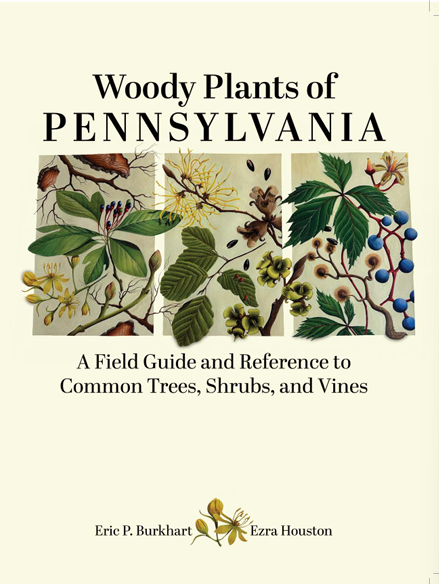
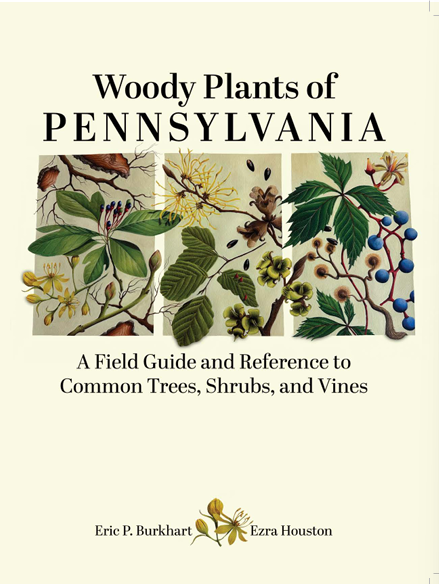
Woody Plants of Pennsylvania: A Field Guide and Reference to Common Trees, Shrubs, and Vines
Edition: 1
Copyright: 2026
Pages: 230
Edition: 1
Copyright: 2026
Pages: 260
Choose Your Format
Choose Your Platform | Help Me Choose


$125.00 USD
Ebook
$63.00 USD
Current and informative. This book is the definitive reference guide to the woody plants of Pennsylvania and is intended to serve as a resource for students, nature enthusiasts, horticulturalists, and natural resource professionals. Most species included in this book are broadly distributed within eastern North America, making this a useful reference far beyond Pennsylvania.
• In depth coverage of 9 families, 14 genera, and 32 species.
• Features detailed colored photos of all species, with multiple
plates for each containing leaf, bud, bark, flower, and fruit/
cone features
• Identification comparisons and highlights for similar species.
• Includes distribution maps compiled from iNaturalist and
scientific sources.
• Contains silvicultural, ecological, and ethnobotanical
information for each species drawn from scientific literature
and personal experience.
CHAPTER 1: TREES
Betulaceae: The Birch Family
Fabaceae: The Bean Family
Fagaceae: The Oak Family
Juglandaceae: The Walnut Family
Lauraceae: The Laurel Family
Pinaceae: The Pine Family
Sapindaceae: The Soapberry Family
CHAPTER 2: SHRUBS
Lauraceae: The Laurel Family
Caprifoliaceae: The Honeysuckle Family
CHAPTER 3: VINES
Vitaceae: The Grape Family
Eric Burkhart is a botanist, ethnobotanist, and agroforester at the Pennsylvania State University, where he is Teaching Professor in the Department of Ecosystem Science and Management. For more than twenty years, he has taught botanical courses at Penn State including Field Dendrology, Forest Herbaceous Plants, Invasive Forest Plants, and Agroforestry. Dr. Burkhart maintains a highly interdisciplinary research and education program addressing questions surrounding Appalachian Forest plants including their botany,
ethnobotany, ecology, phytochemistry, and agroforestry potential and has authored or co-authored more than thirty peer-reviewed scientific papers and dozens of popular and extension articles. He holds degrees in Ethnobotany (BA, Idaho State University), Horticulture (MS, Penn State University), and Forest Resources (PhD, Penn State University).
Ezra Houston is a botanist and agroforester at Lincoln University of Missouri, where he works to develop and promote forest farming as a practice among Missouri landowners. Ezra is a recent transplant to Missouri but developed his passion for botany and forestry in Pennsylvania where he grew up. After graduating with his forestry degree, Ezra worked for the Pennsylvania DCNR as a forestry technician before returning to Penn State to pursue his graduate degree. His master’s research focused on modeling site suitability of two native
non-timber forest products (NTFPs): ramps (Allium tricoccum) and goldenseal (Hydrastis canadensis), to support their cultivation and stewardship. He continues his engagement with NTFPs in his current role at Lincoln University. He holds degrees in Forest Ecosystems Management (BS, Penn State University) and Forest Resources (MS, Penn State University).