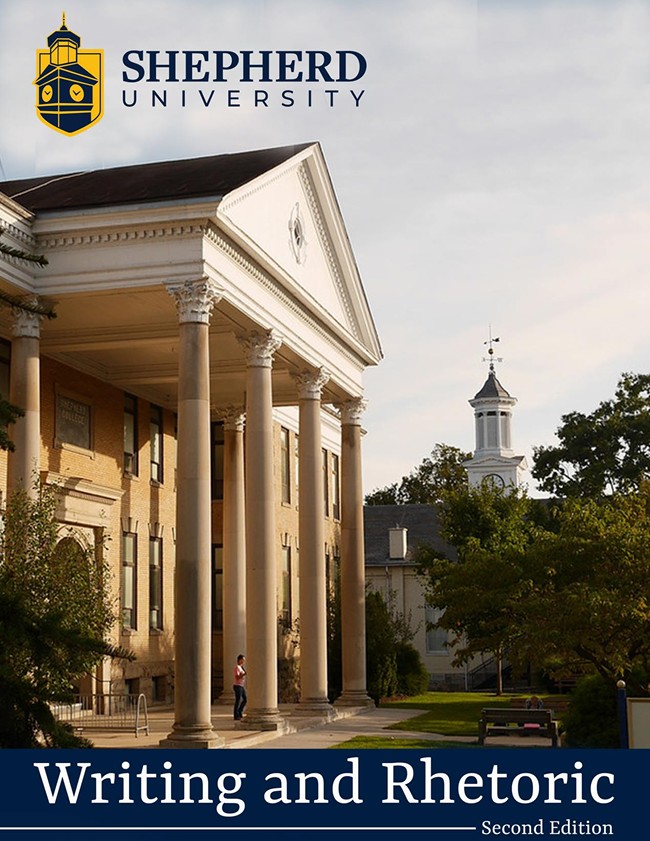
Writing and Rhetoric

Edition: 2

Copyright: 2026

Pages: 143

Choose Your Format

Choose Your Platform | Help Me Choose

Ebook

$32.00 USD

ISBN 9798319717634

Details Electronic Delivery EBOOK 180 days

This book serves as a comprehensive guide for students beginning their college writing journey by introducing the fundamental skills needed to become effective writers, researchers, and critical thinkers. The opening section focuses on helping students transition into college-level writing by explaining the expectations of English courses, offering advice from experienced students and faculty, and teaching strategies for understanding writing assignments through close reading and analysis. These chapters provide a strong foundation by emphasizing the importance of rhetoric, audience awareness, and preparing students for academic success.

The second half of the book expands on the writing process by exploring topics such as drafting, revision, authorial voice, reflection, peer tutoring, proofreading, and academic research. Students are introduced to effective writing as an ongoing process that involves collaboration, critical thinking, and continuous improvement. The book concludes by showcasing award-winning student essays, giving readers real examples of successful college writing, while the appendix provides a practical reference for MLA and APA citation styles. Overall, the book is designed to help students build confidence as writers by combining practical writing instruction with examples of strong academic work.


Part I: Getting Started
Chapter 1 Writing and Rhetoric at Shepherd University

Chapter 2 What Is English 101 Studio?
Prof. Sadie Shorr-Parks and Dr. Valerie L. Stevens 

Chapter 3 W.R.I.T.E: Advice to Incoming Students
Alyssa Schlaefli 

Chapter 4 Understanding Essay Assignments through Close Reading and Analysis
Dr. Mark Cantrell 

Part II: Writing as Process, Conversation, and Narrative
Chapter 5 Writing and Reading as Process
Dr. Valerie L. Stevens 

Chapter 6 Writing as Conversation
Dr. Brian Santana, with “Paraphrasing” by Dr. Tim Nixon 

Chapter 7 Writing as Narrative
Prof. Sadie Shorr-Parks 

Chapter 8 Authorial Voice
Dr. Valerie L. Stevens 

Chapter 9 Reflection, Critical Thinking, and Metacognition
Dr. Heidi M. Hanrahan

Chapter 10 Proofreading, Editing, and Revising: Don’t Those Words Really Just Mean the Same Thing?
Dr. Jon Elmore 

Chapter 11 Peer Tutors on Peer Tutoring
Ava Mellott and Chloe Westfall 

Chapter 12 Research for Writing and Rhetoric Classes
Dr. Michael Vaclav 

Chapter 13 Scarborough Library Academic Database User Guide
Caitlin Carson 

Part III: 2026 Catherine Fix Essay Contest Winners
Chapter 14 Growth and Identity: Fieldwork at Hollywood Casino in Charles Town
Treaty Armstrong 

Chapter 15 The English Major and Artificial Intelligence: Digging Deeper Into the Risks of Artificial Intelligence 
Karley Hoffman 

Chapter 16 The Rebirth of Martinsburg, West Virginia
Talan Gomez 

Appendix MLA and APA Citations

SHEPHERD UNIVERSITY

This book serves as a comprehensive guide for students beginning their college writing journey by introducing the fundamental skills needed to become effective writers, researchers, and critical thinkers. The opening section focuses on helping students transition into college-level writing by explaining the expectations of English courses, offering advice from experienced students and faculty, and teaching strategies for understanding writing assignments through close reading and analysis. These chapters provide a strong foundation by emphasizing the importance of rhetoric, audience awareness, and preparing students for academic success.

The second half of the book expands on the writing process by exploring topics such as drafting, revision, authorial voice, reflection, peer tutoring, proofreading, and academic research. Students are introduced to effective writing as an ongoing process that involves collaboration, critical thinking, and continuous improvement. The book concludes by showcasing award-winning student essays, giving readers real examples of successful college writing, while the appendix provides a practical reference for MLA and APA citation styles. Overall, the book is designed to help students build confidence as writers by combining practical writing instruction with examples of strong academic work.


Part I: Getting Started
Chapter 1 Writing and Rhetoric at Shepherd University

Chapter 2 What Is English 101 Studio?
Prof. Sadie Shorr-Parks and Dr. Valerie L. Stevens 

Chapter 3 W.R.I.T.E: Advice to Incoming Students
Alyssa Schlaefli 

Chapter 4 Understanding Essay Assignments through Close Reading and Analysis
Dr. Mark Cantrell 

Part II: Writing as Process, Conversation, and Narrative
Chapter 5 Writing and Reading as Process
Dr. Valerie L. Stevens 

Chapter 6 Writing as Conversation
Dr. Brian Santana, with “Paraphrasing” by Dr. Tim Nixon 

Chapter 7 Writing as Narrative
Prof. Sadie Shorr-Parks 

Chapter 8 Authorial Voice
Dr. Valerie L. Stevens 

Chapter 9 Reflection, Critical Thinking, and Metacognition
Dr. Heidi M. Hanrahan

Chapter 10 Proofreading, Editing, and Revising: Don’t Those Words Really Just Mean the Same Thing?
Dr. Jon Elmore 

Chapter 11 Peer Tutors on Peer Tutoring
Ava Mellott and Chloe Westfall 

Chapter 12 Research for Writing and Rhetoric Classes
Dr. Michael Vaclav 

Chapter 13 Scarborough Library Academic Database User Guide
Caitlin Carson 

Part III: 2026 Catherine Fix Essay Contest Winners
Chapter 14 Growth and Identity: Fieldwork at Hollywood Casino in Charles Town
Treaty Armstrong 

Chapter 15 The English Major and Artificial Intelligence: Digging Deeper Into the Risks of Artificial Intelligence 
Karley Hoffman 

Chapter 16 The Rebirth of Martinsburg, West Virginia
Talan Gomez 

Appendix MLA and APA Citations

SHEPHERD UNIVERSITY
