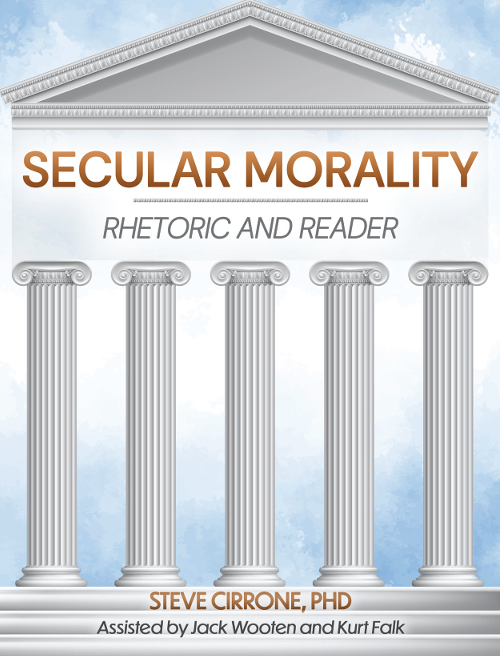
Secular Morality: Rhetoric and Reader
Edition: 1
Copyright: 2025
Pages: 177
Choose Your Format
Choose Your Platform | Help Me Choose


Ebook
$55.00 USD
Preface
Part One—Establishing a Secular Morality
Introduction
Morals, Ethics, and Secular Morality
The Golden Rule
The Working Assumption
Three Transcendent and Fixed Moral Principles
All human life has an inherent dignity, and, therefore, all human life deserves respect
If something is good for us, then it should be good for others
Actions that seek to harm or that knowingly harm others are immoral
Moral Dilemma
Moral Premises: Further Guideposts to Moral Argument
Morality cannot exist without action
Morality involves individual and/or collective choice
Morality touches all of us and affects the world in which we live
Morality depends on applying deductive and/or inductive reasoning
Deductive Moral Argument
Inductive Moral Argument
Morality should be seen as a constant
Part Two—Applying the SM System
Why This System?
How to Use This Text
For Students
For Teachers
For Teachers and Students
Examples of Moral Imperatives
Part Three—The Moral Essays
How the Moral Essays Are Organized
Sub-Group A: Moral Arguments Concerning Rights in the US
Abortion: The Moral Right to Choose .
by Franchesca Paz
“[A woman] has the moral right to make her own decisions, and now that this right has been taken away for many women in our country, these women will also lose their rights to physical autonomy and personal freedom .”
KEY WORDS: Respect and Dignity Clause, Deduction, Moral Dilemma, Feminism, Abortion Rights
Morality and Mercy: The Case for Physician-Assisted Suicide
by Marissa Wittmann
“As someone who has seen the life and luster of a loved one leave long before they actually passed, I have considered physician-assisted suicide if I were ever in the same position . I would have wanted to have the control of choosing when to end my pain and suffering instead of waiting around to die .”
KEY WORDS: Moral Dilemma, Deduction, Health-Care Policy
Why Don’t Children Have Rights in the US?
by Kurt Falk
“Children in the United States do not have fundamental rights to life, liberty, and happiness, and they should . This may come as a shock to you, and maybe even make you believe that I am being dishonest with this claim .”
KEY WORDS: Reciprocity, Deduction, Constitutional Theory, Children and Family
Sub-Group B: Moral Arguments Concerning Cultural Matters
Tyler Perry: Mediocrity Making Millions
by Brent Clark
“The most consistent target of Perry’s visual sermons has proven to be Black women . Unfortunately, Perry has routinely chosen to use his elevated platform as one of the most prominent Black filmmakers currently in the business to do a disservice to Black women everywhere .”
KEY WORDS: Induction, Do No Harm, Film Criticism, Black Culture
On Lessons in Sexuality
by Jackilyn Prado
“Our society is plagued by the sexualization of women . Some feminists would say this is liberating . They say it’s a way to show that we are equal, that we can be free . But the opposite of this is true . It’s not liberating us; it’s imprisoning us .”
KEY WORDS: Reciprocity, Induction, Feminism, Mass Media
A Violent Solution
by Hok Tai Tang
“Violence in video games isn’t only about the grisly details of organs and blood splattering all over the floor as someone grins creepily; it also involves the player choosing what he/she believes is true within the boundaries of right and wrong without strict rules influencing the decision .”
KEY WORDS: Do No Harm, Video Games, Causes of Violence
No Justice for the Wicked
by Dalal Habeeb Audeesh
“Disgust rose in me then—and how could it not? Anyone in her right mind, anyone with a sense of respect for human dignity and a distaste for human suffering, would revile the idea that these armed soldiers were about to prey on innocent young girls—and the fact that they were being
encouraged to do so just made the situation even more shocking .”
KEY WORDS: Respect and Dignity, Reciprocity, Victims of War
Sub-Group C: Paired Essays
Filial Morality
by Jennifer Hernandez
“We, as children and young adults, need to realize that it is truly our moral obligation to provide our parents with the love, respect, and care that they once provided for us, not only because we owe it to them, but also because they deserve it .”
KEY WORDS: Reciprocity, Deduction, Children and Family
Don’t Send Parents to Nursing Homes (Care for Your Kids Instead): A Demonstration on the Power of Fallacies
by Annah Lee
“I assert that due to the introduction of a fallacy in her paper, Hernandez ultimately argues that children should ignore that obligation to care for their parents . I also assert that Hernandez’s true argument is that parents should not be sent to nursing homes and that to better support her true argument, she should appeal to her audience’s logos instead of pathos .”
KEY WORDS: Deduction, Logical Fallacies, Children and Family, Rebuttal Essay
Myth of Happiness
by Jack Wooten
“The problem is that this entitlement is not accessible to all Americans equally; whereas the wealthy have the freedom to pursue their happiness without weighted obligation, the average middle-class American is imprisoned by a never-ending cycle of debt that keeps us always shy of the ability to pursue happiness freely .”
KEY WORDS: Do No Harm, Induction, Student Debt Policy
Beyond the Balance Sheet: The Moral Case for Rethinking Student Debt
by Kandis Kaltenbach
“A solution that both honors the sacrifices of past borrowers and helps current borrowers regain their footing would reflect a deeper sense of fairness and compassion . We could do this by providing some forgiveness along with tax breaks or rebates for those who’ve repaid their loans; including something like this in the solution would help guarantee that everyone who has felt or who feels the weight of student debt will be recognized and respected .”
KEY WORDS: Moral Dilemma, Reciprocity, Deduction, Student Debt Policy, Rebuttal Essay
Sub-Group D: Essays That Address Generative AI
Position Paper #1: The Detriment of Generative AI to the General Public
by Anna Maxwell
“Generative AI . . . is a tool that can be used in a variety of ways, but criticism has arisen in response to the accessibility of generative AI: Its usage as a tool for crimes, worker displacement, its consequences of affecting the capability of the human mind, etc . Given these concerns, generative AI is more detrimental to the general public than helpful .”
Finding the Authentic in the Artificial
By William Flores
“AI is a complex issue, and in recent times it is especially easy to discredit its usefulness due to the harmful effects that it can have in the wrong hands . This is exactly why we should take time to explore the benefits further, and understand that it is a worthy pursuit to invest in through continued research. Not only that, we should actually encourage the use of AI in the arts—especially due to its revolutionary premiere that warrants pushing the limits of what we consider art to be .”
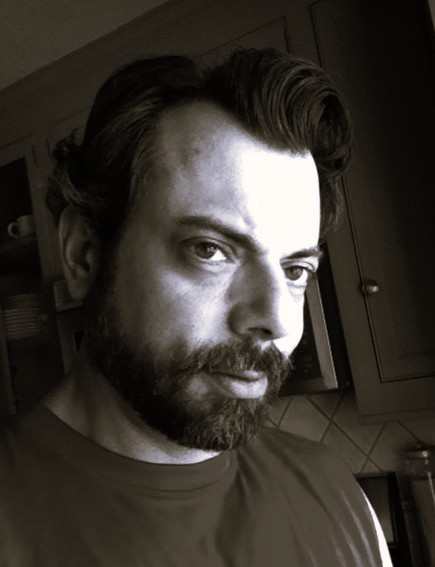
Steve Cirrone has been teaching at community colleges for nearly 35 years. He currently teaches College Writing, English literature, Shakespeare, Creative Writing, LGBT Lit, Film Adaptations and Science Fiction at Sacramento City College. His PhD is from the Claremont Graduate School in Renaissance literature (1997); his dissertation, Shakespeare’s Magic: Gender-Based Occult Value in Midsummer Night’s Dream, I Henry VI and Macbeth, explores how Shakespeare's use of occulta adheres to and extends medieval gender-based notions concerning magic and witchcraft. He has an MA in English (1992), also from Claremont, and he has a BA in English and Russian from SUNY Binghamton (1991). Dr. Cirrone is published in multiple genres, including novels (Natural Venus (2008); Angel's Trumpet (2022)), plays (The Tragedy of Doctor Gnosis (2005); Three Queer Plays (2022)), and philosophy (Secular Morality: Rhetoric and Reader (2025)). Before coming to SCC in 2006, he taught for many years at Tidewater Community College in Norfolk, Virginia, served as the Assistant Division Chair for Transfer English there and also served as President of Hampton Roads Pride. In the late '90's, while living in San Francisco and bartending in the Castro, he taught at several local colleges and was also the Associate Editor for QSF. Some of his many articles and columns won him national Vice-Versa awards; he was also nominated for the Randy Shilts magazine journalism award in1998. He is also an accomplished artist (acrylics) and has had a few shows in Sacramento where he lives with his husband of 20 years, Charley Gilmore, and their beloved doodle Oliver.
Preface
Part One—Establishing a Secular Morality
Introduction
Morals, Ethics, and Secular Morality
The Golden Rule
The Working Assumption
Three Transcendent and Fixed Moral Principles
All human life has an inherent dignity, and, therefore, all human life deserves respect
If something is good for us, then it should be good for others
Actions that seek to harm or that knowingly harm others are immoral
Moral Dilemma
Moral Premises: Further Guideposts to Moral Argument
Morality cannot exist without action
Morality involves individual and/or collective choice
Morality touches all of us and affects the world in which we live
Morality depends on applying deductive and/or inductive reasoning
Deductive Moral Argument
Inductive Moral Argument
Morality should be seen as a constant
Part Two—Applying the SM System
Why This System?
How to Use This Text
For Students
For Teachers
For Teachers and Students
Examples of Moral Imperatives
Part Three—The Moral Essays
How the Moral Essays Are Organized
Sub-Group A: Moral Arguments Concerning Rights in the US
Abortion: The Moral Right to Choose .
by Franchesca Paz
“[A woman] has the moral right to make her own decisions, and now that this right has been taken away for many women in our country, these women will also lose their rights to physical autonomy and personal freedom .”
KEY WORDS: Respect and Dignity Clause, Deduction, Moral Dilemma, Feminism, Abortion Rights
Morality and Mercy: The Case for Physician-Assisted Suicide
by Marissa Wittmann
“As someone who has seen the life and luster of a loved one leave long before they actually passed, I have considered physician-assisted suicide if I were ever in the same position . I would have wanted to have the control of choosing when to end my pain and suffering instead of waiting around to die .”
KEY WORDS: Moral Dilemma, Deduction, Health-Care Policy
Why Don’t Children Have Rights in the US?
by Kurt Falk
“Children in the United States do not have fundamental rights to life, liberty, and happiness, and they should . This may come as a shock to you, and maybe even make you believe that I am being dishonest with this claim .”
KEY WORDS: Reciprocity, Deduction, Constitutional Theory, Children and Family
Sub-Group B: Moral Arguments Concerning Cultural Matters
Tyler Perry: Mediocrity Making Millions
by Brent Clark
“The most consistent target of Perry’s visual sermons has proven to be Black women . Unfortunately, Perry has routinely chosen to use his elevated platform as one of the most prominent Black filmmakers currently in the business to do a disservice to Black women everywhere .”
KEY WORDS: Induction, Do No Harm, Film Criticism, Black Culture
On Lessons in Sexuality
by Jackilyn Prado
“Our society is plagued by the sexualization of women . Some feminists would say this is liberating . They say it’s a way to show that we are equal, that we can be free . But the opposite of this is true . It’s not liberating us; it’s imprisoning us .”
KEY WORDS: Reciprocity, Induction, Feminism, Mass Media
A Violent Solution
by Hok Tai Tang
“Violence in video games isn’t only about the grisly details of organs and blood splattering all over the floor as someone grins creepily; it also involves the player choosing what he/she believes is true within the boundaries of right and wrong without strict rules influencing the decision .”
KEY WORDS: Do No Harm, Video Games, Causes of Violence
No Justice for the Wicked
by Dalal Habeeb Audeesh
“Disgust rose in me then—and how could it not? Anyone in her right mind, anyone with a sense of respect for human dignity and a distaste for human suffering, would revile the idea that these armed soldiers were about to prey on innocent young girls—and the fact that they were being
encouraged to do so just made the situation even more shocking .”
KEY WORDS: Respect and Dignity, Reciprocity, Victims of War
Sub-Group C: Paired Essays
Filial Morality
by Jennifer Hernandez
“We, as children and young adults, need to realize that it is truly our moral obligation to provide our parents with the love, respect, and care that they once provided for us, not only because we owe it to them, but also because they deserve it .”
KEY WORDS: Reciprocity, Deduction, Children and Family
Don’t Send Parents to Nursing Homes (Care for Your Kids Instead): A Demonstration on the Power of Fallacies
by Annah Lee
“I assert that due to the introduction of a fallacy in her paper, Hernandez ultimately argues that children should ignore that obligation to care for their parents . I also assert that Hernandez’s true argument is that parents should not be sent to nursing homes and that to better support her true argument, she should appeal to her audience’s logos instead of pathos .”
KEY WORDS: Deduction, Logical Fallacies, Children and Family, Rebuttal Essay
Myth of Happiness
by Jack Wooten
“The problem is that this entitlement is not accessible to all Americans equally; whereas the wealthy have the freedom to pursue their happiness without weighted obligation, the average middle-class American is imprisoned by a never-ending cycle of debt that keeps us always shy of the ability to pursue happiness freely .”
KEY WORDS: Do No Harm, Induction, Student Debt Policy
Beyond the Balance Sheet: The Moral Case for Rethinking Student Debt
by Kandis Kaltenbach
“A solution that both honors the sacrifices of past borrowers and helps current borrowers regain their footing would reflect a deeper sense of fairness and compassion . We could do this by providing some forgiveness along with tax breaks or rebates for those who’ve repaid their loans; including something like this in the solution would help guarantee that everyone who has felt or who feels the weight of student debt will be recognized and respected .”
KEY WORDS: Moral Dilemma, Reciprocity, Deduction, Student Debt Policy, Rebuttal Essay
Sub-Group D: Essays That Address Generative AI
Position Paper #1: The Detriment of Generative AI to the General Public
by Anna Maxwell
“Generative AI . . . is a tool that can be used in a variety of ways, but criticism has arisen in response to the accessibility of generative AI: Its usage as a tool for crimes, worker displacement, its consequences of affecting the capability of the human mind, etc . Given these concerns, generative AI is more detrimental to the general public than helpful .”
Finding the Authentic in the Artificial
By William Flores
“AI is a complex issue, and in recent times it is especially easy to discredit its usefulness due to the harmful effects that it can have in the wrong hands . This is exactly why we should take time to explore the benefits further, and understand that it is a worthy pursuit to invest in through continued research. Not only that, we should actually encourage the use of AI in the arts—especially due to its revolutionary premiere that warrants pushing the limits of what we consider art to be .”
Steve Cirrone has been teaching at community colleges for nearly 35 years. He currently teaches College Writing, English literature, Shakespeare, Creative Writing, LGBT Lit, Film Adaptations and Science Fiction at Sacramento City College. His PhD is from the Claremont Graduate School in Renaissance literature (1997); his dissertation, Shakespeare’s Magic: Gender-Based Occult Value in Midsummer Night’s Dream, I Henry VI and Macbeth, explores how Shakespeare's use of occulta adheres to and extends medieval gender-based notions concerning magic and witchcraft. He has an MA in English (1992), also from Claremont, and he has a BA in English and Russian from SUNY Binghamton (1991). Dr. Cirrone is published in multiple genres, including novels (Natural Venus (2008); Angel's Trumpet (2022)), plays (The Tragedy of Doctor Gnosis (2005); Three Queer Plays (2022)), and philosophy (Secular Morality: Rhetoric and Reader (2025)). Before coming to SCC in 2006, he taught for many years at Tidewater Community College in Norfolk, Virginia, served as the Assistant Division Chair for Transfer English there and also served as President of Hampton Roads Pride. In the late '90's, while living in San Francisco and bartending in the Castro, he taught at several local colleges and was also the Associate Editor for QSF. Some of his many articles and columns won him national Vice-Versa awards; he was also nominated for the Randy Shilts magazine journalism award in1998. He is also an accomplished artist (acrylics) and has had a few shows in Sacramento where he lives with his husband of 20 years, Charley Gilmore, and their beloved doodle Oliver.