
Who am I? What makes me a unique individual? What shapes my experiences of existence, identity, and selfhood? Who is this entity asserting, “my body, my psyche, my mind, and my soul”? How do we differentiate between the psyche, mind, soul, self, and ego? Is awareness synonymous with consciousness?
Both laypersons and experts—psychologists, psychiatrists, philosophers, anthropologists, and theologians—often conflate the definitions of these concepts. As a long-time university lecturer, the author aims to assist students and general readers in navigating this terminological puzzle.…
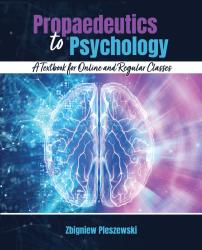
Propaedeutics to Psychology: A Textbook for Online and Regular Classes is primarily intended for university students enrolled in introductory psychology courses. However, its approachable and engaging style makes it an excellent resource for anyone with a curiosity about the foundations of psychology. Whether you’re a student or simply intrigued by the subject, this book offers an informative and enjoyable introduction to the field.
Zbigniew Pleszewski adopts a conversational and inclusive tone, inviting readers into a thoughtful dialogue. The text moves…

The domain of psychology is shared with medicine, anthropology, philosophy and literature. Analyzing the human mind at various levels: molecular, biological, social, phenomenological and spiritual, involves different methods and conceptualizations. Nomothetic approach (in theoretical and experimental studies) provides a generalized view of the human being, while the idiographic approach (assumed by clinical psychologist, novelists or filmmakers) offers a description of a unique person. Considering the complexity of the human mind, all these levels of analysis and approaches are needed and…