Writing Guide with Handbook aligns to the goals, topics, and objectives of many first-year writing and composition courses. It is organized according to relevant genres, and focuses on the writing process, effective writing practices or strategies—including graphic organizers, writing frames, and word banks to support visual learning—and conventions of usage and style. The text includes an editing and documentation handbook, which provides information on grammar and mechanics, common usage errors, and citation styles.
Writing Guide with Handbook breaks down barriers in the field of…
"Punctuation, Writing, and Grammar Basics: The Easy Way!' is a quick and simplified guide to punctuation, writing, and basic grammar.
Unsure when a comma is needed? Unclear how to properly use a semicolon? Uncertain whether a number should be spelled out or written as a numeral? Tired of having your instructor or boss critique your writing? Timid and shy about writing simply because you re unsure of your writing abilities? Fear no more . . . this book will alleviate your worries and provide you with the confidence needed to become a successful writer!
…
The College Writing Program covers the full range of writing skills and strategies needed for success in college. During the course, students actually complete a college-level Process Essay from start to finish, moving step-by-step through the writing process, by utilizing the guidance provided. Course uses fun, interesting activities to keep students moving forward.
The book is:
- Thorough and substantive
- Research-based materials use the latest pedagogical theories
- Each…
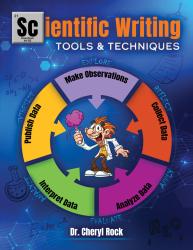
Career success in the sciences is built on excellent written communication whether within papers, proposals, or laboratory reports. However, where does the process begin? Moreover, what exactly is required? Additionally, what tools are needed to accomplish scientific writing goals? It starts here! This book was designed to help students receive a solid foundation in the scientific writing process through the following:
• Breaking down laboratory report writing into digestible processes where they can review, revise, and produce an optimal paper
• Providing tools such…
Convergent Media Writing: Telling a Good Story Well is designed for use in an introductory survey course on writing for media. It exposes students to the various media forms they may encounter later in their programs of study and/or in their future careers.
Convergent Media Writing: Telling a Good Story Well will:
- equip students to engage in the preparation and presentation of various media communication writing formats.
- help students develop writing skills sufficient to write for print, radio,…
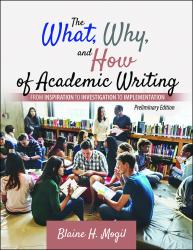
As college level instructors know, everyone arrives to campus at a different level of proficiency and with different skillsets. No matter our pedagogical approaches, they will all leave our courses with differing levels as well. So, among the first orders of business is to provide for every level of entry, every level of English language skills, and most of all, help scholars recognize the real significance of the life changing (and world changing) journey they are embarking upon.
The What, Why and How of Academic Writing is a holistic roadmap to helping…
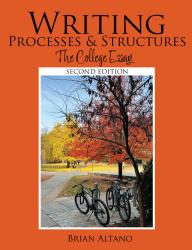
Writing Processes and Structures: The College Essay is divided into seven Units, an Appendix, and an Answer Key. The Units represent rhetorical modes, or essay types: introduction to the five-paragraph essay, description, narration, process, comparison and contrast, and persuasion; the Appendix provides a summary of paragraph types, with the key words, the principal verb tenses, the structure, and the outline of each. There is an overview of the 10 types of journals, with additional journal entry suggestions. The Answer Key supplies responses to the grammar,…
Reading maketh a full man;
conference a ready man;
and writing an exact man.
~ Francis Bacon
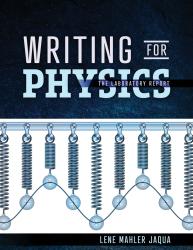
Laboratory courses are challenging on many levels. We are trying to familiarize students with equipment at the same time that they are to connect the uses of that equipment to the theoretical physics that they are learning. Add onto that mix that they need to express in writing their understanding of their findings, and the task seems formidable.
Most students do not know how to write well, and for the instructor, not only is writing…
Writing this textbook has given me the opportunity to highlight what I deem important, to teach you from my mistakes, and perhaps most importantly, to write joyfully about something that I care about. This has been fun for me, and I hope it’s fun for you.
The content is very much a reflection of its author’s strengths and weaknesses. It is strong where I tend to be strongest as a writer, and most interested – features, creative nonfiction, interviewing, and opinion work. It is weak where I tend to be the least interested as a writer, and it is where I have drawn most heavily on…

From the trenches encourages readers to write from the places, spaces where we all meet, despite our differences. Discover prompts in life and on the page that inspire questions, which evoke truth and answers that further discussion and understanding. Experience disappointment, joy, a journey through writing, through difference and land where we all aspire to be, a space of being seen, of having bested the fight, of having to fight no more, in or from the trenches.
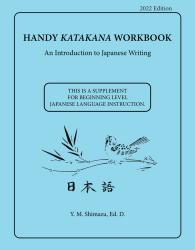
Designed to accompany an introductory Japanese language course, The Handy Katakana Workbook contains 8 teach-yourself study sheets and 26 worksheets on how to write and read Katakana, 2 Practice Quiz Exercises, and a Katakana chart with stroke order. The workbook is designed to be covered in 15 to 25 hours of instruction. Each study sheet introduces new Katakana. Each worksheet presents a sufficient number of Katakana and their combinations for beginning level students to practice. Each study sheet and work sheet is intentionally laid out…
Technical Communication Essentials: Foundational Communication Strategies for Everyday Writing is divided into three important sections:
- Write to Think
- Build the Foundation
- Document and Deliver
The strategies provided in this book build the foundational skills necessary to be both efficient and effective, the ultimate achievement in technical communication. The text covers why it is important to build your timelines in a way that allows for time away from you are working on, and why it is important review and…

Writing in Our Digital World encourages students to fashion their own computer-based writing environments to create and manage digital writing projects.
Designed to complement traditional writing curricula, this writing guide:
- Fosters proficiency in digital writing, a clear advantage in business and professions.
- Introduces foundation concepts and techniques for perfecting digital writing projects.
- Identifies best practices to manage digital content, develop digital fluency, and reduce content management frustrations.…
The NEW 5th edition of Business and Professional Writing: From Problem to Proposal is built around a single concept - that students learn professional writing through ownership of their ideas. This text equips students with the real-world skills that today’s employers seek.
Business and Professional Writing: From Problem to Proposal:
- is a proposal writing text. It assists students in building a proposal from the ground up.
- includes an author-constructed heuristic known as the “Six P’s” which…
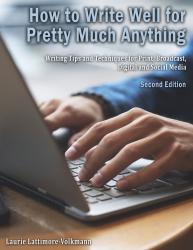
“Writing is easy.”
How many times have students heard that?
In reality, writing something that people will read—and continue reading—is hard work. Even so-called “good writers” struggle with that oh-so-important element that often eludes even their professional pens. But enjoying the writing process is even harder work yet so critical if you’re going to work in any arena where formal and informal communication is required daily—which is basically everywhere, by the way.
How to Write Well for Pretty Much Anything: Writing Tips and Techniques for Print,…
When most people sit down to write something, either for a class, for fun, or for work, they dread it? Why? What about putting words on paper is so intimidating? One thing might be the judgment factor that is placed on most writing assignments in school.
The same can be said for reading. Somewhere along the way, we started to doubt our ability to read and comprehend well enough to complete assignments, to read for pleasure, to write about what we had read with confidence.
Reading and Writing for Academic Success to…
The NEW 5th edition of Scientific and Technical Writing: From Problem to Proposal is built around a single concept - that students learn professional writing through ownership of their ideas. This text equips students with the real-world skills that today’s employers seek.
Scientific and Technical Writing: From Problem to Proposal:
- is a proposal writing text. It assists students in building a proposal from the ground up.
- includes an author-constructed heuristic known as the “Six P’s” which assists…

Abstract
As individuals become more immersed in online discourse, the rhetorical ways in which face-to-face humor emerges as an important part of the written lexicon remain an important facet of effective communication. Social media, listservs, blogs, email, and collaborative virtual environments all require sophisticated forms of communication; the rhetoric of humor and laughter is no small part of this written discourse (Hubler & Bell, 2003). Interestingly, in electronic spaces, linguistic forms of humor, joking, and laughter disconnect from verbal and…
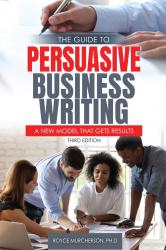
The Guide to Persuasive Business Writing: A New Model that Gets Results will transform students into competent persuasive writers. It includes many examples of documents students will be likely to create at some time in their career. Remember, on the first day of the job, every day on the job, one will be creating their own narrative, writing their story, creating an image. And the quality of the story will depend on how you communicate it. Good persuasive writing will have much to do with this.
So what makes this guide different? How is it going to help…
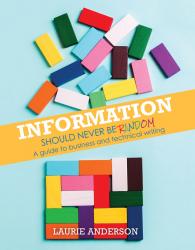
Information Should Never Be Random: A Guide to Business and Technical Writing breaks down that writing process for students so they can capitalize on it and get ahead on the job faster. This book approaches teaching business and technical writing differently than other books. This text separates how information is organized from how the information is delivered to the writer’s audience. This separation makes the application of learning more flexible for any dynamic work setting.
This book takes the lowest common denominator approach and…
An Introduction to College Writing is designed to address the essential foundations for college writing, including reading and writing critically, the writing process, paragraph development, essay structure, and modes of exposition, to provide an approachable, comprehensive introduction to the basics of writing for college. The chapters are excerpted from Linda Dawn Lukas’s College Composition and Reading: Information and Strategies and also include a chapter on the major modes of exposition from George Searles’ College English: The Basics. The book…
The Business Writing book offers a comprehensive insight into workplace writing. With various definitions and explanations of writing processes, Business Communication is the first in a series of Business Professional development work by Professor Michael French. With a focus on planning, organizing, designing, creating, and proofing your documents, Business Writing takes students through the necessary stages to construct effective workplace documents.
Start with Empathy: A Guide to Writing and Research in Divisive Times reminds readers that writing is not the first step in solving the problems of our world. By exploring why we think the way we do (metacognition), our frames of reference, and experiences, students can first work to understand themselves. In turn, they can then investigate why other people don’t think in the same ways, and this gives them the opportunity to understand problems based on culture, class, family, community, national, and international perspectives.
…

Sample
For this chapter, we propose to discuss the concept of identity within the two text genres of life writing and reflective writing, situated within the larger field of illness narratives. We consider the concept of identity construction an ideal entry point for our analyses since both the reading of narratives and the creation of reflective writing texts crucially rely on recognizing and acknowledging self and other. These skills have been recognized as vital for the development of future doctors to ensure successful interaction between them and their…
Designed to work with the required freshman writing and research course, its co-requisite course, and the Writing Across the Curriculum approach course for teaching both, Reinventing the Freshman Writing and Research Course is organized according to a fifteen-week semester comprised of five units:
- Entering the Academic World
- Finding a Research Topic and Question
- Finding and Assessing Existing Academic Dialogues
- Formalizing Our Contributions to the Dialogue
- Presenting Our…
Transportable Writing Tool: A Guide for Writing and Revising transforms the way writing is viewed and practiced by delivering a comprehensive and focused tool that allows writers to use more effective writing processes and produce more effective texts.
The multifaceted yet accessible tool synthesizes and taxonomizes writing into six core elements that serve as a heuristic to write and revise. Unlike other handbooks, many of which focus chiefly on the concept of grammar, The Transportable Writing Tool provides a balanced treatment…
New Publication Now Available!
Writing and Arguing about Music is an essential book for beginning the discussion on writing about topics related to music. Argumentative theory is discussed along with a structure of writing that focuses students on developing concise, accurate, and supported argumentative papers. Geared towards second level composition courses, this book features articles and methodology that gives the student and instructor an approach that is not your typical composition course.…
Successful Rhetoric for Professional Writing provides students with guidelines, pointers, and tips for creating professional documents. These guidelines, pointers, and general advice reflect the most current guidelines for professional writing, as the rules for writing professional documents change over time. This text provides straightforward information that spells out what to do to write professional documents with not just competency, but with correctness and sophistication to set them apart from others.
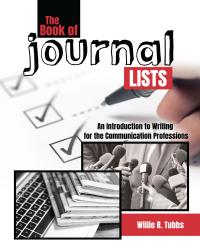
The Book of Journal Lists: An Introduction to Writing for the Communication Professions is a concise, visually appealing, and above all else, useful mass communications writing textbook. It integrates meaningful, interesting exercises that would neither bore readers nor prove too challenging for new writers.
The Book of Journal Lists: An Introduction to Writing for the Communication Professions includes:
- chapters that are short and to the point. When learning new information, people want easy-to-…
College reading and writing is challenging. Students must take in a tremendous amount of information, make sense of it, and see how it fits into their understanding of the world.
Moreover, modern students get their information from a wide variety of sources (Internet, print, media), so now perhaps more than ever they need the ability to read and think critically so that they can evaluate quality and reliability.
Critical Approaches to Reading, Writing and Thinking creates “lifestyle” critical readers, writers, and thinkers rather…
Welcome to the world of writing content that is short, sweet, and to the point, without omitting pertinent information. Welcome to the world of Broadcast News Writing!
The Difference in Broadcast and Print Writing
Newspaper and magazine journalists across the United States traditionally use AP, or Associated Press, a style in which many college journalism students are trained. However, when it comes to broadcasting, there is not a universal style of writing. Many radio and television stations use their own style.
Most broadcasting stations focus on…
It can be daunting to make the transition into university English courses and other classes requiring essay writing.
Introduction to Academic Reading and Writing Skills for University Students helps bridge the gap between high school and college, providing students with preparation for the challenges of essay writing and post-secondary level analysis of complex reading materials.
The text addresses the topic from a number of facets. It includes composition guidance to overcome mental blocks, targeted planning for the writing task, and coverage of the…

Preview of The Discerning Eye coming attractions: The aim of this book is not to prescribe the absolute meaning of a movie. Rather, the aim is to help students discover some of a movie's many possible meanings. To achieve this, the book is divided into four parts: Part One, The Birth of an Art Form Chapters 1-3 examine the history and development of production and post-production of Hollywood movie-making. Part Two, Major Milestones in the Development of Motion Picture Art Chapters 4-6 focus on these groundbreaking…
New Publication Coming Soon!
The long term goal of Critical Thinking and Writing in Psychology is to help the student become more competent and confident in writing, in all future settings. This is a guidebook for building psychologists specifically tailored to the types of writing they will utilize on the job. This text provides students with a practical look at what is acceptable in the field, as well as instruction on scientific writing and how to read it. Additionally, it includes a series of pertinent topics in psychology…

Experiencing Reading and Writing integrates both diversity of material with sound theory using an inductive, cognitive/rhetorical model that links reading and writing in an informed way. This text singularly focuses upon the college reader and the writer. Its primary objective is to create lifelong learners who can understand without recrimination what their difficulties have been and how they can now read and write much more fluently than ever before.
Experiencing Reading and Writing will enable students to:
- …
Investigating Writing strengthens students' writing to prepare them for varied writing situations. While many new employees learn while working on the job, Investigating Writing prepares students who one day will be new employees, or who are already experienced professionals, to be less shocked by the writing skills needed to communicate within school, work, and the community.
Fundamentals of College Writing, 2e, is a student-centered workbook that provides a straightforward approach to grammar and essay development.
Part One focuses on key elements of grammar, punctuation, and usage. It provides instructional material, reference handouts, and exercises, including traditional worksheets, as well as assignments that ask students to write and analyze their own sentences.
Part Two Provides examples of various paragraph and essay models, including the research essay. These essays can be used to reinforce instruction in…
College Reading: Reading and Writing Collaboration is designed for students to enhance reading and writing skills. Each section is uniquely designed by chapters to augment cognition, promote student reading and writing skills, but mostly to develop transferable skills needed in other disciplines across the curriculum.
This book is designed to create a personal experience to reading, expose the mind to knowledge, activate prior knowledge, and develop good reading habits. The sections focus on the lecture, discussions, in-class activities, assignments and…

New Edition Now Available!
Telling the Story: A Guide to Writing, Editing and Designing Student Publications in Print and Online is a basic guide for students publishing newspapers at the college level, both in print and online. Throughout the years of teaching journalism and advising student newspapers, it has become clear that there are few resources available to students to guide them through the process of producing their campus papers. This guide fills some of that void, and provides a basic outline of the steps needed to…
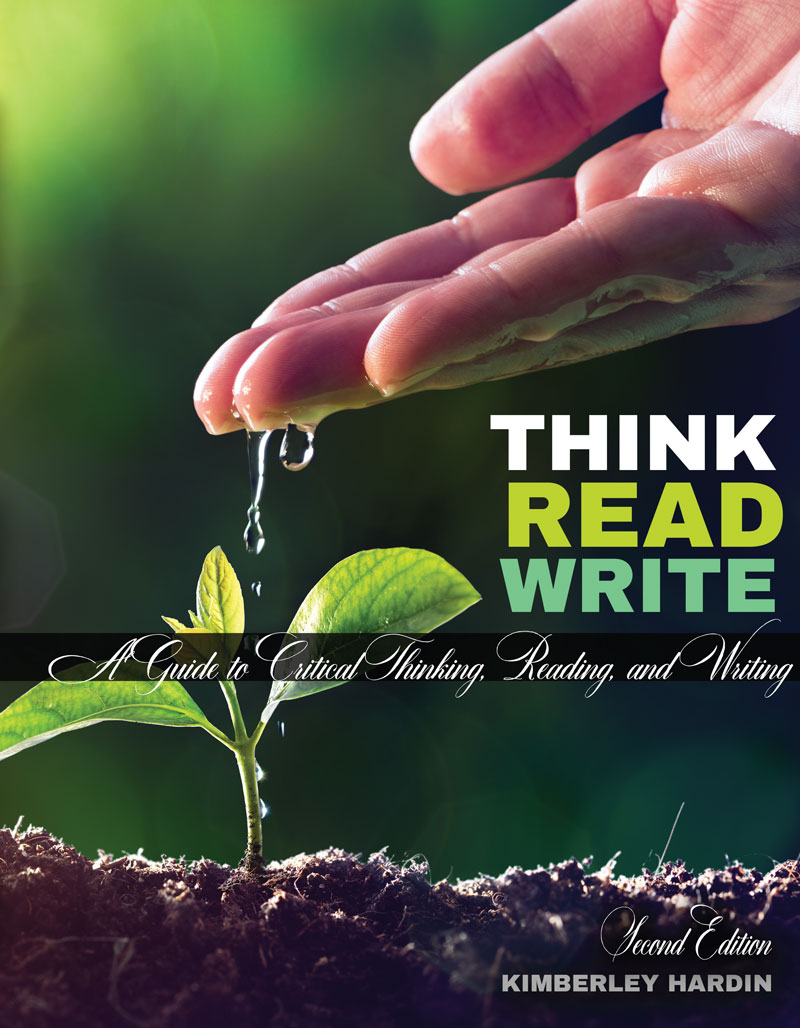
The significance of Think, Read, Write: A Guide to Critical Thinking, Reading, and Writing lies in the ordering of the words: think, read, write. You can’t do the last one without doing the first two. Using the cover picture as a metaphor, thinking is the soil, reading is the seed, and writing is the plant that grows from both of these things. You can also see critical thinking as the water that nourishes your writing; the more you think, the more you water your plant, the better your paper will be, and the bigger your plant will grow. This book teaches writing as…
Kaleidoscope: Shaping Language, Shaping Identity focuses on “academic discourse,” the kind of thinking, reading, and writing expected at university. Intended to speak directly to inexperienced and underprepared student writers, this text introduces students to a number of genres that are typical at college or university with emphasis on creating thoughtful, purposeful, independent writers. By introducing practical application of modern composition theory, students learn how writing is shaped by the rhetorical situation, discursive practices, and genre expectations…
The writing process inspires dread in countless students, and the underlying source of fear is almost always the same: “I’m just not a good writer.” Fortunately, Monique Ferrell and Julian Williams assure students in Good Writing Made Simple that writing is a learnable skill, just like anything else. And yes—anyone can do it!
Good Writing Made Simple delivers everything students need to succeed at college writing. Early chapters provide coverage on the foundations of crafting clear, understandable written ideas: Grammar and…
As instructors in graduate programs that train educational diagnosticians, licensed specialists in school psychology, and other evaluation specialists for work in school systems, we have found that one of the most difficult concepts to teach revolves around writing psychoeducational reports. Students struggle to apply report writing skills in real-world settings and often times have a significant amount of difficulty constructing a readable psychoeducational report that is cohesive and user-friendly. “Report Writing Boot Camp” was created specifically for this purpose: …
Writing is a strength - or weakness - for students in all their classes. Becoming a successful writer gives students an advantage. The West Guide to Writing: Success from Community College to University gives the reader the keys to succeed!
Written by three full-time English professors with a combined thirty years of teaching at both the community college and university levels, The West Guide to Writing is an affordable, compact, comprehensive, timely, and accurate textbook.
The West Guide…
Writing for Mass Communications was born out of a need for a structured, single-semester text to help instructors lay a firm foundation for writing across media. With decades of professional and academic experience, the authors understand the challenges of teaching media writing in an area that is defined by change.
Writing for Mass Communications:
- encourages students to think journalistically and then to explore writing journalistically.
- fashions an experience that is both challenging and…

Richard Hanson’s Writing Successfully publication offers innovative features such as:
- emphasizing revision of writing context until definitive: can’t successfully revise content until context is clear.
- developing a two-step revision strategy; first for context and overall content/organization, then at the paragraph level.
- multiple student examples of pre-drafting; secondary and primary research; evaluations; literacy narratives; memoirs; argument/persuasion; rhetorical, textual, and literary analysis.
- succinct, thorough…

For those of us who teach developmental or introductory college writing, we are currently faced with myriad changes — changes in what we do, who we serve and how we are viewed by others. Now, with less funding and more institutional, state and national pressure, we must restructure our courses and re-envision our students in order to withstand the scrutiny from outside and create a course that provides students with the critical thinking, reading and writing skills and intellectual curiosity they need to be successful students and citizens. Discovering the Student, Discovering…
New Second Edition Coming Soon!
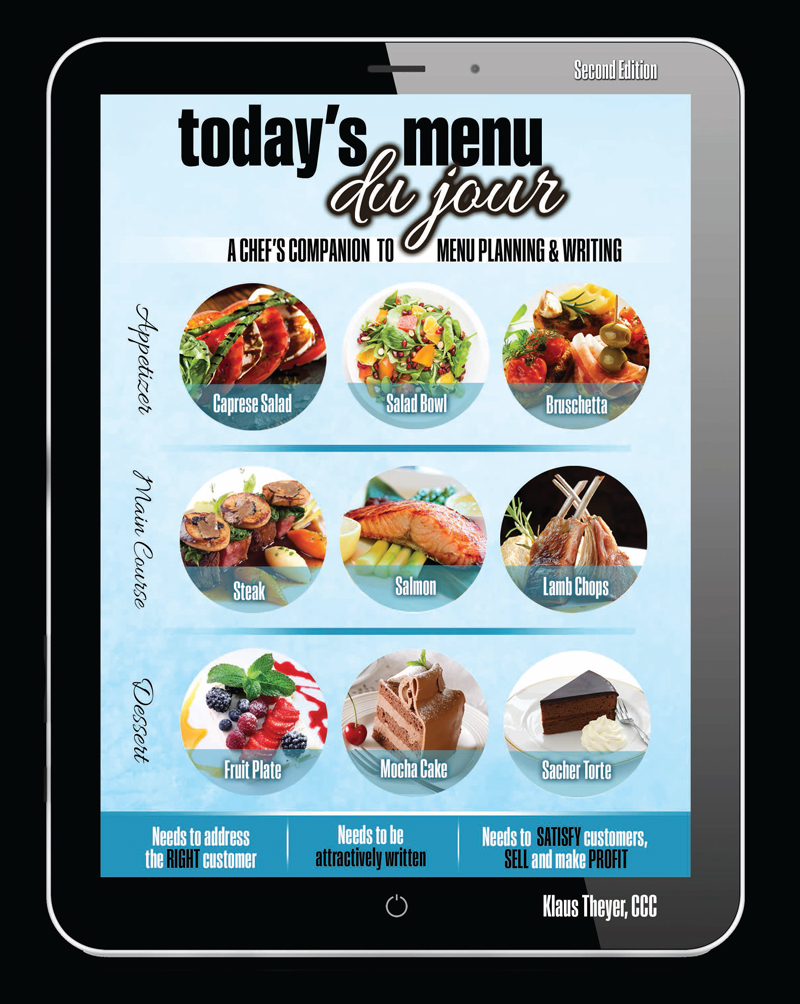
Over the last twenty-five years, cooking methods, awareness of food preparation and its impact on one’s health, as well as the in?uence of the many different cultures and their food products, have empowered chefs to create healthier menu items.
Subsequently, the traditional presentation style has also undergone considerable changes. It is just natural progress that menu writing style, the “descriptive copy,” followed the same trend.
The menu, “The Silent Salesperson,” is likely the most important merchandising tool…

Reading & Writing with Resolve provides everything instructors need to help their students master writing in a college setting. The text takes a three-faceted approach by focusing on the complete writing process, the generation of critical reading responses and the proper use of grammar.
Reading & Writing with Resolve begins with a thorough explanation of how to write an academic paper. Through step-by-step instruction, students are led through detailed examples of brainstorming, prewriting, outlining, drafting, and…

Writing across the Constitution: A Multi-theme Reader for Citizens and Writers is a unique composition reader that organizes its topics for discussion and writing around the Constitution of the United States of America. It presents a variety of timely controversial issues–such as free speech, gun control, capital punishment, illegal drugs, same-sex marriage, and many other issues that spring directly from the Bill of Rights and the other amendments to the Constitution. Students have the opportunity to research, discuss, and write about these topics while…
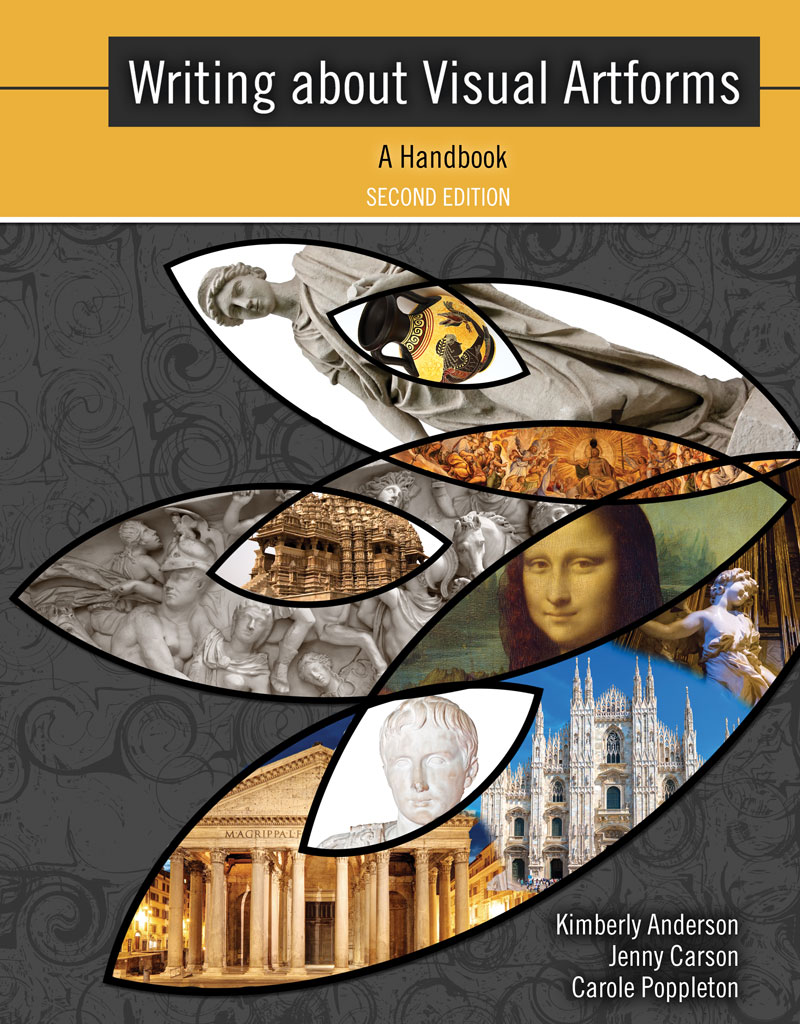
Writing about Visual Artforms is a brief handbook that contains important tips for writing about art as well as directions for composing formal analyses, comparison essays and research papers. A short section details various approaches to interpretation accompanied by examples.
In addition, the final section entitled “Additional Advice for Non-Native English Speakers” is designed to meet the needs of those who are new to the English language.
Writing about Visual Artforms is appropriate for any art course that contains a writing component…
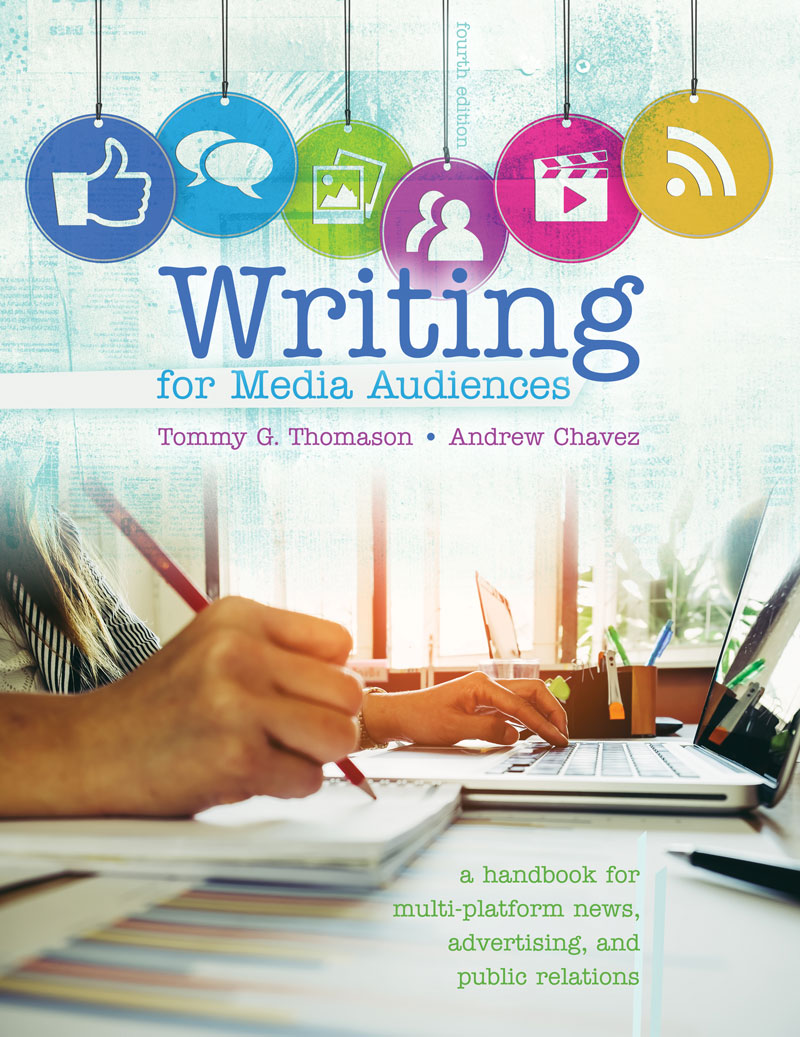
Writing for Media Audiences is a platform for students to become familiar with the new, mass communication way of writing. It explains mass communications practitioners such as journalists, advertising copywriters, public relations practitioners and the like, do write differently than other professional writers. These practitioners approach writing in a unique way in order to satisfy those who do more skimming than reading.
Writing for Media Audiences: A Handbook for Multi-platform News, Advertising, and Public Relations: …

Just four in 10 consumers say they have at least a fair amount of trust and confidence in the mass media to report the news fully, accurately and fairly. (Gallup)
It is time for a revolution.
Young aspiring journalists and media writers need to be armed with a wealth of information. They need canny interviewing skills and fact-finding techniques. They must be prepared to compete with the best in the business. And they must be able to adapt their writing to a multitude of platforms, ranging from traditional print to online and social media,…
You want to be a screenwriter? Juliet Aires Giglio and Keith Giglio did too. Long before they became professors, they spent successful years writing and producing in the magical world of Hollywood, working on projects that have generated much success.
However, when they stood up in front of the classroom they could not find a book designed for the screenwriting student that helped the writer actually write. None of the screenwriting books they read covered the craft of writing as screenwriters really talk about it. None of the books shared the techniques of screenwriting that they…
Connections: A Combined Reader and Rhetoric offers thematic and instructional content in one easy-to-use source. The five instructional chapters present proven practices and fundamental concepts while the five thematic chapters immerse students in multiple perspectives, historical contexts, and contemporary debates. The integrated instructional and thematic chapters of Connections will teach students to excel in their writing courses and across the curriculum.
Connections: A Combined Reader and Rhetoric…